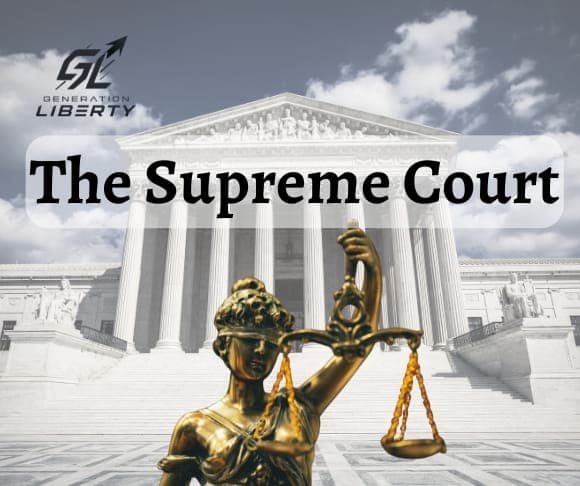

Though the Constitution establishes the Supreme Court in Article III, it says very little about the details, leaving Congress and the people, to develop the Court as we know it today. Here’s what the Constitution actually covers:
Article III, Section 1 establishes “one supreme Court” and vests in it “The judicial Power of the United States.” Supreme Court justices (judges) hold office “during good Behaviour,” which is essentially a lifetime appointment since they are removable only through impeachment. Additionally, Section 1 says that their compensation “shall not be diminished” while in office.
Article III, Section 2 of the Constitution defines the Supreme Court’s legal authority to hear cases, known as its jurisdiction. The Court has two primary types of jurisdiction: original and appellate. Original jurisdiction gives the Court the power to hear a case for the first time, but the Constitution limits it to a narrow group of cases involving ambassadors, public ministers, consuls, and disputes between states.
Appellate jurisdiction, on the other hand, is the power to review decisions made by lower courts, “with such Exceptions, and under such Regulations as the Congress shall make.” These cases often involve important questions regarding federal and constitutional law. The Court may affirm or reverse a decision or send it back to the lower courts for further proceedings.
Article II, Section 2 gives the president the power to nominate justices “by and with the Advice and Consent of the Senate.” But what it doesn’t specify is the number of justices the Court should have. Congress determines the number of members on the Court. It started with 6, including one chief justice, but since 1869, the bench has been set at nine members. The Constitution also doesn’t set any qualifications for justices, such as age, citizenship, or legal training requirements.
A common misconception about the Court’s power is that the Constitution gave the Court the authority to strike down laws as unconstitutional; it did not. The Court established that power itself in Marbury v. Madison (1803), commonly referred to as “judicial review.”
In summary, the Constitution sketches the Court’s existence and independence, but its size, structure, and much of its power have been developed by Congress, the president, and the Court’s own precedents over time.