
★ In this story 02
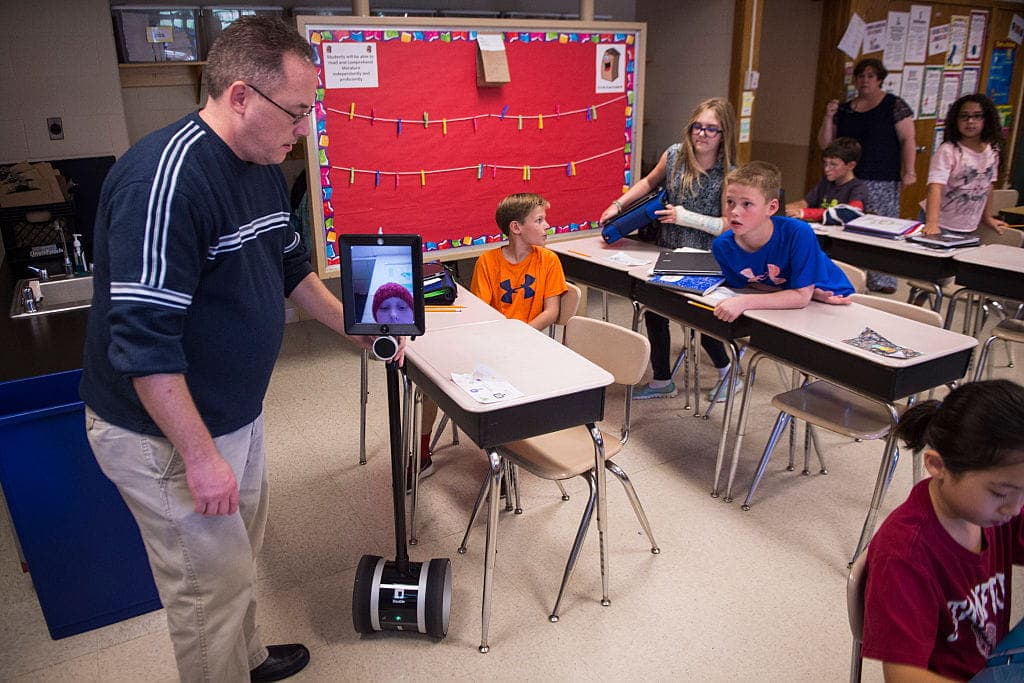
For teachers and school-aged kids, AI is virtually impossible to avoid. Its presence is overwhelming, but so are the program’s inaccuracies. Rather than try to keep students from using the tools, a growing number of US schools are attempting to educate children on AI literacy, a way to understand the platform’s values and shortcomings.
Finding a Solution to the Problem
According to Wikipedia, AI literacy is “a set of competencies that enables individuals to critically evaluate AI technologies; communicate and collaborate effectively with AI; and use AI as a tool online, at home, and in the workplace.” Basically, those who possess it know how to use AI programs responsibly and accurately.
Amanda Bickerstaff, the founder and CEO of AI for Education, recognized the heavy use of AI in schools and believed it was necessary to guide children in the proper ways of using it. In a South Carolina public school, and in front of a group of teachers and principals, Bickerstaff demonstrated the platform’s weakness by asking it to create a world map.
As instructed, the AI program produced a map of the world, but it was far from accurate. Several errors, including misspelled country names and words that made no sense, appeared on the screen. This was appalling to the audience, who couldn’t believe how incorrect it was. Educators found this a hard pill to swallow. The programs kids so heavily relied on are potentially giving them false information. Rather than banning AI altogether, Bickerstaff and her team believed it would be better to teach kids, teachers, and parents safe and effective ways to use it.
AI Literacy – How Does It Help?
Thirty-seven states have produced a guidebook for proper use and understanding of AI; South Carolina is not one of them. Such guidebooks provide instruction on how to assist users in the navigation of AI platforms. The first step offers basic knowledge and understanding of artificial intelligence and how it works, familiarizing the user with cognitive systems, robotics, and machine learning algorithms.
Next steps involve the application and evaluation of different AI systems and an explanation of where and when they are useful tools. Some situations work better without the use of AI, and this can help users recognize when it should and should not be applied.
The final step reviews the ethics of AI. Topics such as accountability, accuracy, explainability, and inclusivity are discussed in this part of the learning process. It is important that users understand the moral implications of AI and the value of making informed decisions when using artificial intelligence systems.
One of the teachers, Ray Knauer, who attended the AI training courses, had this to say about AI’s presence in the classroom: “We’re all trying to figure this out right now: What’s the right balance so we don’t scare students away from AI but don’t encourage them to run to it. We have to teach students: You can’t just get an answer and move on. You have to use analytical skills and dig deeper.”
The rise of AI in everyday life is inevitable. It is important that kids, teachers, and parents alike understand its value and the areas in which it can best be applied.

Kirsten Brooker
Culture Correspondent for Liberty Nation and Generation Liberty. Kirsten loves to write about culture from the point of view of an everyday American who lives deep in the heart of the Midwest. She is the mother of two adorable girls, likes classic rock, and humbly wears the crown of a former Homecoming Queen with grace and style.