
★ In this story 02
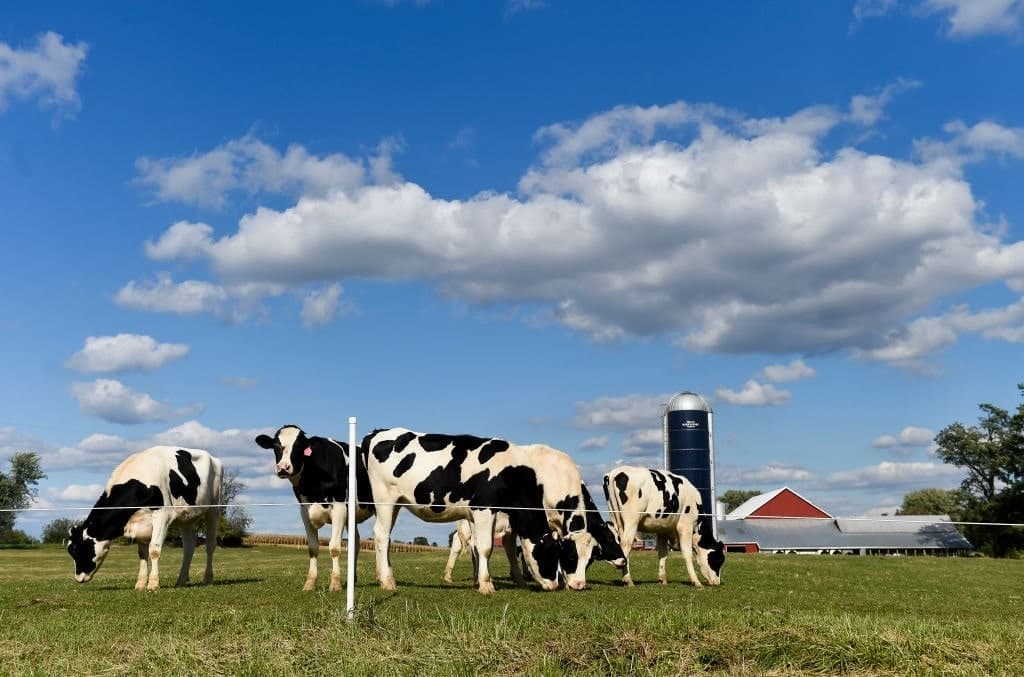
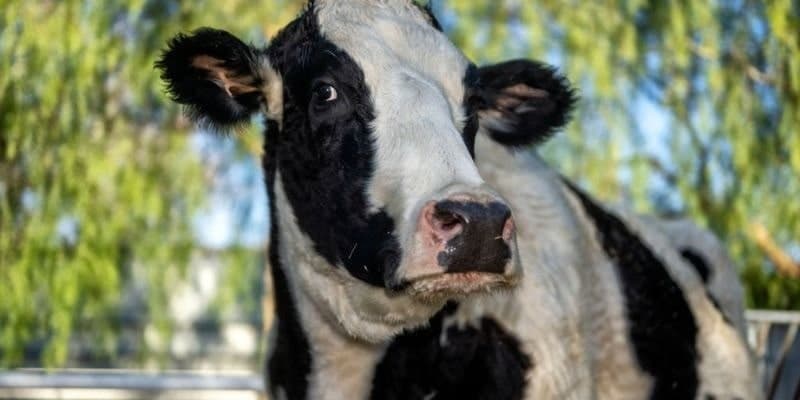
From frankenfoods to toilets that turn waste into ash, climate change enthusiasts search for solutions to stop the world from heading into another ice age or becoming a desert. Billionaire Bill Gates is leading the charge against burping cows, recently donating $4.7 million to a company that wants to put masks on the creatures.
Climate Change Hack: Mask that Cow
Zero Emissions Livestock Project (ZELP) says it has the answer to the problem of the belching beasts, and Gates’ donation will help the company see that reality. The plan is to use artificial intelligence masks that go around the cow’s head. When the creature burps, exhaling methane, the mask will oxidize the gas and then release it as carbon dioxide and water vapor, according to ZELP. And, as The Defender explained, “It also has sensors that continuously collect millions of data points on the animals that are processed by machine learning algorithms.” The UK-based company said:
“Our AI is trained to detect heat, flag welfare conditions, and identify the most efficient animals with a high-level of accuracy.”
Not surprisingly, there are a lot of critics about this newest invention, despite the fact that it was one of four winners of the inaugural Terra Cart Design Lab competition launched by then-Prince Charles, who said it was “fascinating.” Howard Vlieger, a third-generation farmer, said the invention is powered by greed. “This is what you get when you combine greed and stupidity.”
ZELP collaborates with Cargill, a giant in the agriculture industry, and leases out the smart masks to farmers and sells carbon offset credits, according to researcher and investigator Critical Sway. But Vlieger said cows are not the problem. “When the settlers worked their way across the plains, there were millions of buffalo. If ruminant animals were the problem, why didn’t we have climate change problems then?”
Besides cattle, other ruminant animals include antelopes, deer, giraffes, goats, and sheep. They are mostly characterized as having a four-chambered stomach and two-toed feet. Imagine trying to put these masks on giraffes!
The Science Behind It All
Do we really need to put AI masks on our cows for climate control?
First, the facts.
Last year, a study involving satellites examined methane emissions from the Bear 5 cow feedlot near Bakersfield, CA, and found “the lot was emitting a range of 977 pounds (443 kilograms) to 1,472.69 pounds (668 kg) of methane per hour,” reported Space. “If these emissions were sustained for a year, it would add up to over 5,000 tons of methane to Earth’s atmosphere.” Yes, someone really went to space to study cow burps. There are approximately one billion cattle worldwide,” Insider reported. “Cows and other farm animals produce about 14% of human-induced climate emissions.”
Now the rebuttal.
Some experts argue the problem is not that cows belch methane; it’s how and where they graze. For example, conventional livestock production confines large numbers of animals in a concentrated feeding area. W. Richard Teague, Ph.D., a professor emeritus and grazing ecologist at Texas A&M AgriLife Research & Extension Center, found that ruminant animals reduce greenhouse gas emissions and provide services that increase carbon sequestration and reduce environmental damage with regenerative crop and grazing management. When cows are allowed to open graze “under appropriate management results in more carbon sequestration than emissions,” he said. “The potential for tumors and other ill health effects are significant,” Vlieger said of the smart masks.