

★ In this story 03
There are many stories that appear every year around Halloween, from Washington Irving's 1820 tale “The Legend of Sleepy Hollow” to Edgar Allan Poe's eerie poems and short stories. But one story about an alien invasion aired the night before Halloween nearly 90 years ago — and it frightened some Americans so badly that it triggered reports of widespread panic.
The War of the Worlds - An Alien Invasion
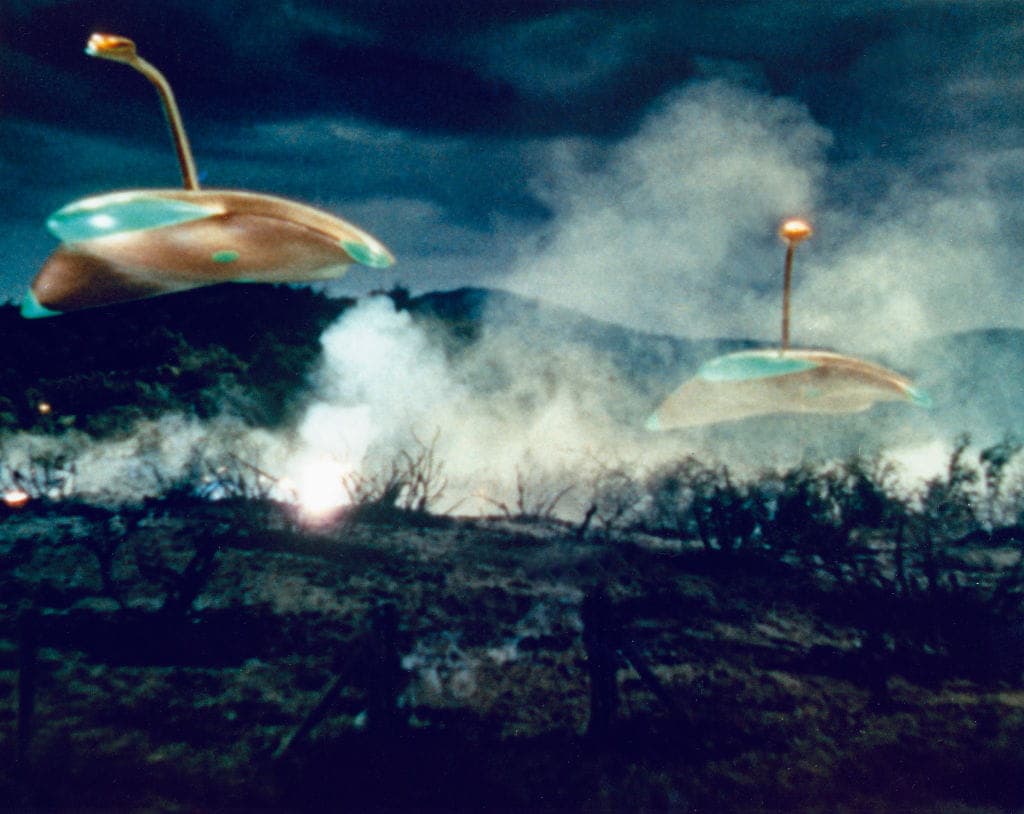
On the night before Halloween in 1938, radio star Orson Welles performed an adaptation of H.G. Wells’ “The War of the Worlds” on the CBS radio series known as The Mercury Theatre on the Air. He approached the legendary story as if it were a live news bulletin, alerting the public to an alien invasion in New Jersey. Welles’ act was so convincing that some listeners believed it was the real deal — that actual aliens had in fact landed in the Garden State.
Some folks who heard the broadcast were so frightened that they called their local police, newspapers, and radio stations, causing many journalists to believe Welles’ show had sparked widespread hysteria. “By the next morning, the 23-year-old Welles’s face and name were on the front pages of newspapers coast-to-coast, along with headlines about the mass panic his CBS broadcast had allegedly inspired,” according to Smithsonian Magazine.
Historians say that while Welles and his team hoped to deliver a realistic version of the story, none believed they would deceive the program’s listeners “because they all found the story too silly and improbable to ever be taken seriously.”
Panic at the Radio
When the story is told of Welles’ radio adaptation of The War of the Worlds alien invasion, many often recall the reported nationwide panic that followed the famous broadcast. Around 12 million people reportedly listened to Welles’ performance live, with “about 1 in every 12 ... [thinking] it was true and ... some percentage of that 1 million people ran out of their homes,” explained Radiolab, a public radio program. "That constitutes a major freakout,” Radiolab added.
But not everyone agrees that the performance caused fear nationwide. "The supposed panic was so tiny as to be practically immeasurable on the night of the broadcast," Slate reported, noting that a national survey held on the night of the show found just 2% of those contacted said they were listening to “a radio 'play' or 'the Orson Welles program,'” and “none said a 'news broadcast.’”
Responsibility of the Press
Years after his performance on the fake alien invasion, Welles reportedly insisted that he was really pleased with the public’s response to the show. He said he had to hide his pleasure the morning after the broadcast. According to Smithsonian Magazine:
“The Mercury, he said in multiple interviews, had always hoped to fool some of their listeners, in order to teach them a lesson about not believing whatever they heard over the radio. But none of Welles’s collaborators—including John Houseman and Howard Koch—ever endorsed such a claim.”
If Welles really intended to teach listeners a lesson about discernment, his approach raises some interesting questions about freedom of the press, which is protected by the First Amendment in the United States Constitution. Does the media have a responsibility to provide people with accurate information? Where should the line be drawn between creative storytelling and deliberately misleading the public? That’s for the reader to decide.
4 Questions
The story, in brief
What happened during Orson Welles's 1938 War of the Worlds broadcast?
On the night before Halloween in 1938, Orson Welles performed an adaptation of H.G. Welles' The War of the Worlds on CBS's The Mercury Theatre on the Air. He presented the story like a live news bulletin about an alien invasion in New Jersey, and some listeners believed the report was real.
Why did some Americans panic after Orson Welles's radio show?
The broadcast sounded like breaking news, and some people thought actual aliens had landed in New Jersey. Some frightened listeners called local police, newspapers, and radio stations, which helped fuel reports that the program had caused widespread hysteria.
Did Orson Welles's War of the Worlds really cause nationwide panic?
Accounts differ about how much panic the broadcast caused. Radiolab said about 12 million people listened, with about 1 in 12 thinking it was true, while Slate said the supposed panic was tiny and cited a national survey in which none of those contacted said they were listening to a news broadcast.
What questions did the War of the Worlds broadcast raise about the press?
The broadcast raised questions about whether the media has a responsibility to give people accurate information. It also prompted debate over where to draw the line between creative storytelling and deliberately misleading the public, especially in light of freedom of the press under the First Amendment.