
★ In this story 02
We’ve all heard the cries to save our democracy, which begs the question: Is the United States a democracy or a republic? The simple answer is that America is both, but that takes some explanation.
Democracy vs Republic
The word “democracy” doesn’t appear in our Constitution. Instead, the document guarantees every state a “Republican Form of Government” as it appears in Article IV, Section 4, commonly called the “Guarantee Clause.”
As James Madison wrote in The Federalist Papers: No 10, “The two great points of difference between a democracy and a republic are: first, the delegation of the government, in the latter, to a small number of citizens elected by the rest; secondly, the greater number of citizens, and greater sphere of country, over which the latter may be extended.”
Simply put, a democracy asks, who holds political power? The people. A republic asks, how is that power exercised? Through elected representatives operating under a constitution and the rule of law.
There are two types of democracy: direct and representative. In a direct democracy, citizens vote directly on laws and policies, such as was done in ancient Athens. In a representative democracy, citizens elect representatives to make laws on their behalf.
To narrow it down a little more, a republic is a government in which officials are elected instead of inheriting power, the government operates under a constitution or other supreme law, leaders must obey the law, and individual rights are protected even if a majority disagrees. In other words, in the United States, the Constitution, rather than public opinion alone, limits government power.
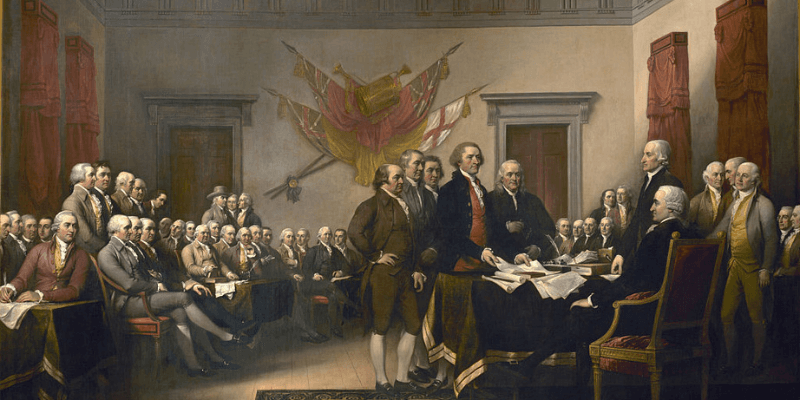
What Did the Founding Fathers Want?
The Founding Fathers didn’t agree on everything, but they did conform on one important idea: The government’s power should come from the people. At the same time, they wanted to protect individual freedom by preventing an overly powerful government and a simple majority from having unlimited control. That’s why they created a constitutional republic, in which people elect representatives, instead of a pure democracy, in which citizens vote directly on every issue.
Think of it like this: A democracy determines who gets to drive the car and a republic determines the rules of the road. In America, citizens choose the driver through elections, but the Constitution sets the speed limits and other rules that everyone must follow.
Many modern debates frame “democracy” and “republic” as opposites, but the Founders didn’t see it that way. Their goal was to give the people a voice in government while also putting limits on government power. They wanted elected leaders to answer to the people, but they also demanded a Constitution that would protect individual rights and impede government officials or a temporary majority from having too much control. That balance remains a key part of America’s system of government today.