
A government shutdown occurs when money approved by Congress that pays for federal programs can no longer be allocated. This may happen on Oct. 1, 2025, if Republicans and Democrats cannot agree on a government funding plan.
President Donald Trump and JD Vance met with congressional leaders on Sept. 29 to seek agreement on a continuing resolution (CR) that would prevent a government shutdown, but they couldn’t make a deal. Political gridlock leaves millions of Americans wondering what will happen next.
What Happens in a Shutdown?
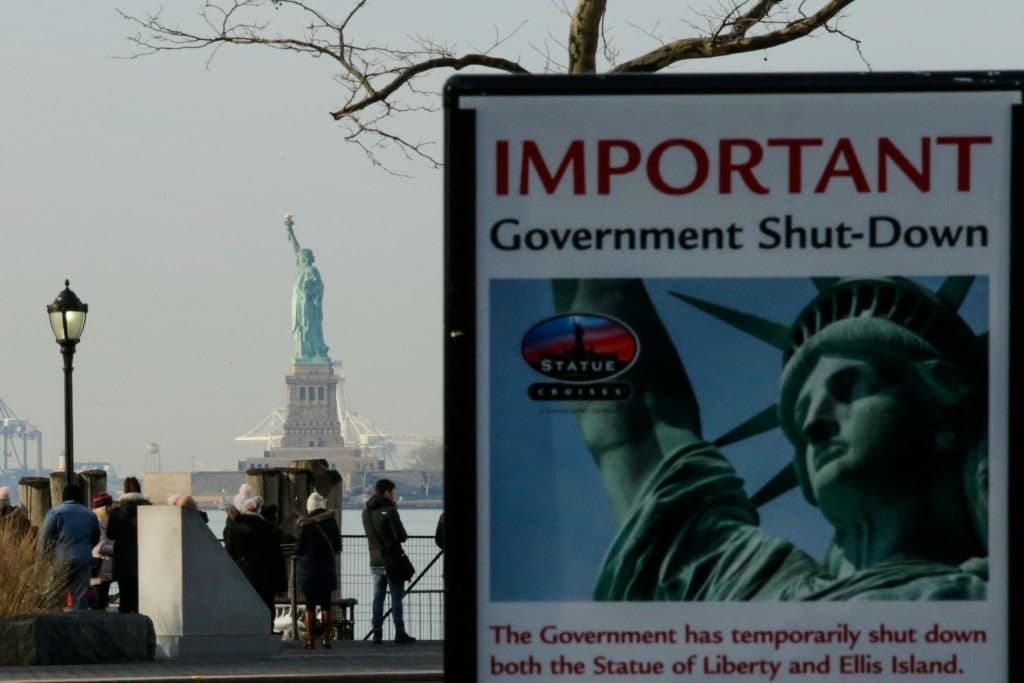
A shutdown happens when Congress fails to pass legislation funding the federal government, forcing all agencies to stop “non-essential” responsibilities. Hundreds of thousands of federal workers are typically furloughed, and many services and programs are closed, including Smithsonian museums, national parks, Small Business Administration loans, and Federal Housing Administration loans.
Those services and programs considered “essential” allow them to remain active while the government is closed, including active-duty military, border security, air traffic control, Social Security, Medicare, Medicaid, veterans’ benefits, and the US Post Office.
Government Shutdowns Through History
The most recent and longest government shutdown lasted five weeks, running from December 2018 to January 2019. Caused by a fight over funding for President Trump’s US-Mexico border wall, the shutdown cost the US economy roughly $3 billion, according to a report by the Congressional Budget Office (CBO).
The CBO also found that furloughed federal employees and private businesses experienced the most “negative effects” of the shutdown.
One of the longest government shutdowns – lasting 16 days – took place in 2013 during President Barack Obama’s second term. The shutdown was caused by a battle over the Affordable Care Act, a health care law also known as “Obamacare.” The Republican-led House and the Democrat-led Senate clashed over two spending bills. One sought to disrupt the implementation of Obamacare.
Republicans eventually gave in to the Democrats, passing a spending bill that didn’t attempt to change Obamacare.
One of the earliest government shutdowns took place in November 1981 during President Ronald Reagan’s administration. At the time, Reagan wanted significant spending cuts, and he wasn’t happy with the funding bills passed by the Republican-controlled Senate and Democrat-controlled House. Reagan vetoed Congress’ plan, forcing a government shutdown. Faced with the reality of 250,000 furloughed workers, Congress passed another funding bill, ending the shutdown.
Altogether, there have been more than 15 shutdowns since 1976. Some ended within hours, but others dragged on for weeks, each leaving behind economic costs and political scars.
What Happens Next
In order to avoid a shutdown, Congress must fund the federal government by Sept. 30 at 11:59 p.m. EST. If lawmakers miss the deadline, the government will grind to a halt. With both Republicans and Democrats refusing to give ground and the clock ticking, the question now is which side will blink first.