

★ In this story 03
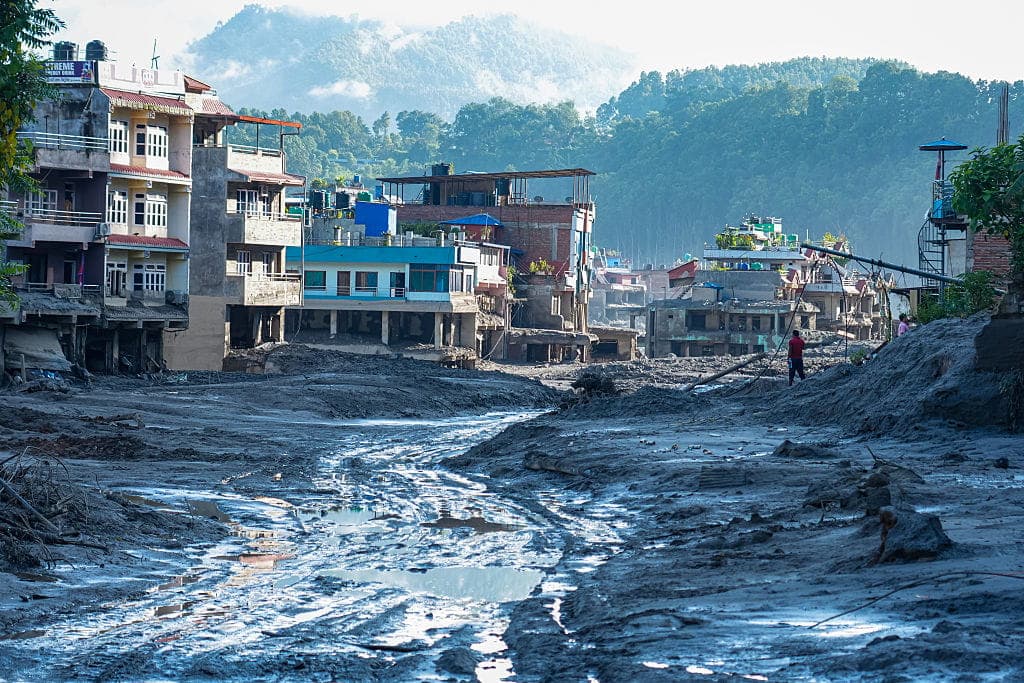
Recent floods in Nepal and Tibet have taken hundreds of lives and left thousands of people missing. Rescue operations are still underway, though many areas remain inaccessible, making it difficult to reach those in need. In Nepal, authorities are keeping a close eye on more flooding due to the debris that has clogged nearby river systems. The Grand Canyon in Arizona recently experienced flash floods as well, seriously affecting fewer than 20 people.
Glacial Collapse – The Cause of the Flooding in Nepal and Tibet
It was initially thought that the flood in Nepal and Tibet began after an earthquake in the Himalayan mountains. Later, it was discovered the cause was a large piece of a glacier that fell and wedged itself in the Lhende tributary of the Bhotekoshi River. The glacier created a makeshift dam that was eventually forced loose, allowing a build-up of water, rock, and mud to move down the mountain.
The flood traveled about 62 miles and demolished everything in its path. It destroyed towns all along the Bhotekoshi River, killing hundreds and leaving thousands more missing. The power of the water was so strong that it took out bridges, roadways, buildings, people, pets, and homes. The flood is considered one of the deadliest glacial collapses in recent history.
Nepal Accepts Help From China and India
After initially turning down aid from foreign governments, Nepal’s government began to accept the offers for relief and rescue efforts. An assessment of the damage by Nepal’s Natural Disaster Management Centre left the Nepalese government with little choice. India, China, Australia, and South Korea are now permitted to bring in teams of experts that will assist with rescue missions, body identification, medical assistance, and supplies.
A senior Nepalese government official stated, “We received massive pressure from the international community to allow at least search-and-rescue teams and some experts because their citizens have also gone missing in the floods. We are allowing a limited number of experts in certain areas.”
Flash Flooding in the Grand Canyon
It’s monsoon season in the Grand Canyon, which makes visiting the well-known national park slightly more dangerous. On Aug. 29, a flash flood in Bright Angel Creek took at least two lives and left about 15 people missing. Over the weekend, more than 60 people were airlifted from the canyon. The flooding was caused by four waves of rainfall over the past several days, and fears remain that continued storms could exacerbate the situation.
While much of the focus is on the missing hikers, concerns regarding the new Transcanyon pipeline are increasing. The pipeline was a $208 million project (to be completed next year) that would provide adequate water supply to all of the park’s residents and visitors. The brand-new construction was damaged by the flash floods, but extent of the damage is still being calculated.
“Heaven help us if the whole thing down there at the bottom has to be reconstructed. Where are they going to get the money?” said Jack Schmidt, director of the Center for Colorado River Studies at Utah State University.

Kirsten Brooker
Culture Correspondent for Liberty Nation and Generation Liberty. Kirsten loves to write about culture from the point of view of an everyday American who lives deep in the heart of the Midwest. She is the mother of two adorable girls, likes classic rock, and humbly wears the crown of a former Homecoming Queen with grace and style.