
★ In this story 03
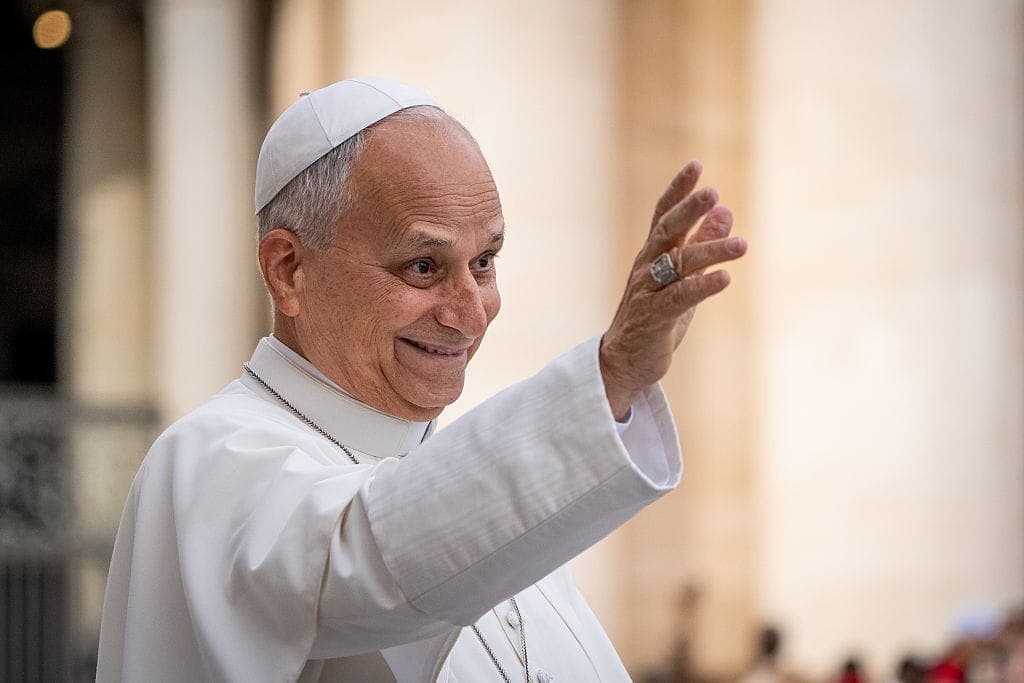
Pope Leo XIV, leader of the Roman Catholic Church, recently made history as the first pope to vote in the United States, casting an absentee ballot in Illinois’ midterm elections. Born Robert Francis Prevost on Sept. 14, 1955, in Chicago, the 71-year-old religious leader is registered to vote in the Land of Lincoln, although he currently resides in Vatican City.
Holy Father Leo Casts a Ballot
The central governing body of the Catholic Church, known as the Holy See, confirmed that Pope Leo XIV — also referred to as the Holy Father — voted in the midterms. “Pope Leo XIV has exercised his right to vote as a United States citizen, whenever he was eligible to do so,” the Holy See Press Office said in a statement, adding that the pope has a “long-standing practice of civic participation.” The statement continued:
“The Holy Father has also confirmed that, during his years of residence in Peru he exercised his right to vote whenever he was eligible to do so. The Holy Father expresses his belief in the right and the duty of citizens to participate in democratic processes.”
Before becoming pope, Prevost voted in nearly half a dozen primaries, requesting both Republican and Democrat ballots, Illinois State Board of Elections data show.
Can the Pope Legally Vote?
As a US citizen, Pope Leo can legally cast a ballot in American elections, despite being the leader of a foreign nation. According to the State Department, Leo’s status as head of state is a “potentially expatriating act” if he is a citizen of Vatican City or if he takes “an oath of allegiance to that country” in connection with his job. “Such employment, however, will result in one's expatriation only if done voluntarily with the intention of relinquishing U.S. citizenship,” the department noted. “Running for foreign office, even foreign head of state, is not a potentially expatriating act; only accepting, serving in, or performing the duties of a foreign office are potentially expatriating as described above.”
This means that the pope’s allegiance to and role in a foreign government could lead to expatriation if he intended to give up his American citizenship, but it is neither required nor guaranteed. “He’s an American citizen living abroad. He didn’t lose his voting rights when he moved to the Vatican,” explained voting rights expert Richard Hasen from the UCLA School of Law.
Why This Matters
The United States as we know it would not exist without the right to vote — it is a fundamental pillar of our Republic. After the nation’s founding, Thomas Jefferson said, “The influence over government must be shared among all the people.” The third president of the United States, Jefferson supported expanding voting rights, arguing in 1785:
“It has been thought that corruption is restrained by confining the suffrage to a few of the wealthier of the people: but it would be more effectually restrained by an extension of that to such numbers as would bid defiance to the means of corruption.”
It is every American’s civic duty to legally participate in elections. The pope was simply doing his part as an American.
4 Questions
The story, in brief
Why did Pope Leo XIV vote in the Illinois midterm elections?
The Holy See said Pope Leo XIV exercised his right to vote as a United States citizen and has a long-standing practice of civic participation. It also said he believes citizens have both the right and the duty to participate in democratic processes.
Can Pope Leo XIV legally vote while leading Vatican City?
Yes. As a U.S. citizen, Pope Leo XIV can legally cast a ballot in American elections even though he leads a foreign nation. The State Department says serving in foreign office leads to expatriation only if it is done voluntarily with the intention of giving up U.S. citizenship.
How did Pope Leo XIV cast a ballot in a U.S. election?
Pope Leo XIV voted by absentee ballot in Illinois' midterm elections. He is registered to vote in Illinois, even though he currently lives in Vatican City.
What is Pope Leo XIV's voting history in the United States and Peru?
Before becoming pope, Robert Francis Prevost voted in nearly half a dozen primaries, according to Illinois State Board of Elections data. The Holy See also said that during his years living in Peru, he exercised his right to vote whenever he was eligible to do so.