
★ In this story 04
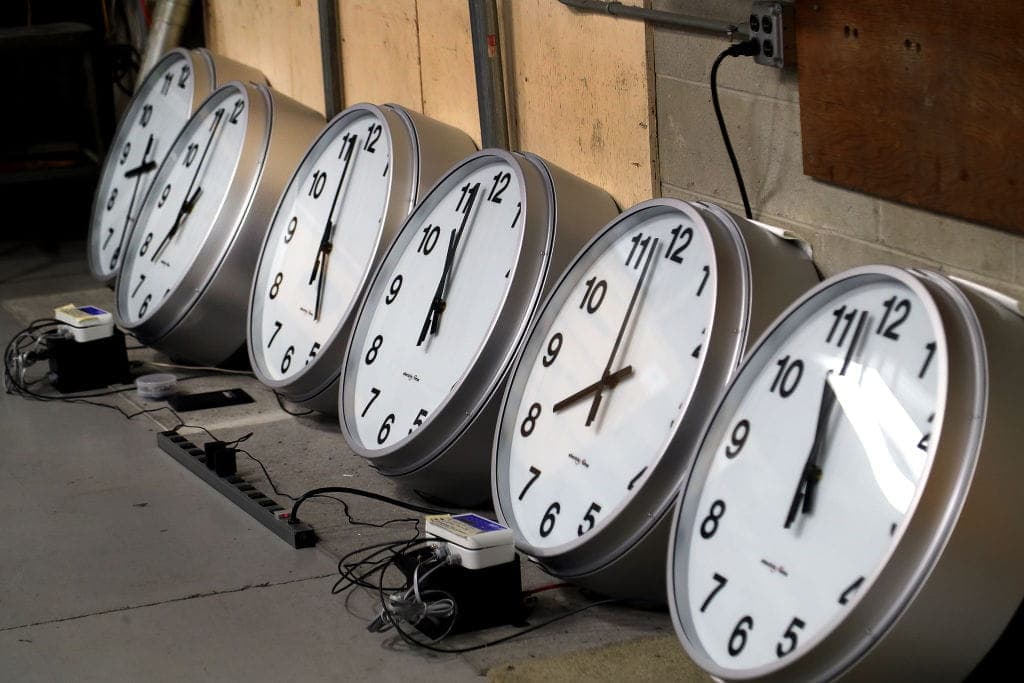
It’s that time again: At 2 a.m. this morning, most of the nation collectively “fell back.” Twice a year, millions of Americans engage in this strange ritual. In the spring, folks grumble as they lose an hour of sleep. In the fall, we celebrate the hour gained abed – only to realize that within a week the sun is setting before we even finish supper. So, what were the reasons behind daylight saving time, and how has something so controversial lasted so long?
Daylight Saving Time – Even the Origin Story Is a Fight
Spring forward and fall back. That’s the catchphrase for the routine we’ve followed for more than a century that has driven ordinary citizens, scientists, and politicians absolutely batty. But how did it all get started? Well, one common story is that daylight saving time was invented to help farmers.
It’s a tidy explanation. It’s also entirely false. American farmers didn’t invent daylight saving time. In fact, they fought fiercely against it.
Other mythological origins range from bug collectors to American Founding Father Benjamin Franklin himself! And as silly as that might sound, at least these two aren’t entirely backward, like the farmer theory.
In 1784, Franklin wrote a letter to the Journal de Paris while serving as envoy to France. He wrote that if Parisians simply woke up at dawn instead of sleeping until noon, the city could save an estimated 64 million pounds of candle wax and tallow every year. But it was a joke at the expense of late-sleeping French aristocrats, not a serious suggestion to change the clocks.
More than a century later, in 1895, New Zealand entomologist George Hudson did present a formal paper to the Wellington Philosophical Society proposing an extra two hours of daylight in the evenings to give him more time to hunt bugs.
Could you imagine having to deal with this clock-changing mess eight times a year instead of twice? In 1907, William Willett, a wealthy British homebuilder and avid golfer, self-published a pamphlet titled “The Waste of Daylight.” In it, he proposed that clocks move forward by 20 minutes on each of four consecutive Sundays in April, with the reverse done in September.
World War I – The Real Beginning
What bug collectors and golfers couldn’t achieve through years of polite debate, global war accomplished easily. In 1916, during World War I, Germany and its ally Austria-Hungary found themselves burning through what little coal they had left and unable to resupply thanks to enemy naval blockades.
Desperate to conserve fuel for the war, the German Empire decreed on April 30, 1916, that all clocks would advance one hour. It wasn’t long before Britain, France, and other European nations in the war noticed and adopted the practice for themselves.
When the US entered the war, Congress passed the Standard Time Act of 1918. This law formalized the American time zones we know today, which the railroads had been using for years, and mandated seven months of daylight saving time.
The Fight for Daylight and Where to Put It
The fighting in World War I ended on November 11, 1918, and the fight to end daylight saving time in America began shortly after. Farmers weren’t happy about the time change, least of all dairy farmers. Cows don’t look at clocks – but they are creatures of habit that need to be milked on a schedule dictated by the sun, not a federal timetable.
American farmers pressured lawmakers so aggressively that Congress passed a law – and then overrode President Woodrow Wilson’s veto of it – in 1919 to end national daylight saving time and return timekeeping to local control.
For most of the next half century, timekeeping in the US was chaos. States, counties, and even individual cities were free to adopt or reject daylight saving time as they pleased. Television networks struggled to schedule broadcasts. Freight railroad companies complained that coordinating timetables across hundreds of conflicting ordinances was an absolute nightmare. Commuters, whether on the rails or roads, might have to change their watches half a dozen times or more in a single trip!
President Franklin D. Roosevelt briefly instituted a year-round “War Time” from 1942 to 1945 to save energy through World War II. But once peace returned, the patchwork of confusion came with it.
In 1966, Congress passed the Uniform Time Act. The law established standard rules across the country: If a state chose to participate in daylight saving time, it had to follow the uniform start and end dates set by the federal government. Today, only two states opt out entirely and remain on standard time year-round: Hawaii and Arizona. For everyone else, clocks now move forward one hour at 2 a.m. on the second Sunday in March and back an hour at 2 a.m. on the first Sunday in November.
Why It Matters
So, does the time change actually save on energy costs? Perhaps it did save fuel burned to generate electricity for light during World War I and World War II. But today, it doesn’t seem to help in that regard.
In 2006, Indiana went from just a handful of counties observing daylight saving time to adopting the time change statewide. A study by economists after the fact showed that rather than saving electricity, it actually increased demand by about 1% in the fall thanks to the added use of air conditioning.
Meanwhile, sleep researchers and cardiologists have pointed to significant health downsides. Studies show a documented spike in car accidents, workplace injuries, and heart attacks during the Monday and Tuesday following the loss of sleep in the spring.
The debate over ending the clock change continues even today in Congress and across state legislatures. And while many agree we shouldn’t be changing our clocks anymore, now the argument seems to be centered on which time – standard or daylight saving time – should be the year-round norm. The House passed a bill to standardize it earlier this year, but it stalled out in the Senate, and it doesn’t seem likely to do much better any time soon.
So, for now, we continue to change our clocks twice a year, grumbling groggily about losing an hour in the spring and reveling in taking it back in the fall. But no matter what is ultimately decided, one truth remains: However clever we may think our laws are, we can’t legislate the sun into rising or setting any earlier or later.
4 Questions
The story, in brief
Who really pushed back against daylight saving time in the United States?
American farmers were among the strongest opponents of daylight saving time, especially dairy farmers. Their work followed the sun and regular milking schedules, not a federal clock. They pressured lawmakers so hard that Congress ended national daylight saving time in 1919 and overrode President Woodrow Wilson's veto to do it.
Why did the United States first adopt daylight saving time in 1918?
The United States adopted daylight saving time during World War I after other nations had begun using it to conserve fuel. Congress passed the Standard Time Act of 1918, which formalized American time zones and required seven months of daylight saving time. The change was tied to wartime energy needs, not to helping farmers.
How did Congress try to fix daylight saving time confusion in 1966?
Congress passed the Uniform Time Act in 1966 to create standard rules nationwide. If a state chose to observe daylight saving time, it had to use the federal start and end dates. That replaced decades of confusion when states, counties, and cities could make their own conflicting choices.
What happens next in the fight over daylight saving time?
The debate is still going on in Congress and in state legislatures. Modern studies cited in the text say daylight saving time probably does not save energy and may even raise electricity demand, while researchers have also pointed to health risks after the spring clock change. No final resolution is described.