
★ In this story 03
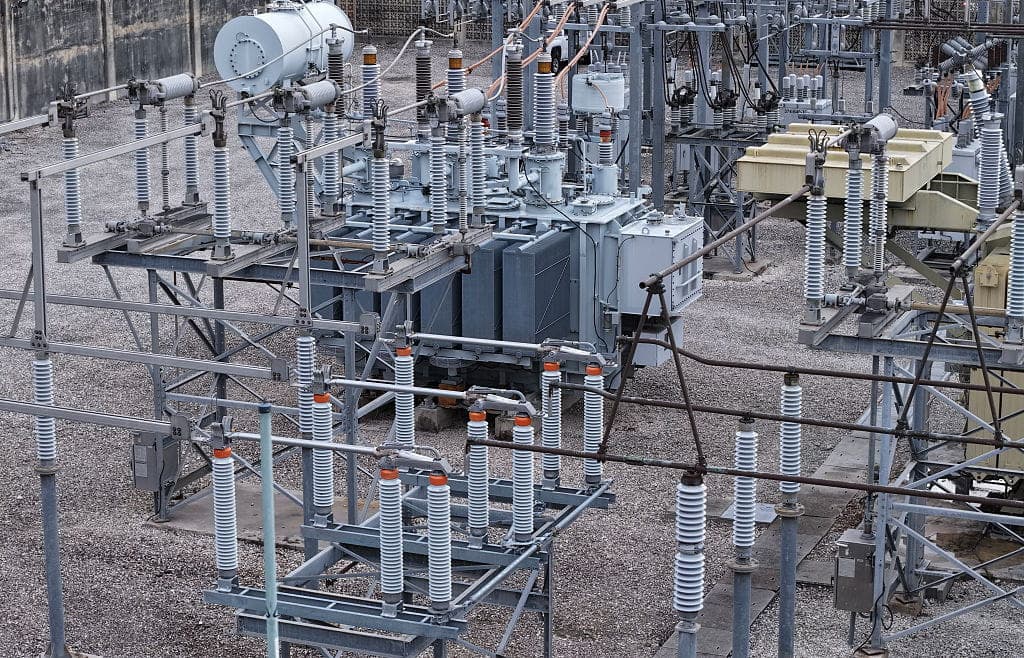
Secretary of War Pete Hegseth’s “State of the Force” speech on Sept. 30 at Marine Corps Base Quantico in Virginia laid out a bold initiative for the US military. He called it FORTRESS America, a plan to make every US military base self-sufficient and not dependent on local community grids for power. This is meant to prevent enemies from shutting down military installations and their on-base communications, medical care, or fuel.
Dealing With Failure of Community Grids
FORTRESS is an acronym for Federal Operations for Resilience, Troop Resources, Energy, Supply, and Survivability. The initiative has already taken shape, with contracts for five US Army bases to develop and install nuclear microreactors that can provide power if an enemy cyberattack takes out local power grids.
As Liberty Nation News explained, “The five companies and the US Army installations where the microreactors will be built are Antares Nuclear at Fort Bragg, North Carolina; Radiant Industries at Fort Benning, Georgia; BWXT Advanced Technologies at Fort Campbell, Kentucky; General Atomics Electromagnetic Systems at Fort Hood, Texas; and Westinghouse Government Services at Fort Drum, New York.” These five bases are moving toward electrical independence. “The Army expects that more than 20 nuclear microreactors will be built and operated,” the Associated Press reported.
Hegseth described FORTRESS America: “Every major military installation in America is going to generate its own power, independent of the civilian grid. If an adversary takes down the grid — by cyberattack, by sabotage, or by any means — our bases stay lit. Our aircraft keep flying. Our command centers never go dark.”
Commercial Power Keeps Military Bases Going
Currently, according to The Daily Wire, US military installations “rely on the commercial power grid for 99% of their electricity needs.” This applies to America’s most critical nuclear-deterrent capability. Again, as The Daily Wire explained, “Even bases like Missouri’s Whiteman Air Force Base, which houses the B-2 stealth bombers capable of carrying nuclear weapons, have to rely on local commercial power grids for their primary power.”
A Fox News Digital report claimed that the plan isn’t just to build electrical mini-grids with their own power source at each of approximately 500 US military installations. “Under FORTRESS, every major military installation in the continental United States would be expected to sustain essential operations independently for at least 90 days, including access to electricity, water, fuel and communications.” Fox News Digital called the initiative a “doomsday” plan.
Striving for self-sufficiency in powering our military bases is not the only issue FORTRESS America will address. As Hegseth told his audience, independence will be organized around five pillars: as mentioned, energy independence; “supply-chain and defense-industrial-base resilience; a strategic defense reserve (munitions, fuel, critical minerals, electronics, spare parts, medical supplies); installation hardening and cyber resilience; and resilience in space and the electromagnetic spectrum.”
New Initiative Has a Broad Objective
The Department of War cannot accomplish this alone. The War Department secretary’s proposal will require an all-of-government approach. For example, becoming as independent as possible in critical minerals will require coordination with the Department of the Interior, Department of Energy (DOE), and the Environmental Protection Agency (EPA). Additionally, installing nuclear microreactors at military bases will require working with the Department of Energy, the Nuclear Regulatory Commission to ensure meeting nuclear safety standards, and the Environmental Protection Agency, not to mention state and local agencies.
For decades, the US military has been attempting to establish some level of independence from outside grids. Now, there is a comprehensive, detailed plan to do so. Finally, the department charged with keeping America safe is taking steps to ensure national security in the event of a global conflict.
~
The views expressed are those of the author and not of any other affiliate.
4 Questions
The story, in brief
What is FORTRESS America in Pete Hegseth's State of the Force speech?
FORTRESS America is a plan to make every major US military installation generate its own power and operate independently of the civilian grid. Hegseth said the goal is to keep bases, aircraft, and command centers operating if an adversary disables local power through cyberattack, sabotage, or other means.
Why does Pete Hegseth want US military bases off local power grids?
The plan is meant to stop enemies from shutting down military installations by attacking community power grids. Hegseth said losing grid power could disrupt on-base communications, medical care, fuel, and other essential operations, so bases need their own reliable sources of electricity and support systems.
How will FORTRESS America power US military bases independently?
The initiative is already moving ahead with contracts for five US Army bases to develop and install nuclear microreactors. The article says those microreactors can provide power if an enemy cyberattack takes out local grids, and the Army expects that more than 20 nuclear microreactors will be built and operated.
What happens next under the FORTRESS America plan?
The proposal will require an all-of-government effort involving agencies such as the Department of Energy, the Nuclear Regulatory Commission, the Environmental Protection Agency, and other state and local agencies. Beyond energy independence, the plan also calls for work on supply chains, strategic reserves, installation hardening, cyber resilience, and resilience in space and the electromagnetic spectrum.
Dave Patterson
National Security Correspondent at LibertyNation.Com and Generation Liberty, Dave is a retired U.S. Air Force Pilot with over 180 combat missions in Vietnam. He is the former Principal Deputy Under Secretary of Defense, Comptroller and has served in executive positions in the private sector aerospace and defense industry. Dave’s articles have appeared in The Federalist and DefenseOne.com.