
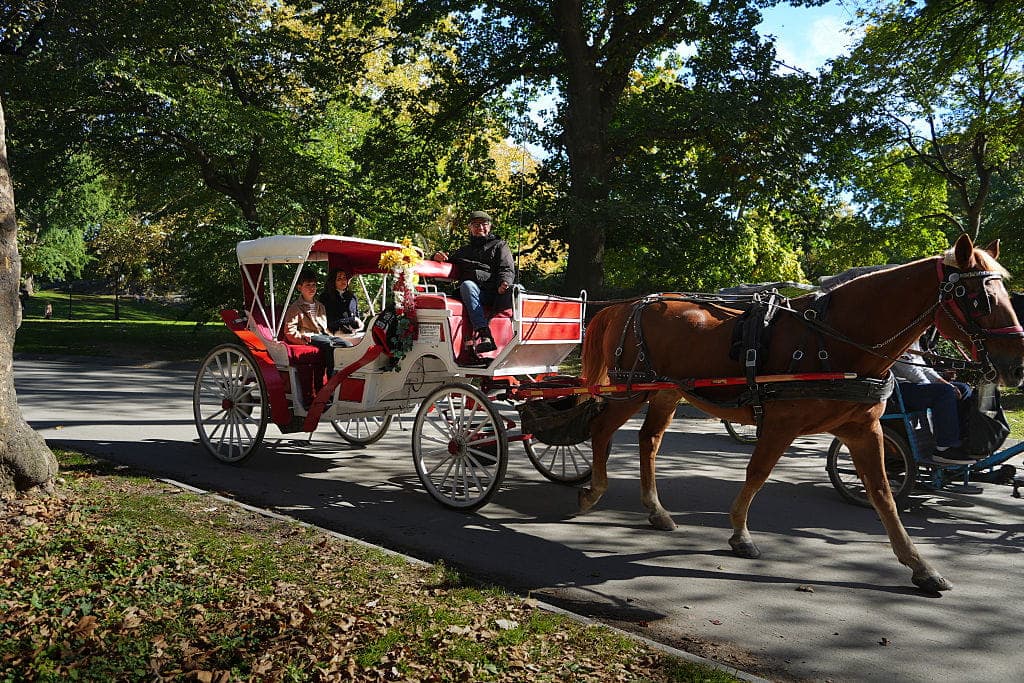
For more than 160 years, a trip to Midtown Manhattan brought with it the clattering of iron horseshoes. Carriage rides in and around Central Park have long been a New York City classic – but now the city council is saying no more horsing around.
After a decisive 40-7 vote on Oct. 22, the longstanding tradition will be gradually phased out over the next couple of years. By 2028, there will be no more horse-drawn carriage rides.
Gone the Way of the Horse and Carriage
When construction began on Central Park in the 1850s, horse-drawn carriage rides for tourists were part of the initial design. In fact, the first section of the park opened in 1858, and, by 1862, tourists were enjoying the carriage rides. So the tradition is as old as Central Park itself, baked into its very design, and was taking place before the park was even fully completed in 1876.
To be clear, the city doesn’t run the rides. Rather, it simply allowed others to do so. There’s an old saying for when things become obsolete or fade out over time: It went the way of the horse and carriage. It makes sense; once automobiles were invented and became common, they quickly replaced older modes of transportation.
Now the idiom comes full circle in New York, as the horse and carriage now go, well, the way of the horse and carriage. By June 1, 2028, there will be no more commercial carriage rides allowed.
The Spark Behind the Ban
Controversy over Manhattan’s carriage industry isn’t new. Animal rights activists have argued for decades that forcing large draft horses to drag tourists around the city through hot summers, freezing winters, car exhaust, and loud traffic is inhumane. But the issue found itself in the headlines after a video went viral showing a horse collapsing in traffic and after 18-year-old Romanch Mahajan lost his life following a carriage-related accident in Central Park in June 2026.
Sponsors of the ban argued that no amount of regulation could reconcile heavy livestock with the chaotic sensory overload of a 21st-century metropolis. After the vote, the city stopped issuing new carriage licenses. The council also mandated that a workforce transition program be crafted to help affected stable workers and drivers move on to other lines of work.
Carriage drivers and their union, however, are not giving up. Many of these operations are multi-generation family businesses and have paid hundreds of thousands of dollars for city-issued permits. They say their horses are family, and that they’re well-fed and given medical care far superior to that in wild pasture conditions.
The union promised to challenge the ban in court, arguing the city is unfairly erasing an honest trade and a piece of living history.
Why It Matters
When a government body votes to ban an entire industry, it raises questions that reach far beyond that single municipality or trade. For one thing, do cities have an ethical right to force businesses into buying licenses or to ban them outright? And for industries that have been allowed in the past but now are not, does the city have the right to force people to find new work, get rid of their equipment and livestock, and repurpose or sell their real estate?
Then there’s the balance between animal welfare and freedom in commerce. Where is the line between working animals and animal cruelty?
NYC was not the first to ban carriage rides. It follows cities such as Chicago, Salt Lake City, and Key West. And this is how massive cultural changes sometimes take place: not through national laws. The passage of this ban – called Romanch’s Law by its supporters – is a textbook example of how public campaigns, viral footage, and focused lobbying at the local level can shift statutes and transform traditional American culture, one city at a time.
4 Questions
The story, in brief
What did the New York City Council vote to do about Central Park carriage rides?
The New York City Council voted 40 to 7 on Oct. 22 to gradually phase out horse-drawn carriage rides in and around Central Park. By June 1, 2028, no more commercial carriage rides will be allowed, and after the vote the city stopped issuing new carriage licenses.
Why is New York City banning horse-drawn carriage rides in Central Park?
Animal rights activists have argued for decades that making draft horses pull tourists through hot summers, freezing winters, car exhaust, and loud traffic is inhumane. The push intensified after a viral video showed a horse collapsing in traffic and after Romanch Mahajan died following a carriage-related accident in Central Park in June 2026.
How are carriage drivers and stable workers affected by the New York City ban?
The council required a workforce transition program to help affected stable workers and drivers move into other lines of work. Drivers and their union say many operations are multi-generation family businesses, that they paid hundreds of thousands of dollars for city-issued permits, and that their horses are treated like family and given strong care.
What happens next after New York City banned Central Park carriage rides?
Carriage rides will be phased out over the next couple of years, with the full ban taking effect by June 1, 2028. Carriage drivers and their union said they will challenge the ban in court, arguing the city is unfairly wiping out an honest trade and a piece of living history.