
★ In this story 02
The cell phone has been one of the biggest and most persistent distractions in classrooms across the United States for many years. Kids paying attention to these devices instead of their teachers has disrupted learning, raised safety and mental health concerns, and affected the overall school atmosphere. The rise of smartphones, social media, and artificial intelligence (AI) only made matters worse, effectively forcing educators and lawmakers alike to find a solution to the growing problem.
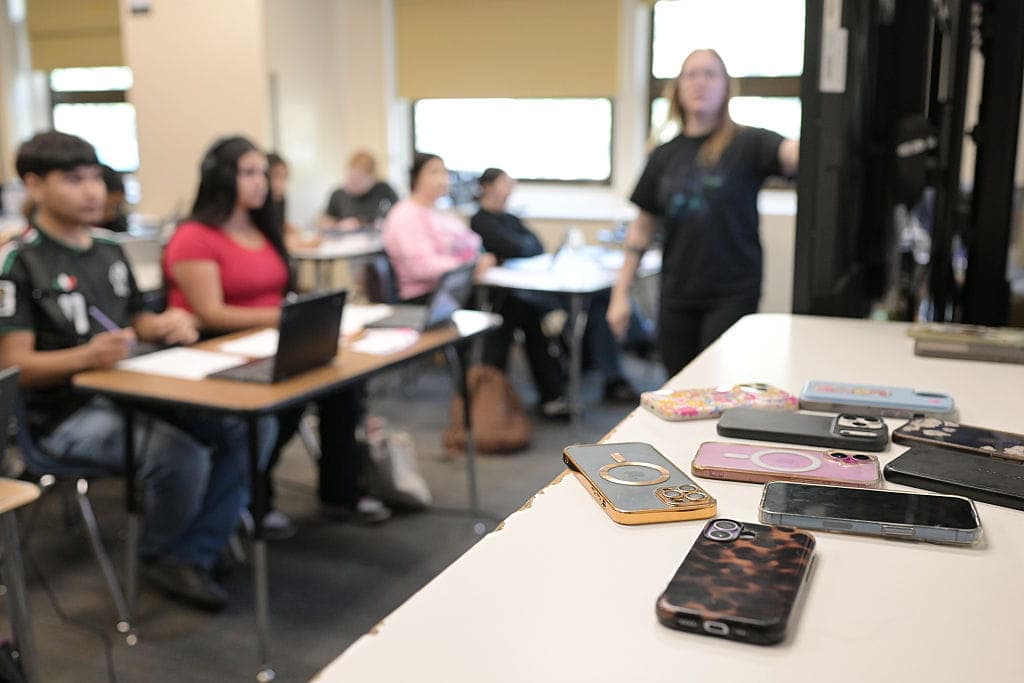
Well, a new report indicates a Texas law banning cell phone use in classrooms is delivering the intended results, suggesting the simplest solution may have been all it took to get students’ attention back on what matters.
Classroom Cell Phone Ban Gets A+
Texas Gov. Greg Abbott signed a law in 2025 designed to create phone-free classrooms, and just one year later, both students and teachers alike are already seeing positive results, according to a Texas A&M Vital Health report. One of the most obvious benefits of the cell phone ban is that students are paying more attention in class.
“Across our entire U.S. history teaching team, every single one of us saw better test scores across all learning levels once the ban took effect,” said 11th-grade history teacher Rachel Bailey.
School psychologist Israel Arevalo, who is also an assistant research scientist at Texas A&M Health Telehealth Institute, explained that removing the constant digital distractions students face throughout the day has freed up mental space and eased the strain on their attention.
The social benefits of classroom cell phone bans are equally clear, though they take different forms depending on a child’s stage of development, according to the report. For younger children, shifting attention from devices to other people creates more opportunities to practice basic social skills, including taking turns, identifying emotions, and interpreting body language. Teenagers are strengthening those early social skills “while developing more complex social and emotional skills they’ll use as adults.”
“We are meant to be social — not through screens but through face-to-face interactions where language and communication can be truly conveyed,” Arevalo noted. “Research has shown that increased screen time is associated with a greater likelihood of children developing socioemotional difficulties as well as decreased social skills.”
A Hard Lesson
Although banning distracting cell phones from classrooms was a simple fix to a big problem, adjusting to the change proved to be hard for students, teachers, and even parents. According to Arevalo, baseline anxiety spiked in all three groups, but the unease eventually plateaued and then began to drop.
“There was this palpable anxiety on campus for weeks leading up to the school cellphone ban about how we were going to enforce it, but by the end of day one, it was just a total breath of fresh air,” Bailey said.
Perhaps the biggest challenge schools have encountered since enacting the prohibition on cell phones in classrooms is what happens after students go home. Arevalo explained that some students may overdo evening screen time to make up for the daytime ban, reducing the positive effects that the classroom ban may have had. “We can make those policy changes in the schools, but accountability is on the parents once the child goes home,” Arevalo said. “Whenever we are trying to change a behavior or implement an effective intervention, we want to make sure those efforts are consistent across settings.”
Bailey said it’s obvious which parents are on board with the change because “their kids reach for their phones less.” Texas’ classroom cell phone ban may be working in schools, but it’s up to Lone Star State parents to make the benefits last after the school bell rings.
4 Questions
The story, in brief
What did Texas' classroom cell phone ban change for students and teachers?
A Texas law signed by Gov. Greg Abbott in 2025 created phone-free classrooms, and a Texas A&M Vital Health report says positive results appeared within a year. Students are paying more attention in class, and one 11th-grade history teacher said her entire U.S. history team saw better test scores across all learning levels after the ban took effect.
Why do classroom cell phone bans help students socially and mentally?
School psychologist Israel Arevalo said removing constant digital distractions frees up mental space and eases strain on students' attention. The report says younger children get more chances to practice basic social skills like taking turns and reading body language, while teenagers build more complex social and emotional skills through face-to-face interaction.
How did Texas students, teachers, and parents react to the cell phone ban at first?
Arevalo said baseline anxiety spiked among students, teachers, and parents as schools adjusted to the change. He said the unease eventually plateaued and then began to drop. Teacher Rachel Bailey said there was palpable anxiety for weeks before the ban, but by the end of the first day it felt like a breath of fresh air.
What challenge remains after Texas schools banned classroom cell phones?
The biggest challenge comes after students go home, because some may increase evening screen time to make up for not using phones during the school day. Arevalo said parents are responsible for keeping the effort consistent at home. Bailey said it is obvious which parents support the change because their children reach for their phones less.