

The 1960s were an eventful time in American history. The country was in the middle of the Cold War and the Cuban Missile Crisis. The presidential debate aired on television for the first time, and President John F. Kennedy was elected. It was also during this era that man stepped onto the moon for the very first time.
The United States had been trailing Russia in space developments, so President Kennedy set a deadline to get astronauts to the moon. During a special joint session of Congress on May 25, 1961, he said, “I believe this nation should commit itself to achieving the goal, before this decade is out, of landing a man on the moon and returning him safely to Earth.”
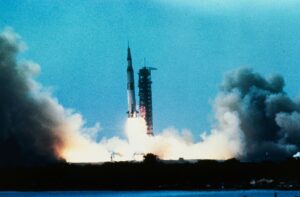
In 1966, an international team of engineers and scientists and the National Aeronautics and Space Administration (NASA) conducted the first Apollo mission to test the structural integrity of the spacecraft. On January 27, 1967, at the Kennedy Space Center in Cape Canaveral, FL, a fire broke out during a launch pad test and three astronauts died. But the mission continued despite the tragedy.
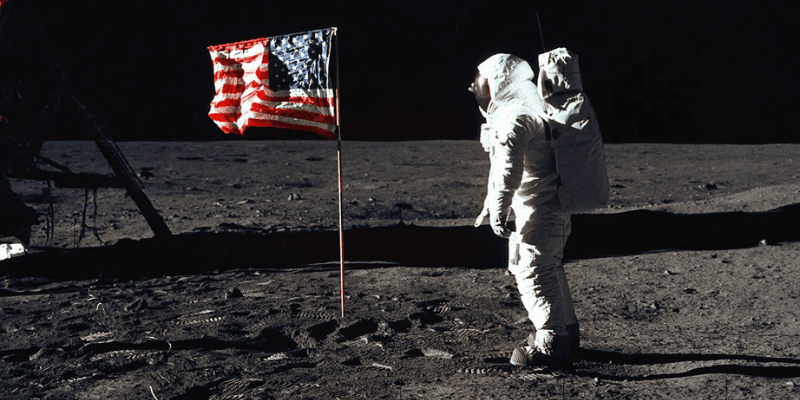
On July 20, 1969, American astronauts Neil Armstrong and Edwin “Buzz” Aldrin became the first humans to land on the moon. Armstrong was the first to walk on the moon, and as he took his first step, he said these now-famous words: “That’s one small step for man, one giant leap for mankind.” President Richard Nixon spoke with the two astronauts over a telephone radio transmission not long after they planted the American flag on the surface. He said it was the “most historic phone call ever made from the White House.”
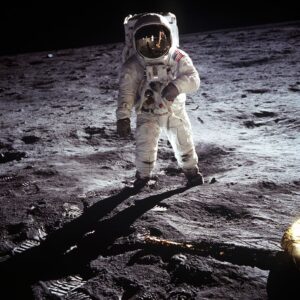
It took 76 hours, traveling 240,000 miles for Apollo 11 to enter lunar orbit on July 19. The next day, the lunar module, named “Eagle,” separated from its command module and headed to the moon’s surface. Once the craft touched down on the southwestern edge of the Sea of Tranquility, Armstrong radioed Mission Control in Houston, TX, and said: “The Eagle has landed.”
Since that first moon landing, there were five more lunar missions as well as an unplanned lunar swing-by. Apollo 13 had technical difficulties that caused the crew to abort its mission. The last men to walk on the moon were astronauts Eugene Cernan and Harrison Schmitt of the Apollo 17 journey, which left the moon’s surface on December 14, 1972.
The Apollo program involved around 400,000 engineers, scientists, and technicians. It cost $24 billion, which is around $100 billion in today’s currency. Kennedy’s goal to beat the Soviets to the moon was successful, but after accomplishing the feat, the program dwindled away.