
★ In this story 06
What is economics? It is the science that studies human action. Economists have one crucial job: explain. Economics contains different branches of thoughts and doctrines that trigger a war of ideas within the industry and public square. So, what are these schools, what do they teach, and who are or were the influential figures championing these orthodoxies to the world?
Austrian School of Economics
The Austrian School of Economics promotes the concept that free market capitalism can solve most problems in the economy. It also calls for a reduction in the size and scope of government. Austrian Theory puts the spotlight on the individual for economic decisions, such as subjective value and liberty.
This school of thought is based on the works of Carl Menger and Fredric Bastiat, but it has been most influenced by a long list of notable 20th-century economists: Friedrich Hayek, Murray Rothbard, Ludwig von Mises, Walter Block, and Israel Kirzner.
Keynesian Economics
The Keynesian School of Economics argues that the total demand for goods and services in a market at any price level in any period affects output and inflation. Keynesians believe pure capitalism is bad and that the government needs to intervene regularly to solve financial crises and prop up the economy during both the boom and bust phases of the business cycle.
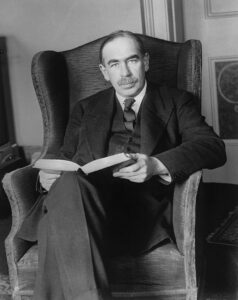
The most celebrated person from this economic thought is John Maynard Keynes. Since then, however, many Keynesian economists have become mainstream and been installed in many pillars of society, from academia to the media. Some notables include Paul Krugman, Joseph Stiglitz, and James K. Galbraith.
It should be noted that there are extensions of Keynesianism. New Keynesian, for example, states that policymakers can achieve full employment, improve the economy, and stabilize conditions through public policy. Post-Keynesian, as another example, argues that capitalism is built on an unstable foundation and that the economy will need government intervention, mostly through fiscal policy, to accomplish growth.
Modern Monetary Theory (MMT)
The modern monetary theory (MMT) proposal has been associated with the Post-Keynesian school of economics, expanding into the territory that fiscal policy is an all-powerful tool to solve anything. The primary policy prescription for MMT is that the lawmakers should be in charge of the printing press rather than a central bank, suggesting that Congress can print its own currency to cover spending without ever having to worry about inflation.
There are many well-known people promoting MMT, but the most prominent person is economist Stephanie Kelton, the author of The Deficit Myth and former presidential campaign advisor to Sen. Bernie Sanders (I-VT)
Chicago School of Economics
The Chicago School of Economics holds a similar opinion to the Austrians. Chicago economists believe that free markets are more efficient at regulating the economy than the government. However, the key difference is that the Chicago School Theory argues that a centralized authority should be in charge of the money supply, keeping it in equilibrium with the demand for money.
Legendary economist Milton Friedman is most associated with the Chicago School of Economics, winning the 1976 Nobel Memorial Prize in Economic Sciences for his research on consumption analysis, monetary history and theory, and the complexity of stabilization policy. But George Stiger, Thomas Sowell, Ronald Coase, Gary Becker, and James Buchanan are other forces in this school of thought.
Marxian Economics
Marxian economics comes from the writings of Karl Marx. Its premise is simple: Capitalism is flawed, and the system will lead to the self-destruction of humanity without government intervention, regulation, and ownership. Marxism promotes the labor class over the capitalist class, with the idea that the proletariat can better organize society.
Aside from Karl Marx and Friedrich Engels, the other more significant and notable figure who has propagated Marxism is Richard D. Wolff.
Economics Is Everywhere
Like biology or physics, economics is everywhere in our world, from buying a gallon of milk at the convenience store to investing in agricultural commodities. But there are disputes over how the economy functions, the solutions for societal problems, and where the future could be headed. Whether it is Austrian or Marxian, the debate will be waged using empirical evidence, hard data, and, most important of all, human action.