
★ In this story 03
Did you know the US Constitution isn’t the original founding document of the US government? Many don’t realize that there was another “constitution” before it. Some words have more consequence than others, and these from the Preamble to the Constitution – a more perfect Union – reveal much about the founding of the nation we know today and, just as importantly, what came before.
The Constitution – Not the Beginning You Might Think It Was
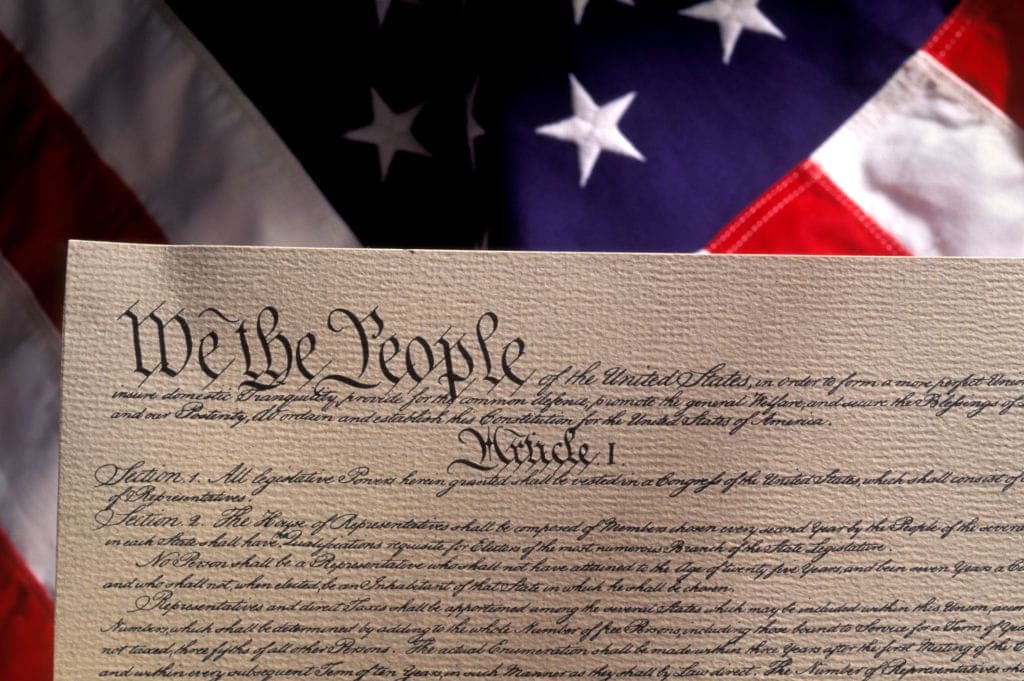
“We the People of the United States, in Order to form a more perfect Union, establish Justice, insure domestic Tranquility, provide for the common defence, promote the general Welfare, and secure the Blessings of Liberty to ourselves and our Posterity, do ordain and establish this Constitution for the United States of America.”
These are the words – the Preamble – that opens the Constitution, the document that lays out the structure of our government and establishes what it has the authority to do.
But have you ever wondered where the name United States of America came from – or what this union would be more perfect than? If we dig into the history and what came before, we can get a deeper understanding of these uniquely American words.
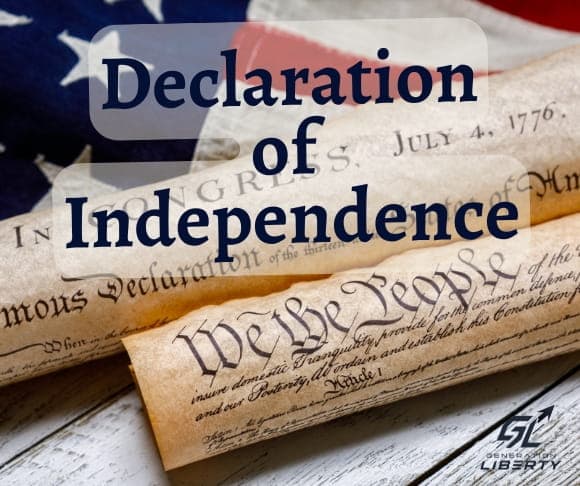
The Founding Fathers of America signed the Declaration of Independence in July 1776. They and the other colonists who fought with them won the right to govern themselves from Great Britain with the signing of the Treaty of Paris in 1783.
But the Constitution didn’t take effect until March 4, 1789. So, how did a young America govern itself in the years between – or even during the Revolutionary War itself?
That’s where the “other constitution” comes in. The first governing document was called the Articles of Confederation.
Articles of Confederation – The First United States
While the Second Continental Congress was working on the Declaration of Independence, it was also writing up the first rules to govern the new country these men intended to create. Work began on the Articles of Confederation in June of 1776, and the document was adopted on Nov. 15, 1777, after debate and revision.
They took effect March 1, 1781, when Maryland became the last state to ratify them.
This document united the 13 now independent states into a “perpetual Union,” defined in Article III as a “firm league of friendship.” And Article I declared: “The Stile of this confederacy shall be, ‘The United States of America.’” That’s why the Constitution refers to the United States without officially naming it; it had already been named.
But under the Articles of Confederation, each state retained its “sovereignty, freedom and independence, and every Power, Jurisdiction and right, which is not by this confederation expressly delegated to the United States, in Congress assembled.”
Speaking of Congress, there was just one chamber, and each state got a single vote, regardless of how many delegates it sent to Congress.
There was no executive branch, which means no president. There was no federal court system or Supreme Court. Congress was left to handle matters of diplomacy and war, relations with Native Americans, and to request – but not require – taxes from the states. And major decisions required nine of the thirteen states to agree.
It was exactly what the Founding Fathers wanted: a small, limited, and weak federal government to bind the states in cooperation but otherwise leave the power of governing to the states and to the people of said states.
Unfortunately, it didn’t really work.
A More Perfect Union
Within just a few years of the end of the Revolutionary War, many of the Founders – chief among them George Washington and James Madison – feared the young country was already on the brink of collapse. Congress couldn’t enforce taxation or even military regulation. So, of course, states resisted paying or providing troops.
The central government didn’t have any real power to settle disputes between the states. And there were a lot of them – over which states owned what territory, who should pay war pensions, what taxes should be collected, and how to regulate trade.
In May 1787, the Constitutional Convention met in Philadelphia to revise the Articles of Confederation. They hoped to fix the problems so the young United States might survive. But by mid-June, they realized they couldn’t fix the Articles. Instead, they decided to scrap them entirely and wrote the Constitution.
After three long months of debate, the new Constitution was signed, which remains in effect today.
As stated in the Preamble, the goal wasn’t to have a stronger government to rule the people, but to create a more perfect union that was strong enough to protect that freedom over the long haul. That required some tradeoffs. Yes, the government had to have more power from the states and even the people. But the Founders built it in three separate but cooperative branches that checked each other’s power.
When the signers of the Constitution finally emerged, legend has it a prominent Philadelphian named Elizabeth Powel asked Benjamin Franklin whether we now had a republic or a monarchy. Franklin responded: “A republic, if you can keep it.”
That was more than 237 years ago now, and the US Constitution’s republic – a more perfect union – still stands today.
4 Questions
The story, in brief
What were the Articles of Confederation in the United States?
The Articles of Confederation were the first governing document of the United States. They united the 13 independent states into a perpetual Union, described as a firm league of friendship, and declared the name The United States of America.
Why did the Founders replace the Articles of Confederation?
Many Founders believed the country was close to collapse because the central government was too weak. Congress could not enforce taxation or military regulation, could not really settle disputes between states, and major decisions required nine of the thirteen states to agree.
How was the government under the Articles of Confederation organized?
Under the Articles of Confederation, each state kept its sovereignty, freedom, and independence except for powers expressly delegated to the United States in Congress assembled. There was one chamber of Congress with one vote per state, no executive branch, and no federal court system or Supreme Court.
What happened at the Constitutional Convention of 1787?
The Constitutional Convention met in Philadelphia in May 1787 to revise the Articles of Confederation. By mid-June, the delegates decided the Articles could not be fixed, so they scrapped them and wrote the Constitution, which was signed after three months of debate and remains in effect today.