

★ In this story 03
If there’s one thing we can count on in space, it’s that things are always changing. When astronomer Clyde Tombaugh discovered Pluto in 1930, it became the ninth planet in our solar system, a title it held for decades. But in 2006, the International Astronomical Union (IAU) changed Pluto’s classification to that of a dwarf planet, which is similar to a regular planet, except it shares its path with lots of space rocks and other celestial objects.
Pluto’s reclassification changed what we thought we knew about our solar system for nearly 80 years – and now scientists may have discovered a brand new planet that could shake up our understanding of space once again.
A Phoenix Planet
In a new study published in Nature Astronomy, researchers explained that the possible new planet, nicknamed a “phoenix” planet, could provide the first evidence that planets can form from the remains of dead stars.
“A phoenix is reborn from the ashes of its predecessor, and this planet is formed from the ashes of the star,” said astronomer Jamie Williams from the University of Warwick in Coventry, England.
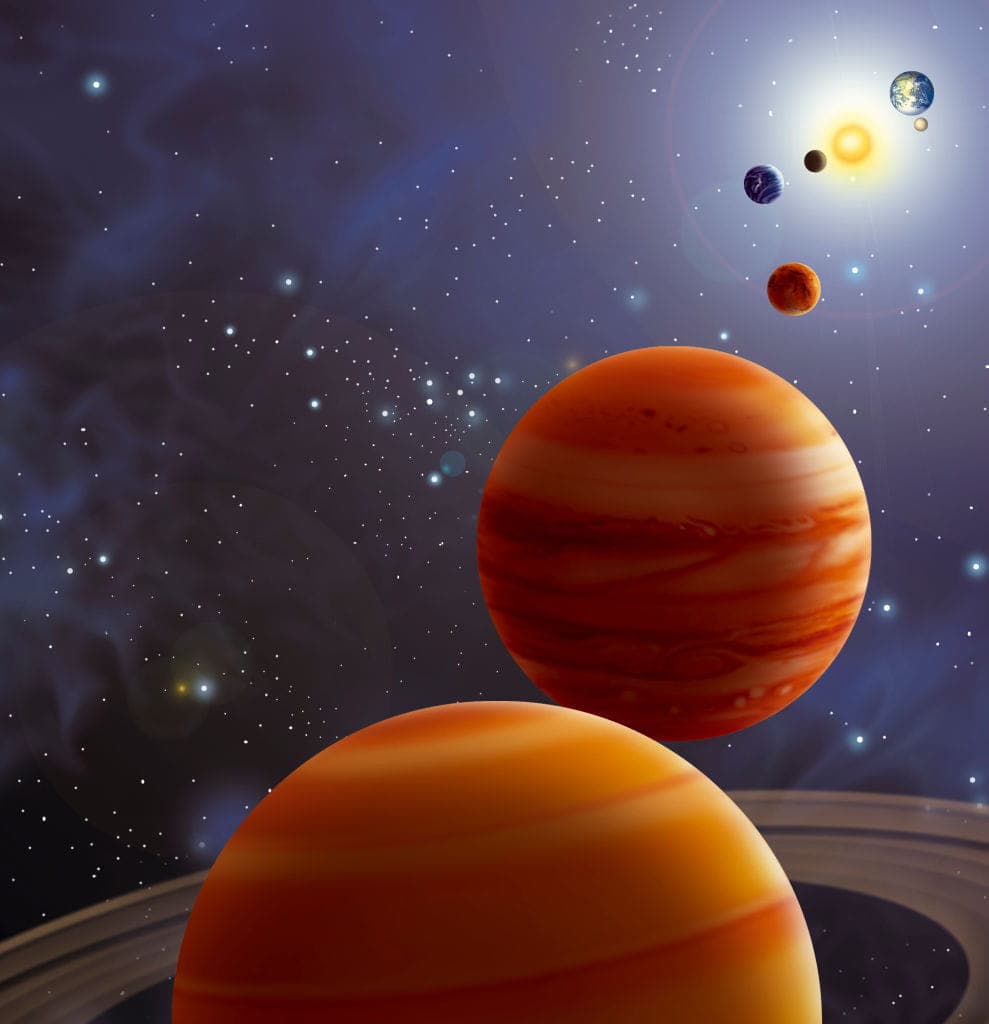
The possible planet is believed to be a gas giant orbiting a white dwarf star about 270 light-years from Earth. If you could drive a car through space at 60 miles per hour, it would take around 3 billion years to travel that far. Scientists were able to see evidence of the phoenix planet’s origins using NASA’s Hubble Space Telescope and other tools.
"This planetary material is very rich in an element called niobium," said Jamie Williams, the lead author of the study. "It's the first time that this element is found in a white dwarf, and this implies that the planetary material is made from the ashes of the star as it died."
Our Solar System
Unlike the possible phoenix planet, the planets of our solar system were formed from a massive cloud of gas and dust, according to the National Aeronautics and Space Administration (NASA).
“There are clouds of gas and dust all around our galaxy. Sometimes these clouds can slowly turn into stars and planets when enough material is available and clumps together, forming massive collections of ice and rock,” NASA explained in its learning resources.
Scientists believe our solar system was formed 4.6 billion years ago, beginning with Jupiter and Saturn. If the phoenix planet is confirmed, it could show scientists that planets can form in more ways than they once thought.
Why This Matters
From Christopher Columbus sailing across uncharted oceans in a wooden ship to Lewis and Clark braving America’s vast wilderness to reach the Pacific Ocean, humanity has always had a desire to explore the unknown. Space really is the final frontier, and there’s still so much we don’t know about the universe beyond our own planet. Neil Armstrong, the first man to walk on the moon, once said: “Mystery creates wonder and wonder is the basis of man's desire to understand.” Every new discovery brings scientists one step closer to unlocking the mysteries of the universe.
4 Questions
The story, in brief
What is the possible phoenix planet scientists say they found?
Researchers said the possible new world is a gas giant orbiting a white dwarf star about 270 light-years from Earth. They nicknamed it a phoenix planet because it may have formed from the remains, or ashes, of a dead star.
How did scientists find evidence for the phoenix planet?
Scientists used NASA's Hubble Space Telescope and other tools to study material linked to the possible planet. They found that the planetary material is very rich in niobium, which the researchers said is the first time that element has been found in a white dwarf.
Why could the phoenix planet change what scientists know about planets?
The study said the possible planet could provide the first evidence that planets can form from the remains of dead stars. If it is confirmed, it could show scientists that planets can form in more ways than they once thought, beyond how the planets in our solar system formed.
How did the planets in our solar system form differently from the phoenix planet?
According to NASA, the planets in our solar system formed from a massive cloud of gas and dust. Scientists believe the solar system began forming 4.6 billion years ago, starting with Jupiter and Saturn, unlike the possible phoenix planet that may have formed from a dead star's remains.