

★ In this story 03
On January 26, the White House announced there would be no more liquified natural gas (LNG) exports to Asia and Europe. Has President Joe Biden accelerated his war on fossil fuels? Evidently, it’s to prevent climate change.
Biden Halts Natural Gas Exports
The Department of Energy will perform a comprehensive evaluation during the pause and update the guidance to authorize liquified natural gas shipments. Officials plan to determine the environmental and economic effects of LNG exports, an initiative that will take months to complete. The administration will then start accepting feedback from the public.
America’s allies should not be concerned, however, because there will be exemptions and exceptions for immediate national security emergencies and unanticipated events, noted Energy Secretary Jennifer Granholm.
“During this period, we will take a hard look at the impacts of LNG exports on energy costs, America’s energy security, and our environment. This pause on new LNG approvals sees the climate crisis for what it is: the existential threat of our time,” President Biden said in a statement.
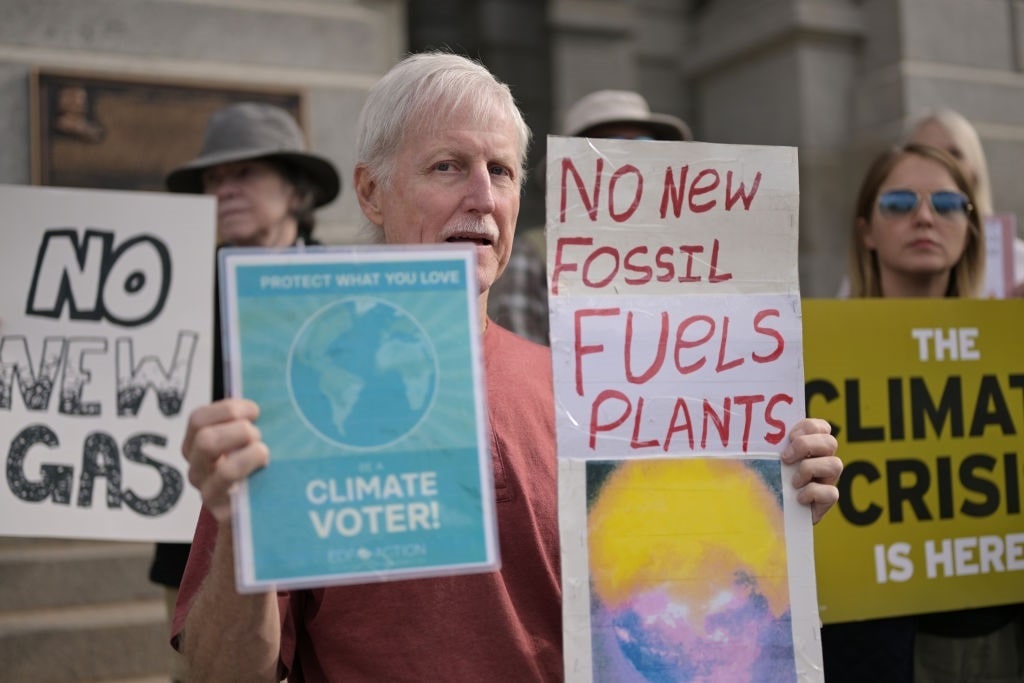
Climate change activists celebrated the move, calling it a bold step to confronting global warming. For the past year, there has been a barrage of demands from environmental groups that the administration rein in natural gas. Ben Jealous, head of the Sierra Club, stated that this move “continues this administration’s historic efforts to meet the global commitment to phase out fossil fuels and confront the climate crisis head on.”
However, various US industries cautioned that these measures could raise the risk of higher fuel prices, threaten energy stability and reliability, and harm employment. American Petroleum Institute (API) CEO Mike Sommers described the announcement as “a win for Russia and a loss for American allies, U.S. jobs, and global climate promise.” He added: “There is no review needed to understand the clear benefits of U.S. LNG for stabilizing global energy markets, supporting thousands of American jobs and reducing emissions around the world by transitioning countries toward cleaner fuels.”
War on Fossil Fuels
Secretary Granholm appeared on several media outlets after the announcement. This included a stop on CNBC, where she was asked if this was about President Biden’s 2020 campaign promise to put fossil fuels out of business. Her response? “I did not hear him say that. I think the president recognizes, as we all do, that there needs to be a managed transition that fossil fuels are not going away in the immediate.”
Throughout the previous presidential campaign, Biden repeatedly told reporters and voters that he would put the fossil industry out of business. “I guarantee you we’re going to end fossil fuel,” he said at an event. When asked at another meeting with voters if he wanted to ban fracking and halt pipeline infrastructure, he emphatically said, “Yes!” In his final debate with then-President Donald Trump, Biden dropped a bombshell on the energy industry: “I would transition away from the oil industry, yes. The oil industry pollutes significantly. It has to be replaced by renewable energy over time. Over time.”
What About Prices?
The good news is that if LNG exports came to a screeching halt, it could lead to a short-term drop in prices. In late 2022, export facility Freeport was knocked offline due to a devastating fire. Because US natural gas production has been around 100 billion cubic feet per day, more of this supply was kept home rather than shipped overseas. It ignited a sharp selloff in natural gas prices that had been trading in the $8 to $10 range and are now slightly above $2 per million British thermal units (Btu). So, placing an artificial cap on demand would suppress price growth.
The bad news is this would threaten the country’s energy dominance and lead to job losses because there would be fewer natural gas projects and export terminals at a time when China is expanding its own LNG base. Additionally, output might slow due to depressed prices and consumption. The US recently experienced the third-largest drawdown of domestic inventories of natural gas in history. This did not launch a substantial rally but rather a slight drop in prices because stockpiles are still above the five-year historical average. However, households would be at a considerable disadvantage if production volumes slide and domestic demand surges on record-breaking cold nights or hot days.
Test Your Knowledge – Take the Quiz!
Try a quiz based on this article
On January 26, 2024, The Biden administration announced that there would be no LNG (liquid natural gas) exports to Asia and _______.
Show the answer
Europe.
Exports were suspended to prevent ________.
Show the answer
Climate Change.
The __________ was tasked with determining the environmental and economic effects of exporting LNG.
Show the answer
Department of Energy.
In a statement, __________ called the climate crisis “the existential threat of our time.”
Show the answer
President Joe Biden.
The continuing goal for climate change activists is to phase out fossil fuels.
Show the answer
True.
The downsides to the suspension include higher fuel prices and ________.
Show the answer
Employment losses.
The CEO of the American Petroleum Institute disagreed with Biden’s export suspension and called it _________.
Show the answer
"A win for Russia".
President Biden has often stated that he plans to end fossil fuels
Show the answer
True.
In 2022, when the export facility Freeport was shut down, they were producing approximately ____________ of natural gas per day.
Show the answer
100 billion cubic feet.
The overstock left from Freeports shutdown decreased the cost from between $8 and $10 per million Btu to __________.
Show the answer
$2.