
The US government plans to borrow about $1.3 trillion over the next six months. That’s a lot of money for a country enjoying record tax collections! With annual $2 trillion budget deficits becoming the norm, borrowing has become a lifeline for the United States. But if governments tax citizens and enjoy access to a printing press, why do politicians have to borrow money anyway?
Taxpayer, Can You Spare Some Money?
The US bond market is the largest in the world. Global investors love American debt, as long as they are compensated adequately, also known as yields or interest rates.
In other words, because investors want to buy Uncle Sam’s IOUs, the government issues debt and pays investors 3%, 4%, 5%, or even 6% (soon!) in return.
Imagine John and Susan Smith, who take out a 30-year loan to purchase a home, a long-term investment, so they don’t have to come up with all that money at one time. Over the years, governments used borrowing primarily to finance major investments, whether big infrastructure projects (bridges, highways, and roads) or healthcare and education.
This also has been a tactic to prevent massive disruption to tax revenues. If the government used more tax collections to cover the cost of a new highway instead of relying partly on bonds, US officials would need to make cuts or delay these investments altogether.
Known as the “golden rule of public finance,” the idea is that governments should not force the current generation to solely pay for tomorrow’s projects with today’s taxes. Instead, politicians and bureaucrats would allow the next generation to shoulder some of the costs.
Additionally, governments typically use borrowing to stimulate an economy during downturns. Rather than raising taxes to fund efforts to boost economic conditions, politicians sell bonds, raise money, and use it to give the economy a jolt.
Borrowing money can also support fiscal responsibility aims or pay for emergencies.

First, rather than tap an emergency reserve, officials can receive an injection of cash almost immediately and pay back investors later. The rainy-day fund is protected.
Second, it might seem counterintuitive, but borrowing can support a nation’s credit rating and lower interest rates because it shows the government can repay lenders.
The Rule, Not the Exception
Bonds have become the rule, not the exception, for modern public finance.
The federal government depends on borrowing to keep its lights on and doors open. Despite collecting $5 trillion in taxes, the United States spends more than $7 trillion. By law, it needs $2 trillion to fill the hole through borrowing.
It is worth noting that these deficits are occurring during an economic expansion. What happens if a recession – back-to-back quarters of negative gross domestic product (GDP) growth – takes place, or another public health crisis unfolds?
Meanwhile, as the years go by and deficits accumulate, the shortfall gets added to the debt stockpile, and it keeps growing. Today, the national debt is $40 trillion, and it could reach $41 trillion by Christmas 2026.
Put simply, the US government needs to borrow to keep everything running smoothly, from paying civil employees their paychecks to funding certain benefits.
Monetizing the Debt
Central banks, including the Federal Reserve, have played a key role in the government’s ability to borrow money.
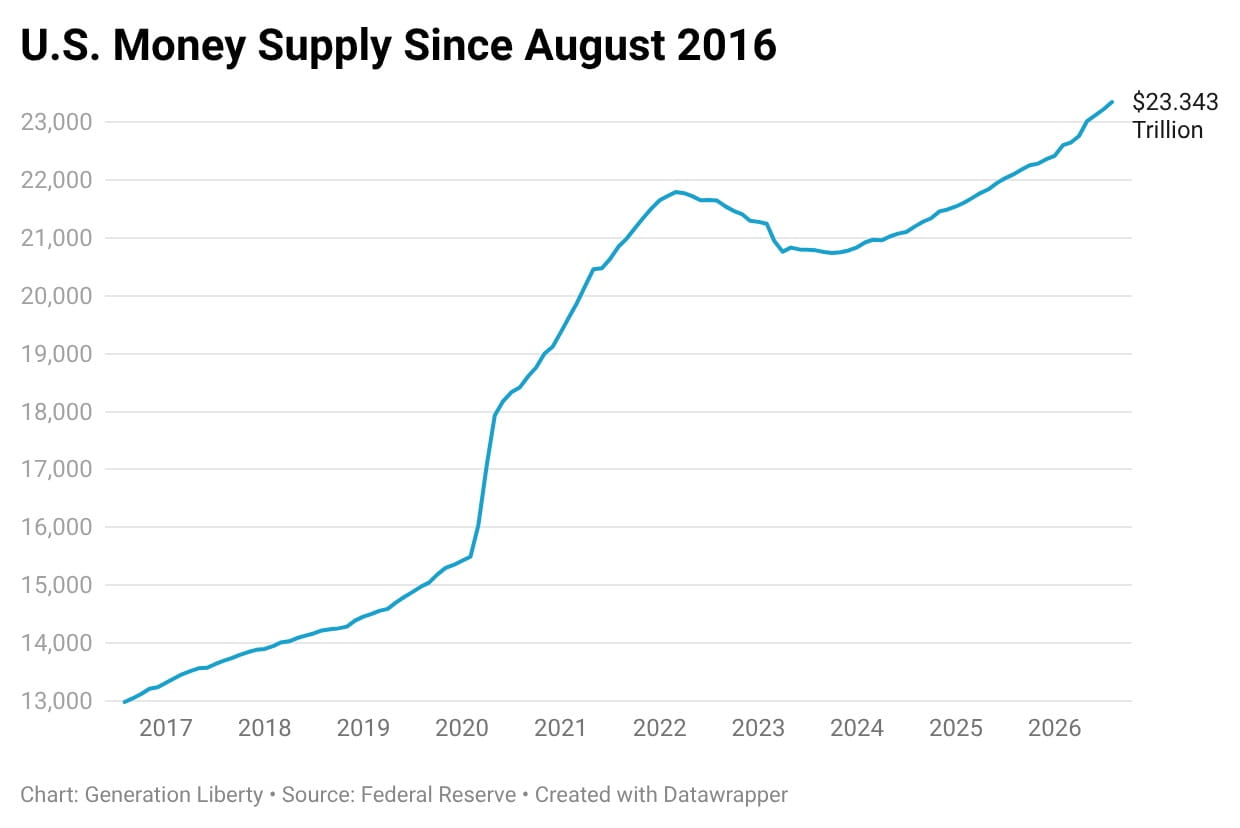
So, the Fed will buy government bonds by printing money and adding it to the financial system. This increases the amount of money traveling through the economy, which can create inflation if too much currency chases too few goods.
The latest example happened right after the coronavirus pandemic. The government borrowed trillions of dollars to cushion the economic blows of the virus, and the Fed injected more than $6 trillion into the economy, creating a climate in which inflation remains above the central bank’s 2% target.
4 Questions
The story, in brief
Why does the US government need to borrow money?
The federal government spends more than it collects in taxes, so it borrows to cover the gap. Despite taking in about $5 trillion in taxes, the United States spends more than $7 trillion, and by law it needs roughly $2 trillion in borrowing to fill the hole. Borrowing also helps keep government operations and benefits running smoothly.
How does the US government borrow money from investors?
The government issues bonds, which are essentially IOUs, to investors in the bond market. In return for lending money, investors receive yields, or interest rates, such as 3%, 4%, 5%, or even 6%. Global investors buy American debt as long as they are compensated adequately.
What are the main reasons governments borrow money?
Governments borrow to finance major long-term investments like bridges, highways, healthcare, and education without forcing current taxpayers to cover the entire cost at once. They also borrow to stimulate the economy during downturns, respond to emergencies quickly, and protect emergency reserves. Borrowing can also support a nation’s credit rating and help lower interest rates.
How can Federal Reserve bond buying affect inflation?
The Federal Reserve can buy government bonds by printing money and adding it to the financial system. That increases the amount of money moving through the economy, which can create inflation if too much currency chases too few goods. After the coronavirus pandemic, the government borrowed trillions and the Fed injected more than $6 trillion, helping create inflation that remains above the central bank’s 2% target.