
★ In this story 03
Across the pond in England, one of Britain’s most celebrated playwrights, William Shakespeare, once wrote in his historical play Henry VI, Part 2: “Ignorance is the curse of God; knowledge the wing wherewith we fly to heaven.” In other words, ignorance is a terrible affliction, while knowledge and understanding are gifts that allow people to grow and become better versions of themselves. More than four centuries later, Shakespeare’s wisdom is finding new relevance in England’s education system, where officials are changing how schools prepare teenagers for the working world.
Education in England
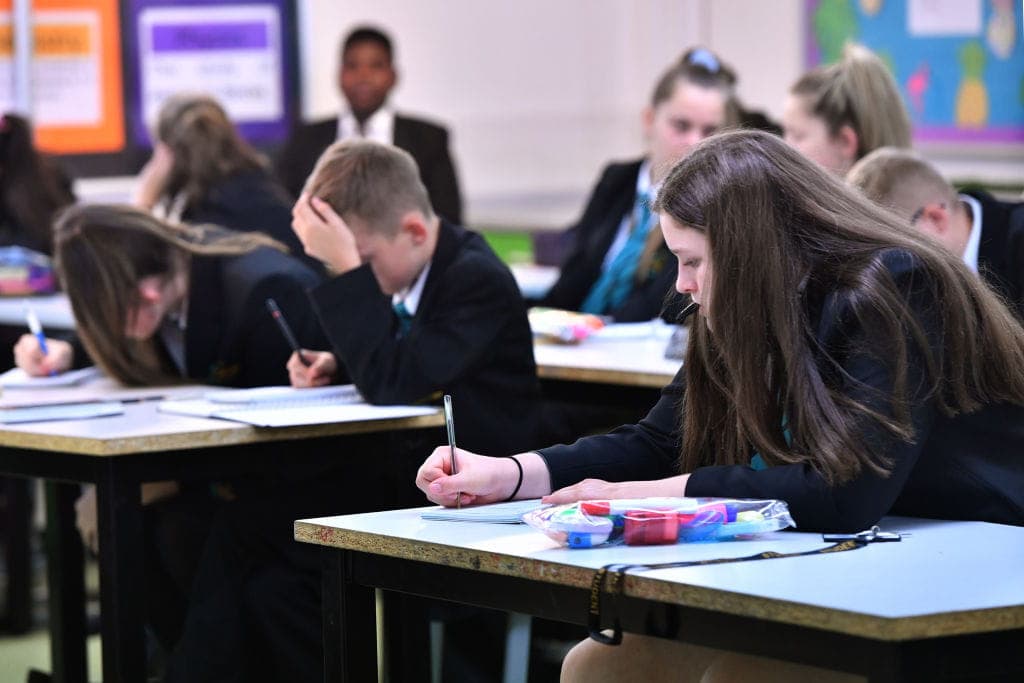
As part of an overhaul of the education system in England, students across the country will have the opportunity to work on new vocational qualifications and gain hands-on work experience to better prepare them for the workforce, according to the UK government’s Department for Education.
The move fulfills a promise that the prime minister made shortly after taking office to place greater emphasis on career-focused education. Under the plan, students will have a new option alongside conventional General Certificate of Secondary Education (GCSE) courses, with the vocational qualifications eventually taking the place of Technical Awards. GCSEs, taken by roughly the equivalent of American high school freshmen and sophomores, are exams that students in England take to demonstrate their understanding of a variety of subjects, including math, science, history, and foreign languages.
Officials are encouraging businesses to offer 200,000 additional work-experience opportunities for students ages 14 to 16, allowing them to explore careers in fields such as accounting, digital media, and construction. Students will also have opportunities to gain firsthand experience working in government offices.
Prime Minister Support
Recognizing that not every student thrives in a traditional classroom setting, Prime Minister Andy Burnham emphasized the importance of giving young people more opportunities to discover their strengths and pursue their own paths to success:
“We’ve all heard someone say ‘school wasn’t really for me’ because they were not given the chance to study vocational courses as well as traditional subjects. That one-size-fits-all approach isn’t working, so we’re building an education system that values both academic and technical paths. I want to give all young people across Britain the hope that their future will be brighter — whether it starts at university or not.”
The new qualifications will be established nationwide based on advice from subject-matter experts, with the Office of Qualifications and Examinations Regulation (Ofqual) monitoring the change “to ensure full parity with traditional GCSEs.”
The vocational options are scheduled to be available in limited subjects — likely including finance, digital tech, child development, construction, and creative media production — as soon as September 2029.
Why This Matters
With the rise of artificial intelligence (AI), the world is changing rapidly, and quality preparation for life after school may be more important now than ever before. Students entering the workforce will likely find themselves competing not only against other human candidates but, in the not-too-distant future, also against robots and other AI-powered technologies. This might be a good opportunity for students in England – and around the world – to embrace opportunities that could give them an edge over the competition.
4 Questions
The story, in brief
What is changing in England's education system for teenagers?
Students in England will be able to take new vocational qualifications and gain hands-on work experience as part of an education overhaul. The new option will sit alongside traditional GCSE courses and is expected to eventually replace Technical Awards. The change is meant to prepare teenagers more directly for the workforce.
Why is Prime Minister Andy Burnham backing vocational courses in England?
Andy Burnham said not every student thrives in a traditional classroom and that many young people were never given the chance to study vocational courses alongside traditional subjects. He argued that a one-size-fits-all approach is not working. He said the goal is an education system that values both academic and technical paths.
How will England students get work experience under the new plan?
Officials are encouraging businesses to provide 200,000 more work-experience opportunities for students ages 14 to 16. These placements would let students explore careers in areas such as accounting, digital media, and construction. Students will also have chances to gain firsthand experience working in government offices.
When will England's new vocational qualifications start, and in what subjects?
The vocational options are scheduled to be available in limited subjects as soon as September 2029. Likely subjects include finance, digital tech, child development, construction, and creative media production. The qualifications will be established nationwide with advice from subject-matter experts, and Ofqual will monitor the change to ensure parity with traditional GCSEs.