
★ In this story 02
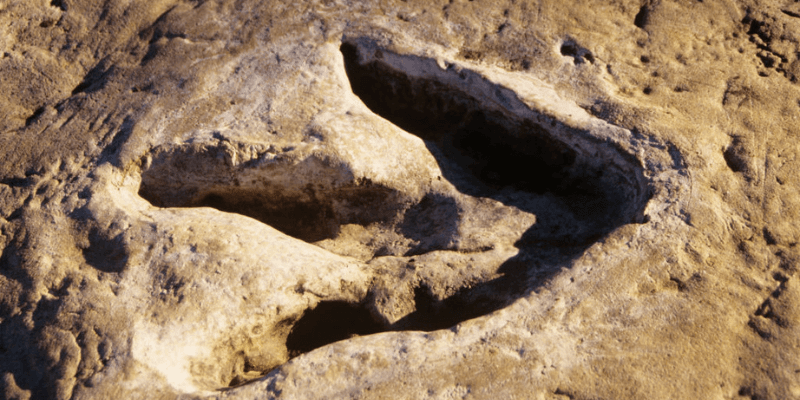
A new species of dinosaur has been discovered. A team of scientists found the fossils in 72-million-year-old deposits of marine soil near Mukawa Town in northern Japan. The dinosaur was first nicknamed Mukawaryu, after the site where it was found. Scientists later gave it the official name Kamuysaurus japonicas, which translates into “Japanese dragon god.”
Japanese Dragon God
In 2013, researchers from Hobetsu Museum and Hokkaido University Museum found part of the dinosaur’s tail, and eventually uncovered a nearly complete skeleton with hundreds of bones. The specimen is thought to belong to a duck-billed, herbivorous (plant-eating) species. According to a study, the skeleton belonged to an adult nine years old or older. The creature measured eight meters (over 26 feet) in length and weighed either four or 5.3 tons when it was alive, depending on whether it was walking on two or four feet. It also had tilted spines along its back, a short jaw bone, and it may have had a thin, flat crest on its head. The location of the skeleton suggests it lived in coastal areas, a rare habitat for large dinosaurs.
“The fact a new dinosaur was discovered in Japan means there was once an independent world of dinosaurs in Japan or in East Asia, and an independent evolution process,” said team leader Yoshitsugu Kobayashi. “It is rare that a dinosaur (skeleton) in this state of preservation is discovered in East Asia. As Japan has lots of marine deposits, more dinosaurs are expected to be unearthed in the future.”
The species belongs to the Edmontosaurini group, which was spread throughout Asia and North America – the regions were connected at the time by present-day Alaska, allowing travel between the continents. Later on, Kamuysaurus japonicas must have been isolated to Asia, where it diverged from its ancestors.
Amazing Discoveries!
It may seem rare for new species of dinosaurs to be discovered, it actually happens more often than you might think. In August, South African researchers realized a skull that had been kept in a museum collection for three decades in fact belonged to an entirely new species. It is thought to have been an omnivorous species that stood on two feet, was about ten feet tall and had a long, slender neck. It has since been named Ngwevu intloko, which means Grey Skull in the South African language of isiXhosa.
It seems that amazing new insights into the past are being discovered all the time!

Laura Valkovic
Socio-political Correspondent at LibertyNation.com and Generation Liberty. Eclectic in interests and political philosophies, Laura came to journalism after years of working as an educator. Her background as a historian has informed her research and writing styles, as well as her approach to current affairs. Born and raised in Australia, Laura currently resides in Great Britain.