

★ In this story 03
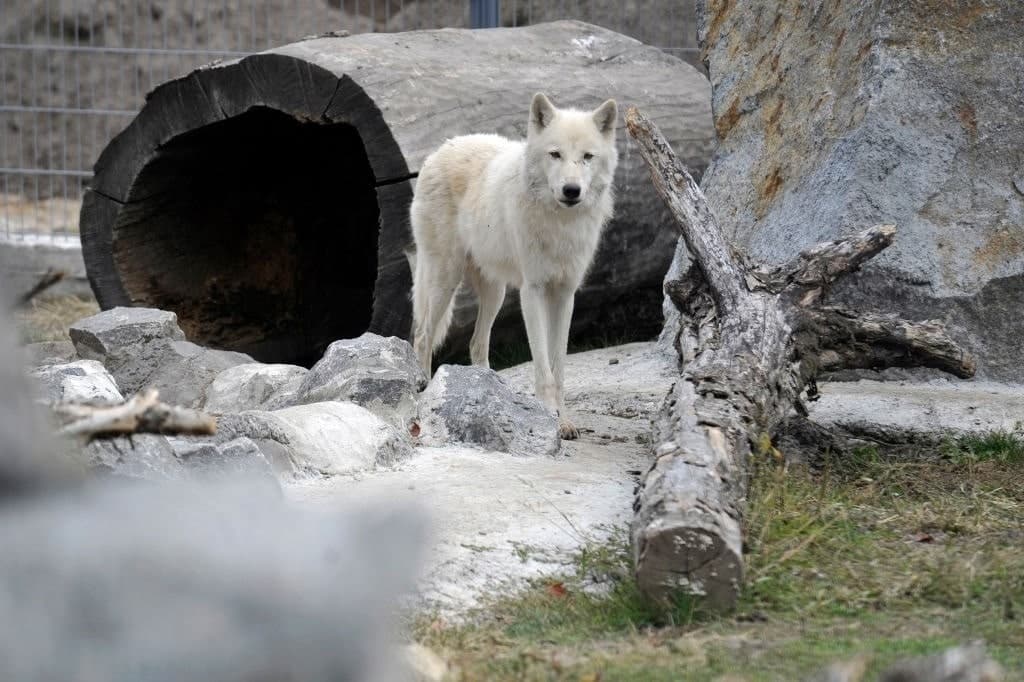
In April 1986, the world’s greatest nuclear disaster began in Chernobyl when the local nuclear power plant’s No. 4 reactor exploded. There are only two nuclear disasters that reached this level of destruction, the second being in Fukushima, Japan, in 2011. The explosion led to costly damages, radioactive areas, and thousands of injured and deceased victims. The effect of the radiation continues to cause those exposed to become ill. Strangely, the wolves in that part of what is now northern Ukraine seem to be unphased by the poisonous air and are even building immunity against it.
Radioactive Wolves
After the area, over 1,040 square miles, was deemed unsafe due to the radiation in the air, approximately 200,000 people were evacuated. The animals, however, were left behind. Many scientists felt that they would eventually die off from radioactive poisoning, but that did not happen. Nearly 40 years later, the local wildlife has thrived and reclaimed the land as their own.
The wolfpacks seem to flourish more now than before they were forced to breathe carcinogenic fumes. They are doing so well that it piqued the interest of scientists who study the area. They wonder if the wolves were somehow developing cancer-resistant genes or if they are immune to the effects of radiation poisoning.
Attempting to determine how the wolves were surviving, evolutionary biologist and ecotoxicologist at Princeton University Cara Love began studying the animals’ behavior. She, among others, tested blood samples from the wolves, placed GPS collars on them to track how much time they spent in the toxic areas, and used radiation dosimeters to measure the level of radiation in the areas where the wolves spent time.
What Love Learned
Love and her team found that the wolves were exposed to 11.28 milligrams of radiation daily. That is more than six times the level that humans can safely handle. They also learned that the animals are equipped with cancer-resistant genomes. Their immune systems look similar to that of a human with cancer undergoing radiation therapy. The wolves’ genetic makeup prevented them from becoming ill and gave valuable insight to scientists and doctors who are working to find ways to fight cancer in humans.
It is likely that the wolves that were present in 1986 when the nuclear explosion occurred began mutating to fight against the harmful effects of radiation. Over time, the mutation was passed down to future generations of wolves. Today, the wolves are born with cancer-fighting immune systems and are living their best lives in the Ukrainian wilderness.
What About the Other Animals?
Though some animals in Chernobyl’s Exclusion Zone (CZE) are negatively affected by the radioactive air, the human-free vicinity is flourishing with happy and healthy wildlife. Wolves, bison, lynx, deer, and other creatures are living prosperous lives without the interruption of human activity.
Test Your Knowledge – Take the Quiz
Try a quiz based on this article
In 1986, Chernobyl experienced one of the world’s most outstanding:
Show the answer
Nuclear disasters.
The only other event like this took place in 2011 in:
Show the answer
Fukushima, Japan.
Chernobyl is located in:
Show the answer
Ukraine.
Over 1,040 square miles around the danger zone were evacuated, including around ______ people.
Show the answer
200,000.
The animals in the area have become incredibly ill from the radioactive exposure.
Show the answer
False.
Scientists hope to learn more about _______ from the unaffected wolves and other wildlife.
Show the answer
Cancer treatment.
The wolves seem to be flourishing more now than ever before.
Show the answer
True.
The wolves are exposed to 11.28 milligrams of radiation daily. That is _____ more than a human can handle.
Show the answer
Six times.
Researchers believe that wolves are now born with mutated immune systems that are:
Show the answer
Cancer resistant.
Other animals are not faring as well as the wolves and are dying off due to the radiation.
Show the answer
False.

Kirsten Brooker
Culture Correspondent for Liberty Nation and Generation Liberty. Kirsten loves to write about culture from the point of view of an everyday American who lives deep in the heart of the Midwest. She is the mother of two adorable girls, likes classic rock, and humbly wears the crown of a former Homecoming Queen with grace and style.