
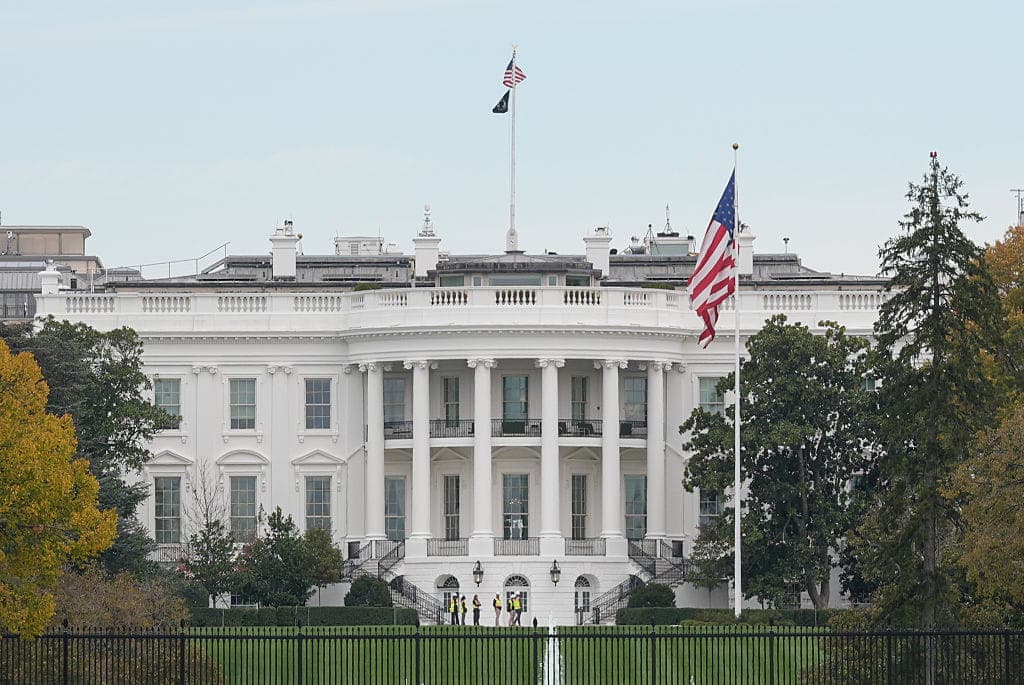
Now that the midterm elections are behind us, the high-stakes battle to see who enters the White House in 2029 starts gaining speed. Major questions loom over 2028, and both sides will have to figure out which direction they want their parties to go as new stars rise and old ones fade.
Potential candidates have been laying the groundwork over the last month or so. Several prominent Democrats who might be angling for a 2028 bid toured the country while campaigning for candidates, essentially running shadow primaries to flash some smiles, shake hands, and get their names out there. Across the aisle, things have been a little quieter on the 2028 front. Voters, however, have been sharing their thoughts all year on who they’d like to see as their party’s nominee, and their views are mixed.
The Democrats Eyeing the White House
So far, many Democratic voters seem uncertain about who should get the nod in 2028. In the latest Siena poll for The New York Times, 45% of Democratic voters, responding to an open-ended question, didn’t know who the nominee should be. Former Vice President Kamala Harris, widely seen as the favorite (for now), received only 12% support, followed by California Gov. Gavin Newsom with 9%.
Neither has announced whether they will run, but both were busy traveling the country leading up to Election Day. Harris campaigned for Democratic candidates in several states, including Nevada, Mississippi, Michigan, and Wisconsin. On Nov. 1, she even appeared in California with Newsom, and both made trips separately to New Hampshire and other early primary states.
Former Transportation Secretary Pete Buttigieg and Rep. Alexandria Ocasio-Cortez (AOC) of New York ranked third and fourth in the Siena poll, respectively, with 7% and 6% support. They’ve also been barnstorming the country and campaigning for Democratic candidates. Whispers of AOC possibly running for the US Senate have spread across the political realm, too, intensifying the discourse around her future.
Georgia Sen. Jon Ossoff, who was just re-elected to a second term, received 4% support in the Siena poll for the 2028 Democratic primaries. Ossoff, however, has said he has “zero interest in running for president” and claimed he would serve his full six-year Senate term. Of course, that doesn’t mean he can’t change his mind. Barack Obama made a similar statement in 2006, and he still ran for and won the presidency, cutting his Senate term short.
Other potential 2028 Democratic contenders are Pennsylvania Gov. Josh Shapiro, Kentucky Gov. Andy Beshear, and Arizona Sen. Mark Kelly. Though no major Democratic candidate has announced a presidential bid yet, several potential candidates have publicly deliberated the possibility. One open question is whether a democratic socialist will enter the field, which would likely cause consternation within the party’s establishment.
The Future of the GOP
The buzz around the Republican Party’s 2028 field has mostly focused on Vice President JD Vance, a former Ohio senator who was once a critic of Donald Trump. Ever since they won the 2024 election together, Vance has been widely seen as the most likely successor to the president’s political movement. Vance leads the field so far, but there’s some debate over whether he or Secretary of State Marco Rubio would be a better fit for the Oval Office.
Both top the 2028 field in most GOP primary polls. An October Echelon Insights survey showed Vance with 38% support, Rubio with 20%, Florida Gov. Ron DeSantis with 12%, and Donald Trump Jr. with 7%. Depending on how the next two years unfold for the Republicans, especially now that they have lost both chambers of Congress, the door could open for other potential candidates, such as Texas Sen. Ted Cruz.
Cruz would no doubt like another shot. On Texas Lt. Gov. Dan Patrick’s podcast, Cruz, who finished second in the 2016 Republican presidential primaries to Trump, said, “It’s no secret that I want to be president.” But when Patrick asked whether he planned to run again, Cruz only said, “Time will tell.”
Trump has yet to endorse anyone for 2028 but has repeatedly called a potential presidential ticket featuring Vance and Rubio a “dream team” and an unstoppable combination, a sentiment with which numerous Republican voters would likely agree. Notably, Rubio has said he wouldn’t challenge Vance in 2028. However, the secretary’s stock has risen since 2024. After the chief diplomat made a quick appearance on stage at a rally in Salina, KS, Trump joked that Rubio “is getting too popular.”
Why This Matters
Going forward after the midterms, all the political upheaval of Nov. 3 will determine the future of the nation. The Democratic Party old guard seems determined to keep the party on the same path, while its rising far-left faction wants to lean more toward socialist policies. Infighting could disrupt and fracture the party in the next two years, perhaps pushing independent voters rightward, a situation the GOP would likely capitalize on heading into 2028.
Much of what happens with the GOP, though, will likely depend on how Republicans handle having Democratic majorities in the Senate and the House. While the Republican Party remains more united than its opposition, a chunk of GOP voters apparently want the party to shift away from Trump, according to the Times/Siena poll.
We won’t know until Sunday, Jan. 3, 2027, when the new Congress is sworn in, how the last two years of Trump’s administration will unfold.
4 Questions
The story, in brief
Who leads early Democratic polling for the 2028 presidential nomination?
Former Vice President Kamala Harris leads the early Democratic field in the latest Siena poll for The New York Times, but support is limited. She received 12% support, while 45% of Democratic voters said they did not know who the nominee should be. California Gov. Gavin Newsom followed Harris with 9%.
Which Democrats are traveling early primary states ahead of 2028?
Kamala Harris and Gavin Newsom both traveled the country before Election Day and made separate trips to New Hampshire and other early primary states. Pete Buttigieg and Rep. Alexandria Ocasio-Cortez also campaigned around the country for Democratic candidates. None of those figures has announced a presidential bid yet.
Who is leading early Republican polling for the 2028 presidential nomination?
Vice President JD Vance leads the early Republican field and is widely seen as the most likely successor to Donald Trump's political movement. An October Echelon Insights survey showed Vance at 38%, ahead of Secretary of State Marco Rubio at 20%, Florida Gov. Ron DeSantis at 12%, and Donald Trump Jr. at 7%.
What could shape the 2028 race after the midterm elections?
The next two years could reshape both parties before the 2028 campaign fully takes form. Democrats face tensions between the party old guard and a rising far-left faction, while Republicans must navigate Democratic majorities in both chambers of Congress. The direction of Trump's final two years in office may become clearer when the new Congress is sworn in on Jan. 3, 2027.

Corey Smith
Corey is a recovering bartender, and a freelance editor. He specializes in memoirs and novels but has a smorgasbord of experience in non-fiction works. In a former life, he ghostwrote several romance novels, which he denies. A cabin far away from sirens and motorcycles would be his ideal home. Instead, he lives near a construction site in New Hampshire.