
★ In this story 03
Have you ever heard people say that the rich should pay their fair share in taxes? How about the idea that, if we all just shared everything equally, everyone would have plenty? It sounds noble on paper. But when philosophers and politicians took that simple idea to the extreme and tried to build governments based on such sharing, things didn’t turn out quite so friendly. Enter socialism and communism.
Socialism and Communism – A Confusing Cluster of Misnomers
In everyday conversation, people often use the two terms interchangeably – but that’s not quite accurate. It gets more confusing when governments pretty much describe themselves as whatever they want, regardless of their actual form.
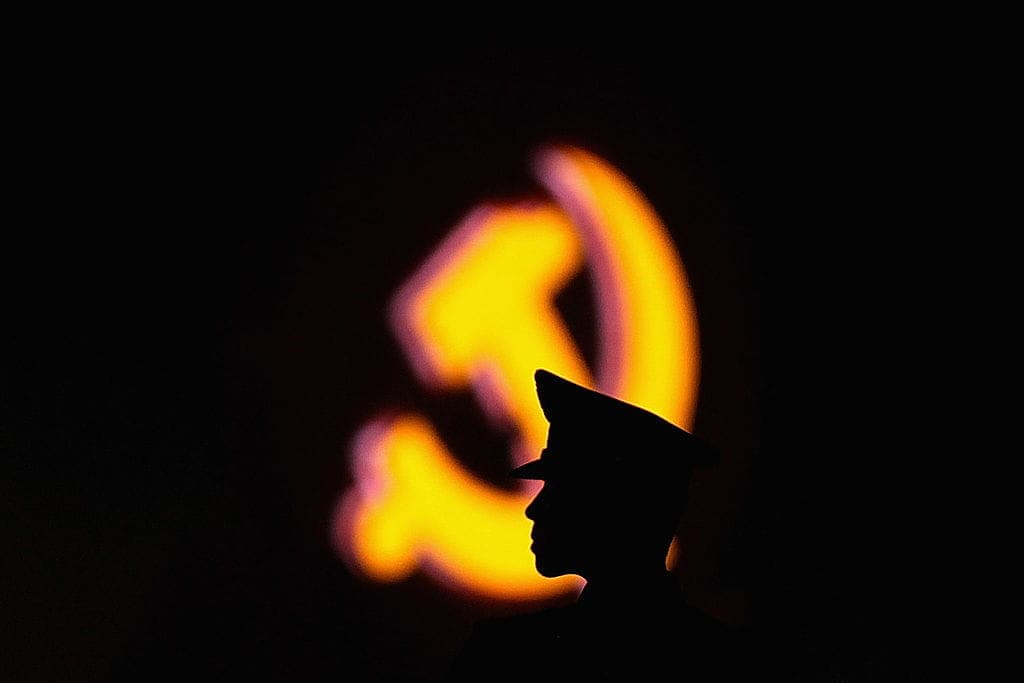
No modern country has ever functioned as an example of pure socialism. Five nations today, however, are officially ruled by communist parties – and none of them use the term communist in their national names. The People’s Republic of China has been governed by the Chinese Communist Party since 1949, and technically it’s a republic, but only in the sense that it doesn’t have a monarch. The government tightly controls the media, the military, and public expression, which makes it in no way a citizen-led democratic republic like the United States or even the democracies of Europe.
The Republic of Cuba has also been governed by communists since 1959, and the Socialist Republic of Vietnam has been under communist control since 1986. The Lao People’s Democratic Republic has been communist since 1975. Each of these examples so far features tight government control of business and trade. Not one is democratic in any real way; they are ruled by an authoritarian single party that controls almost all aspects of life.
Then there’s the Democratic People’s Republic of Korea, or North Korea. It’s not even a republic – never mind democracy – since it is ruled by an all-powerful dictator. The Kim family has dominated with absolute control for three generations.
Karl Marx and the Fatal Flaw
So what are socialism and communism? To borrow the philosophy of Karl Marx, who wrote the Communist Manifesto with Friedrich Engels in 1848, socialism is just a step on the path to communism. It’s the journey, while communism is the destination.
The concept is based on the economic phrase “means of production.” That term describes everything required to make goods and services: the land, the factories, farms, machinery, tools, and raw materials. In contrast, in capitalist free markets, private citizens own the means of production. A good example is saving up money to buy a lawnmower and then mowing lawns for cash. You own the machine and the business. You set your prices, and you keep the profits (generally speaking – don’t forget taxes).
In socialism, the means of production are owned and managed collectively – and in the real world outside of philosophy, that almost always means the government. The idea here is that certain industries – such as health care, energy, and transportation – shouldn’t be privately run for private profits. Instead, the government should coordinate the means of production based on every individual’s contributions and needs. Socialism does allow for personal property, so you can still own your clothes, your phone, and maybe even your home – assuming you can afford it. You still get a wage for your work, though the massive taxes required to fund the government programs often result in poverty.
In communism, however, everything is owned collectively. The guiding slogan, coined by Marx, is: “From each according to his ability, to each according to his needs.” You don’t draw a paycheck, and you don’t have private property. You contribute what you can, and society hands you what it thinks you need.
Marx believed that human society evolved in stages. Feudalism led to capitalism, which would inevitably be taken over by a socialist “dictatorship of the proletariat” (proletariat means working class). Eventually, the state itself would wither away, leaving a peaceful, classless, stateless communist paradise.
But the state never withered away.
How It Turned Out
As it turns out, every single time in history that this progression occurred, the “transitional” state didn’t dissolve; it consolidated control and became an all-powerful totalitarian regime. And the reason is quite clear: If a government has the power to control every calorie of food, every job assignment, and every roof over every head, it also has the power to silence anyone who disagrees with it. Once someone has absolute power and privilege, it’s too comfortable to let them slip away.
True socialism has never existed – not fully. Even the most socialist nations that aren’t communist-controlled authoritarian regimes embrace some degree of free-market capitalism in order to survive. Indeed, even some communist regimes have recently introduced capitalist reforms to fight poverty. As for “real” communism, as envisioned by Marx and his followers, that has never occurred. Never has a government taken complete control of the means of production, then taken everything else as well, and then handed it all over to the people and dissolved itself.
4 Questions
The story, in brief
What is the difference between socialism and communism?
Using Karl Marx's framework, socialism is described as a step on the path to communism. In socialism, the means of production are owned and managed collectively, usually by the government, while people may still keep some personal property and earn wages. In communism, everything is owned collectively, private property disappears, and society gives people what it decides they need.
Which countries are ruled by communist parties today?
Five nations are identified as officially ruled by communist parties today. They are China, Cuba, Vietnam, Laos, and North Korea. The text says these governments are not democratic in any real way and are marked by authoritarian control over business, trade, media, military, and public expression.
Why did Karl Marx think socialism would lead to communism?
Marx believed human society moved through stages, from feudalism to capitalism and then to a socialist dictatorship of the proletariat. He expected that process to end in a peaceful, classless, stateless communist society. In his view, socialism was the transition and communism was the final destination.
What happened when countries tried the shift from socialism to communism?
The text says that every time this progression happened in history, the transitional state did not fade away. Instead, it consolidated power and became an all-powerful totalitarian regime. Rather than dissolving and handing control to the people, the government kept control over food, jobs, housing, and dissent.