
★ In this story 03
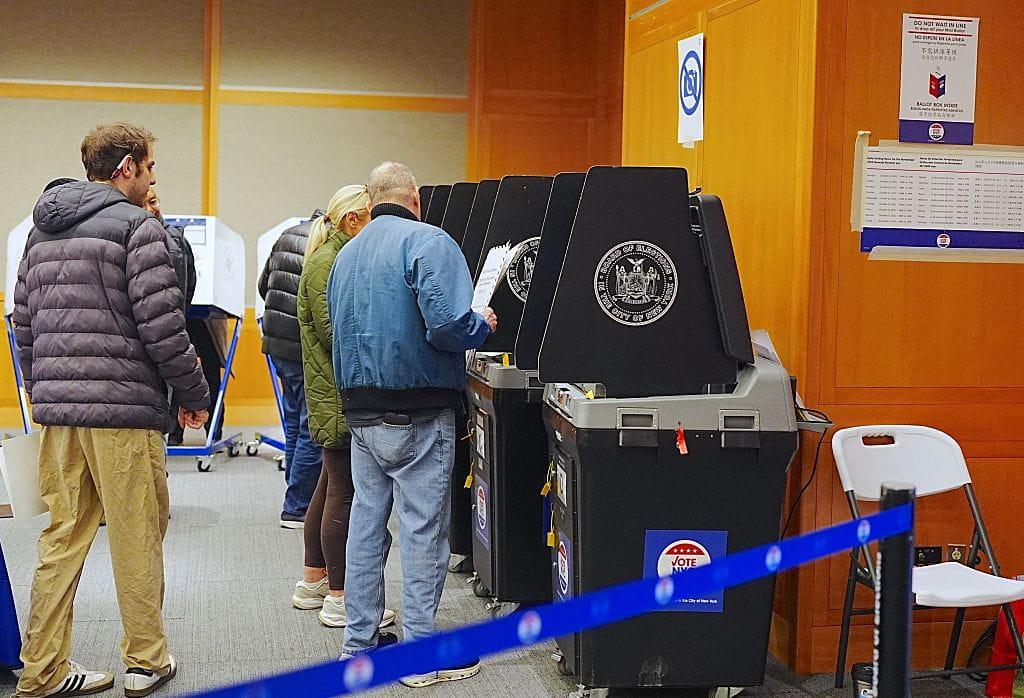
Politicians spend millions of dollars trying to convince Americans to vote for them, but sometimes voters seem more interested in voting against whoever is already in charge. The Nov. 3 midterm elections delivered that message to Republicans, as Democrats captured both chambers of Congress. While the results have shaken Washington, American history shows that voters have been handing out political pink slips for generations.
When Americans Turn Against Washington
The recent midterm elections were not the first time voters had flipped Congress, and it will not be the last. In the early days of the party, Republicans dominated politics since Abraham Lincoln’s election in 1860, but in the 1874 midterms, during President Ulysses S. Grant’s second term, things changed.
The Civil War had ended less than a decade before, but then the Panic of 1873 hit, causing bank failures, railroad bankruptcies, business closures, and widespread unemployment. The Crédit Mobilier scandal, involving members of Congress and railroad interests, only made things worse. Lawmakers also angered voters by approving a retroactive pay increase in 1873, which critics called the “Salary Grab.” And then there was Reconstruction, the time after the Civil War ended when Americans worked to rebuild the divided country. Republicans fought to protect the rights of formerly enslaved people but were faced with violent resistance from southern white supremacist groups.
The results were dramatic. Democrats gained 94 House seats, increasing their representation to 182 seats compared to just 103 for Republicans and eight for other parties. While Republicans kept the Senate, Democrats took control of the House for the first time since before the Civil War.
Fast forward to President Grover Cleveland and the financial crisis known as the Panic of 1893. Twenty years after the Democratic wave, things were about to change again. According to HISTORY, unemployment had reached around 19%, leaving about 2.5 million men without work. Farmers suffered while their crops brought in low prices. In 1894, workers at the Pullman Palace Car Company went on strike after wage cuts, and Cleveland sent in troops to intervene.
Republicans gained 130 House seats while Democrats lost 125. So, the new House had 254 Republicans, 93 Democrats, and ten members of other parties. The Republicans also gained the Senate.
This historical pattern is pretty consistent. According to a Brookings Institution analysis published in August 2025, the president’s party lost House seats in 20 of the 22 midterm elections between 1938 and 2022.
Elections That Changed the Political Landscape
The 1994 midterm elections saw another change; how a national campaign message could transform congressional races. Democrats had controlled the House since 1954, but then President Bill Clinton entered the scene. As did Georgia Rep. Newt Gingrich, who, with the backing of Republicans, developed a campaign strategy they presented to voters with a unified national agenda. The Contract with America, as it was called, outlined ten legislative proposals they promised to bring to a House vote within their first 100 days if they won control.
The Result: Republicans gained 54 House seats and nine Senate seats, taking control of both chambers for the first time in 40 years. Gingrich became the Speaker of the House. However, Clinton vetoed several Republican proposals, and disagreements over federal spending led to two government shutdowns.
The 2006 midterm elections saw change again. Republican President George W. Bush had won reelection in 2004, but the public was becoming dissatisfied. There was the Iraq War where American casualties were mounting, and many people didn’t approve of the government’s response to Hurricane Katrina in New Orleans in 2005. California Democrat Nancy Pelosi became Speaker of the House in 2007, becoming the first woman to hold that position.
The Results: Democrats gained 31 Republican-held House seats and increased their share of the Senate by six, taking control of both chambers.
When the President and Congress Go to War
The 1946 midterms were a disaster for President Harry Truman’s Democratic Party. At that time, Republicans gained 55 seats in the House and 12 in the Senate, taking control of both chambers for the first time since the early 1930s. He faced a Congress determined to challenge his agenda, such as when the Republicans passed the Taft-Hartley Act in 1947 which, among other things, allowed states to adopt right-to-work laws. Truman vetoed it, but Congress overrode it. Even a president’s veto can’t stop legislation if enough lawmakers support it.
By 1948, his approval rating had fallen to around 36%. That year, he called Congress back into a special session, which became known as the “Turnip Day Session,” since it was on July 26, which is a date associated with a Missouri saying about planting turnips. Republicans accomplished little of what Truman demanded, but that actually helped his political argument. He traveled the country campaigning against what he called the “do-nothing Congress,” portraying Republican lawmakers as obstacles to progress. He defeated his opponent, Thomas Dewey, and Democrats regained control of Congress.
Midterm elections reflect a mixture of national conditions, local candidates, voter turnout, presidential approval, and changing political priorities. American voters have a habit of upsetting the status quo, and throughout history, the reasons for the change are usually the same: the economy and conflicts. If people can’t pay their bills and struggle to put food on the table, they are going to blame the current administration and vote for a change. The same holds true if there is a war or conflict. The 2026 midterms are just the latest reminder that voters have little patience when they believe Washington has lost touch with their everyday struggles. Politicians may change, parties may trade places, but the message from voters remains the same: If those in power aren't getting the job done, Americans will find someone else who promises to.
4 Questions
The story, in brief
Why did Democrats win control of Congress in the Nov. 3 midterm elections?
Voters appeared more interested in voting against whoever was already in charge, and the elections delivered that message to Republicans. Democrats captured both chambers of Congress, continuing a long historical pattern in which Americans punish the party in power when they believe Washington has lost touch with everyday struggles.
What historical pattern do midterm elections usually follow for the president's party?
The pattern is that the president's party often loses ground in midterm elections. A Brookings Institution analysis published in August 2025 found that the president's party lost House seats in 20 of the 22 midterm elections between 1938 and 2022.
How did the 1994 Contract with America change control of Congress?
Republicans, led by Georgia Rep. Newt Gingrich, campaigned on a unified national agenda called the Contract with America. It promised ten legislative proposals would be brought to a House vote within the first 100 days if Republicans won control, and the party gained 54 House seats and nine Senate seats, taking both chambers.
What usually happens next after voters turn against the party in power?
Power in Washington can shift quickly, but divided government often brings confrontation between a president and Congress. History in the article shows veto fights, government shutdowns, and even later political comebacks, as when Harry Truman ran against a Republican Congress and Democrats regained control in 1948.