
★ In this story 03
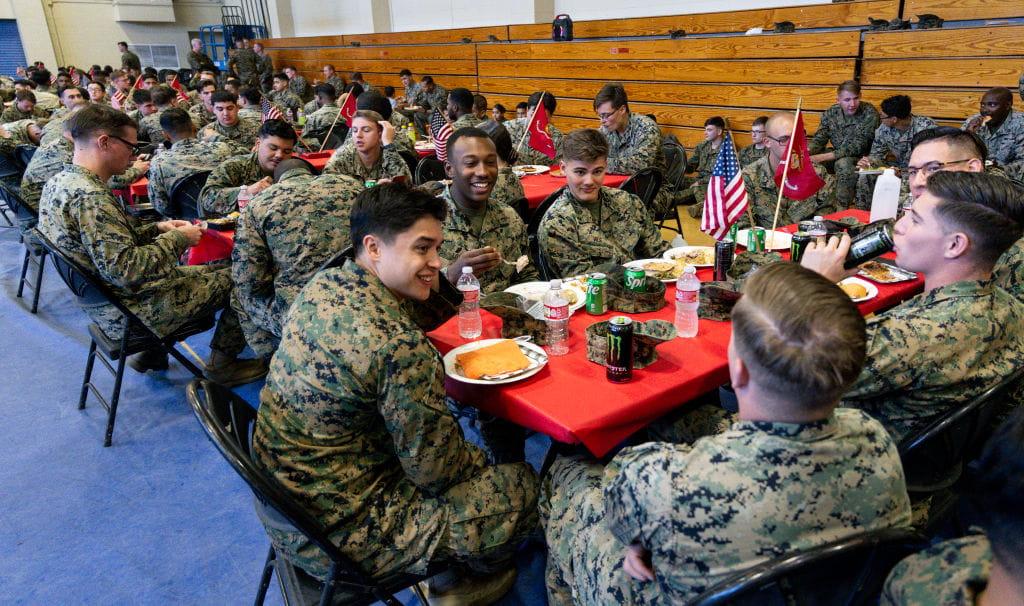
Holidays away from family and friends are always tough times for military service members. Deployed troops in war zones have done their best to make such times as enjoyable as possible. Thanksgiving is a holiday when wartime deployment celebrations have been notable. Since Oct. 3, 1863, when President Abraham Lincoln issued a proclamation designating the last Thursday of November 1863 as a National Day of Thanksgiving, troops in the field have tried to honor the day in some way. Lincoln, in a later 1864 proclamation, established it as a national holiday on the last Thursday in November.
As an interesting side note, according to History.com, during the Great Depression, President Franklin D. Roosevelt, “hoping to boost the economy by providing shoppers and merchants a few extra days to conduct business between the Thanksgiving and Christmas holidays, moved Thanksgiving to November’s second-to-last Thursday.”
A Civil War Thanksgiving for Union Forces
The year after Lincoln’s proclamation establishing Thanksgiving as a national holiday, private efforts were undertaken to bring the holiday to Union troops and sailors. It was called the Soldiers’ and Sailors’ Thanksgiving and was organized by the nautical chart publisher George W. Blunt, with Theodore Roosevelt Sr. (the future president’s father) as treasurer. As the National Review explained, “A committee was set up to organize the effort, their goal being that on Thanksgiving Day there would be no soldier or sailor in the eastern theater ‘who does not receive tangible evidence that those for whom he is periling his life remember him.’”
Originally conceived as a campaign to provide turkeys, pies, and other foodstuffs to Union forces besieging Richmond, VA, the result was turkey dinners for nearly the entire Union Army and Sailors on the battle lines and in encampments behind them. Again, from National Review, “The Soldiers’ and Sailors’ Thanksgiving united the country in the spirit of giving, gratitude, and patriotism. It showed the troops at the front that the country was behind them and solidified Thanksgiving as a national observance.”
On the day before Thanksgiving Day, Nov. 24, 1943, one of the most significant sea battles of the war in the Pacific took place. According to the Heritage Foundation’s historical commentary, “Thanksgiving 1943: American Sailors Pull Off a Miraculous Naval Victory,” Admiral William “Bull” Halsey sent a message ordering Captain Arleigh “31-knot” Burke to take the necessary action to engage and stop Japanese reinforcements. It would be the last major surface engagement of the Solomon Islands campaign.
When Burke got the orders, he and his squadron of five destroyers (called the “Little Beavers”—USS Charles Ausburne, Claxton, Dyson, Converse, and Spence) were taking on fuel at New Georgia Island. Furthermore, the squadron had been in almost continuous battle for months and needed maintenance. Because of a blocked boiler tube, the USS Spence could only make 31 knots, not its normal 34 knots; therefore, Halsey referred to the nickname, “’THIRTY-ONE KNOT BURKE’ GET ATHWART THE BUKA-RABAUL EVACUATION LINE … IF ENEMY CONTACTED YOU KNOW WHAT TO DO.”
Burke’s Flotilla Set Out to Intercept the Japanese
Nonetheless, the flotilla got underway quickly and set out to intercept the Japanese. As the Heritage Foundation explained, “They found what they were looking for not long after midnight on Thanksgiving Day, Nov. 25, 1943, when they encountered two of the Japanese destroyers, the Makinami and the Onami.” It was a moonless night, perfect for a radar-directed torpedo attack. Burke and his squadron sank the Onami and Makinami, followed by the Yugiri. One other Japanese destroyer was damaged, and one escaped. No Americans were killed, nor were any US ships seriously damaged.
Captain Burke observed the battle conditions were “an ideal night for a nice, quiet torpedo attack.” He arranged Thanksgiving festivities when the squadron returned to Purvis Bay.
To bolster the morale of the deployed soldiers, on Thanksgiving 2003, President George W. Bush arrived for an unannounced visit at the Baghdad International Airport to spend the occasion with roughly 600 troops of the 1st Armored Division, 2nd Armored Cavalry Regiment, and 82nd Airborne Division. As the Associated Press reported:
“L. Paul Bremer, the U.S. administrator in Iraq, added his own drama to the surprise … Bremer opened the program by telling the soldiers it was time to read the president’s Thanksgiving proclamation. He asked if there was ‘anybody back there more senior than us’ to read the president’s words. Bush emerged from behind a curtain as cheering soldiers climbed on chairs and tables to yell their approval. The president shed a few tears.”
President Bush Looking for a Warm Meal
The president offered that he “was just looking for a warm meal somewhere,” and he thanked them for inviting him to dinner. According to the George Bush White House Archives, he added that he could not “think of a finer group of folks to have Thanksgiving dinner with than you all … we thank you for your service, we’re proud of you, and America stands solidly behind you.” President Bush then began serving sweet potatoes and corn. He spent two and a half hours with the troops.
These were but three of the many examples of how the US military has celebrated Thanksgiving. Getting a Thanksgiving Day turkey with all the fixings to the troops can be a challenge, especially in combat conditions; however, when successful, it is a much-appreciated touch of home.
~
The views expressed are those of the author and not of any other affiliate.
4 Questions
The story, in brief
When did Thanksgiving become a U.S. holiday for troops in the field?
President Abraham Lincoln issued a proclamation on Oct. 3, 1863, designating the last Thursday of November 1863 as a National Day of Thanksgiving. In a later 1864 proclamation, he established Thanksgiving as a national holiday on the last Thursday in November. Since then, troops in the field have tried to honor the day in some way.
How did Union forces celebrate Thanksgiving during the Civil War?
Private efforts organized the Soldiers' and Sailors' Thanksgiving to bring the holiday to Union troops and sailors. Led by George W. Blunt, with Theodore Roosevelt Sr. as treasurer, the campaign aimed to ensure soldiers and sailors received tangible evidence that people at home remembered them. The result was turkey dinners for nearly the entire Union Army and sailors on battle lines and in nearby encampments.
What happened in Captain Arleigh Burke's Thanksgiving 1943 naval battle?
After Admiral William Halsey ordered Captain Arleigh Burke to intercept Japanese reinforcements, Burke's five-destroyer squadron went out from New Georgia Island despite fatigue and maintenance needs. Shortly after midnight on Thanksgiving Day, Nov. 25, 1943, they found Japanese destroyers and launched a radar-directed torpedo attack. Burke's squadron sank the Onami, Makinami, and then the Yugiri, damaged another destroyer, and suffered no American deaths or serious ship damage.
Why did President George W. Bush visit troops in Iraq on Thanksgiving 2003?
President George W. Bush made an unannounced Thanksgiving visit to Baghdad International Airport to spend the holiday with roughly 600 deployed troops. He thanked them for their service, told them America stood solidly behind them, and then began serving sweet potatoes and corn. He spent two and a half hours with members of the 1st Armored Division, 2nd Armored Cavalry Regiment, and 82nd Airborne Division.
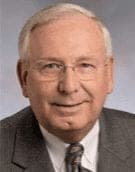
Dave Patterson
National Security Correspondent at LibertyNation.Com and Generation Liberty, Dave is a retired U.S. Air Force Pilot with over 180 combat missions in Vietnam. He is the former Principal Deputy Under Secretary of Defense, Comptroller and has served in executive positions in the private sector aerospace and defense industry. Dave’s articles have appeared in The Federalist and DefenseOne.com.