
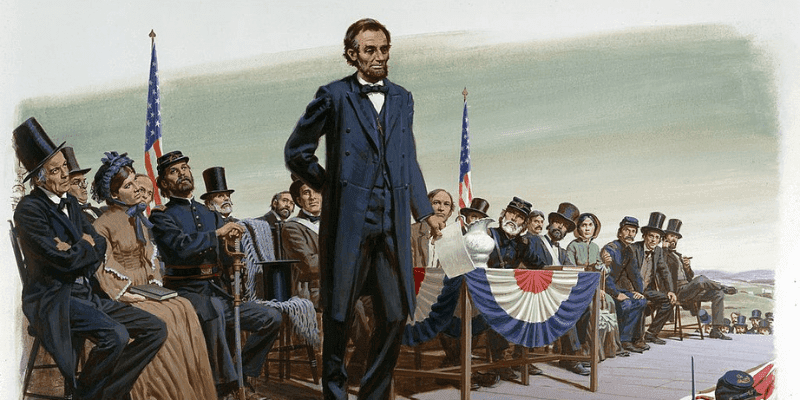
Perhaps one of the most famous of all presidents is the 16th, Abraham Lincoln (1809–1865). Known by such nicknames as Honest Abe, the Great Emancipator, and the Rail-Splitter, Lincoln’s presidency helped reshape the nation.
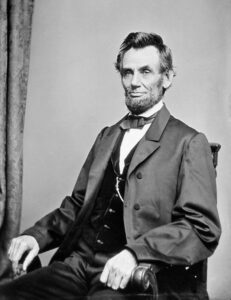
Lincoln was born on Feb. 12, 1809 in a three-bedroom cabin near Hodgenville, Kentucky. For a while, Lincoln co-owned a general store before selling his portion and enlisting as a militia captain to defend Illinois from the Native American tribal wars. He participated in the Black Hawk War of 1832. Demonstrating the type of presidential character he would have, Lincoln challenged his men to combat after they attempted to shoot a wandering Native American whom they thought was a spy. His men lowered their muskets.
A former Whig, Lincoln joined the new Republican Party in 1849. Stephen A. Douglas sponsored the 1854 Kansas-Nebraska Act, which allowed slavery in some states and was the genesis of Lincoln’s rise to the White House.
Lincoln won the Nov. 6, 1860 election without the support from a single Southern state. Almost immediately afterward, several states seceded from the Union. Although he was against slavery, the true meaning behind what led to the Civil War was Lincoln’s strong belief against secession. During his first inaugural address he appealed to the rebel states saying, “Shall it be peace, or the sword?”
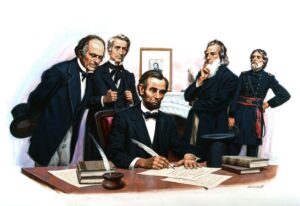
The firing upon Fort Sumter in South Carolina on April 12, 1861 was the beginning of the war. It was a long and bloody fight that took thousands of lives. On Jan. 1, 1863, Lincoln issued the Emancipation Proclamation after the victory at the Battle of Antietam.
On March 4, 1865, Lincoln performed his second inauguration speech after winning reelection to the White House. He had one goal, he said, and that was “lasting peace among ourselves.” He asked all to have “malice towards none” and “charity for all.”
One month later, General Robert E. Lee surrendered his Confederate Army to Ulysses S. Grant at the Appomattox Courthouse, finally ending the war – and slavery.
The Lincoln administration wasn’t just about the Civil War. The first income tax, the Revenue Act of 1862, was established. Also in 1862, the Homestead Act was passed, which offered settlers 160 acres of free land to travel and homestead in the West.
On April 14, 1865, Lincoln attended a performance at Ford’s Theatre in Washington. A Southern sympathizer who thought he would somehow help the lost cause, John Wilkes Booth, assassinated Abraham Lincoln.
Test Your Knowledge – Take the Quiz
Try a quiz based on this article
Arguably one of the most famous, Abraham Lincoln was the ____ president of the United States.
Show the answer
16th.
Lincoln was known by several nicknames, including the Great Emancipator, Honest Abe, and:
Show the answer
The Rail-Splitter.
Lincoln was born on Feb. 12, 1809, in what US state?
Show the answer
Kentucky.
Until he enlisted as a militia captain to defend Illinois from the Native American tribal wars, Lincoln co-owned a(n):
Show the answer
General store.
Before joining the new Republican Party in 1849, Lincoln was part of the:
Show the answer
Whig Party.
Stephen A. Douglas sponsored the 1854 Kansas-Nebraska Act, which allowed slavery in some states.
Show the answer
Slavery.
Lincoln’s strong opposition to secession is what led to the Civil War.
Show the answer
True.
On April 12, 1961, the Civil War began with the firing upon Fort Sumter in:
Show the answer
South Carolina.
After the victory at the Battle of Antietam in 1863, Lincoln issued the:
Show the answer
Emancipation Proclamation.
Lincoln lost his life on April 14, 1865, when he was assassinated at Ford’s Theatre by:
Show the answer
John Wilkes Booth.