
Since private, religious schools started opening up across the nation in the 1800s, there has been an issue with government funding. Even though the separation of church and state had been well established, there have been lawsuits throughout the years.
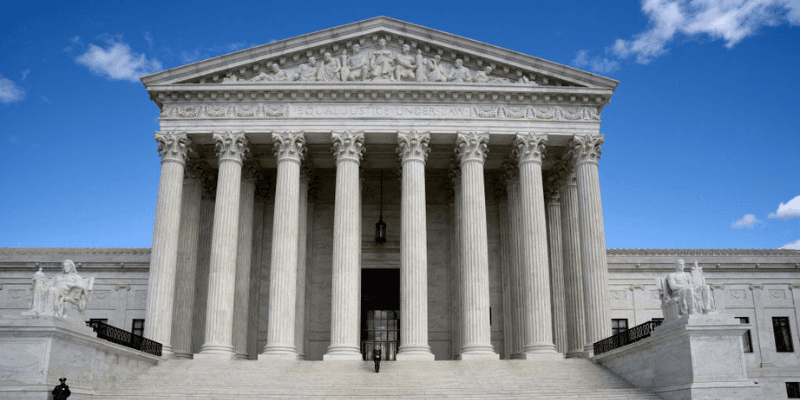
The Supreme Court of the United States issued a ruling on June 30, 2020, for the Espinoza v. Montana case. Three families from Montana sued the state for canceling a program that gave tax credits to donors who gave money to private school scholarships.
The Supreme Court of Montana ruled 5-2 that the entire program was unconstitutional at the state level because it helped fund private, religious schools. The Montana Supreme Court’s decision to scrap the program in its entirety to avoid supporting religious schools was questionable, and the Institute for Justice law firm decided to represent the three families in their lawsuit all the way to the Supreme Court.
Throughout the country, state constitutions have what are known as “Blaine Amendments” in their text. The Blaine Amendment was first proposed in the late 19th century as a U.S. constitutional amendment. This amendment was meant to stop all government funding to schools with religious affiliations but did not have sufficient support at the national level for its implementation.
Many people thought the Blaine Amendment went too far by discriminating against religious education rather than protecting the non-religious. The Supreme Court argued that the Blaine Amendment “barred religious schools from public benefits solely because of the religious character of the schools” in Chief Justice Roberts’ majority opinion in Espinoza v. Montana (2020).
As Justice Roberts explained, states don’t have to fund private schools. But if they do, they can’t refuse to fund the religious ones just because they’re religious. Instead of keeping states from regulating religion, that would actually discriminate against religious schools.
Throughout the country, countless Americans believe that the separation of church and state has allowed for local and state governments to practice religious discrimination unofficially. Espinoza v. Montana was an example of a state’s willingness to abolish a public good altogether to avoid giving power to religious institutions. There are 17 states with scholarship programs similar to Montana’s that prohibit contributions to religious schools as part of the private school scholarships. Many consider these programs to be at risk in the foreseeable future due to the recent decision on Espinoza v. Montana.