
★ In this story 02
The eruption of Mount Vesuvius in AD 79 took the lives of thousands of people and destroyed two cities – Pompeii and Herculaneum. But it also buried and preserved the remains of those cities, leaving a record for scientists and archaeologists to dig up in order to learn about earlier ways of life.
The Mount Vesuvius Eruption – 79 AD
On August 24, AD 79, a volcano that had been dormant for decades, Mount Vesuvius, erupted. The ten-mile cloud of smoke, ash, and pumice rose above southern Italy. The first affected were those in Pompeii, who were subject to the three-inch stones falling like rain from the sky. Some Pompeii residents ran for shelter, hoping to wait out the worst part of the eruption. Others covered their heads with pillows to soften the blow of the large stones coming down on them. Ultimately, the relentlessness of the explosion left them without options.
After a 12-hour-long pumice and stone hailstorm, the volcano unleashed its next level of terror, a cloud of toxic gas in the morning hours of August 25 that suffocated anything that remained alive in the city. Approximately 20,000 people were believed to live in Pompeii at the time. However, some escaped by fleeing when the eruption first began.
Thanks to a strong wind out of the west, the residents of Herculaneum were able to dodge the initial effects of the eruption, but their luck did not last too long. An avalanche of ash and gas tunneled down the side of the volcano that took the lives of those who remained there. If there were any survivors, they were no match for the flood of volcanic mud and rock that then buried the entire city.
Herculaneum was located beneath 60 feet of volcanic remnants. Pompeii was buried between 14 and 17 feet under the rock.
Much of what is known about the Mount Vesuvius eruption is from eyewitness testimonials conveyed by Pliny the Younger. He was staying along the Bay of Naples when the tragedy began. He compiled two letters he sent to a historian named Tacitus explaining what he saw. That documentation has given insight to researchers who study the volcano and the two affected cities.
Excavating Ground Zero
Discovering what is beneath the centuries-old volcanic rock is at the top of the list for many researchers. Many believe the two cities – Pompeii and Herculaneum – were wholly sealed off after the eruption. However, archaeologists have found geological evidence suggesting that might not be the case. Discovering tunnel systems and exposed areas led researchers to believe rescue efforts were deployed following the disaster.
Domenico Fontana, an architect, attempted new construction in the area between 1594 and 1600. He accidentally dug up some old paintings and other artifacts while working. After that, no one tried to research the area for over a century. In the 1700s, several excavations took place, intending to obtain ancient art and other valuables.
Over the years, several people explored the area. In 1780, Francesco la Vega became the director of excavation in Pompeii. His goal was to preserve what was left of the beautiful city. Many artifacts were moved safely to a museum. Unfortunately, the buildings were difficult to protect from treasure seekers and the weather, so much of the city deteriorated.
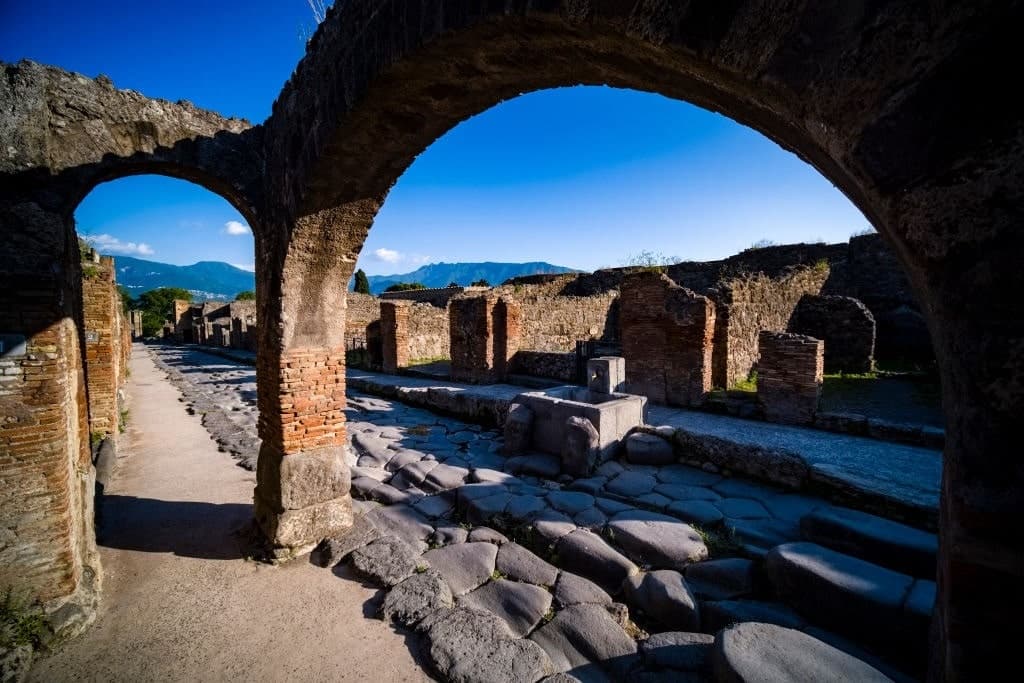
Today, thanks to Giuseppe Fiorelli, superintendent of Pompeii from 1863 to 1875, the site has become more of a tourist attraction, allowing visitors worldwide to see the ancient city and its artifacts.
4 Questions
The story, in brief
What happened when Mount Vesuvius erupted in AD 79?
Mount Vesuvius erupted on August 24, AD 79, after being dormant for decades. The eruption sent a ten-mile cloud of smoke, ash, and pumice above southern Italy, then buried and destroyed Pompeii and Herculaneum. It killed thousands of people, but it also preserved the cities' remains for later study.
How did the Mount Vesuvius eruption kill people in Pompeii and Herculaneum?
In Pompeii, residents first faced falling stones and pumice for 12 hours, and some tried to shelter or protect themselves with pillows. On the morning of August 25, a cloud of toxic gas suffocated anything still alive in the city. In Herculaneum, ash and gas rushed down the volcano, and volcanic mud and rock buried the city.
Why is the AD 79 Mount Vesuvius eruption still important to scientists?
The eruption buried and preserved Pompeii and Herculaneum, leaving a record of earlier ways of life for scientists and archaeologists to study. Much of what is known also comes from eyewitness testimony by Pliny the Younger in two letters to Tacitus. Those accounts have given researchers insight into the volcano and the two cities.
What happened after Pompeii and Herculaneum were buried by Mount Vesuvius?
Researchers later found geological evidence, including tunnel systems and exposed areas, that suggests rescue efforts may have happened after the disaster. Centuries later, Domenico Fontana accidentally uncovered artifacts during construction, and excavations expanded in the 1700s. Giuseppe Fiorelli later helped make Pompeii more of a tourist attraction so visitors could see the ancient city and its artifacts.

Kirsten Brooker
Culture Correspondent for Liberty Nation and Generation Liberty. Kirsten loves to write about culture from the point of view of an everyday American who lives deep in the heart of the Midwest. She is the mother of two adorable girls, likes classic rock, and humbly wears the crown of a former Homecoming Queen with grace and style.