
★ In this story 02
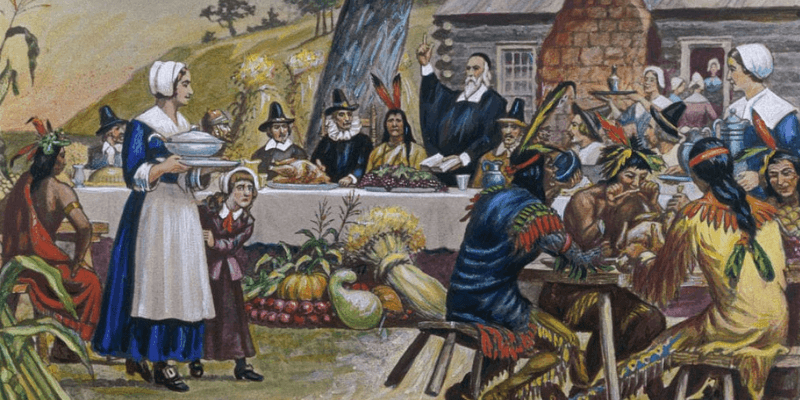
The Pilgrims and Native Americans did not invent Thanksgiving, but they embraced the concept and made it their own. Harvest festivals have been celebrated for thousands of years by many peoples, tribes, and nations in appreciation of the bounty produced by their hard work and stewardship of the land. America has turned the end-of-harvest feast into the holiday of Thanksgiving, marking the story of the colonials of Massachusetts and the Wampanoag people in 1621, who enjoyed peace together for a time.
Early New World settlers were happy simply to survive the weather, wildlife, insects, and poison ivy, so they knew the friendship of the Wampanoags, and sharing the food, was a blessing.
But over the years, that all changed. European settlers overpowered the natives, driving them off their land and spreading new diseases. It didn’t take long for that early friendship to fall apart.
Politicians Impose Gratefulness
Harvest festivals continued up and down the Eastern Seaboard, while colonists dealt with New World matters, especially the American Revolution. That ended with a newly created U.S. Constitution in 1789, when President George Washington gave a proclamation calling November 26 of that year a “Day of Publick Thanksgiving.”
Washington’s idea of Thanksgiving didn’t have much to do with the pilgrims. Rather, he celebrated the start of the United States as a nation. He told the people to show gratitude to God for the U.S. victory in the Revolutionary War, as well as “the great degree of tranquility, union, and plenty, which we have since enjoyed.” He also gave thanks for the new Constitution, “the civil and religious liberty with which we are blessed,” access to knowledge and learning, and “all the great and various favors which he [God] hath been pleased to confer upon us.”
He also asked God to help the U.S. stay true to its founding ideals and to make “our national government a blessing to all the people, by constantly being a Government of wise, just, and constitutional laws.”
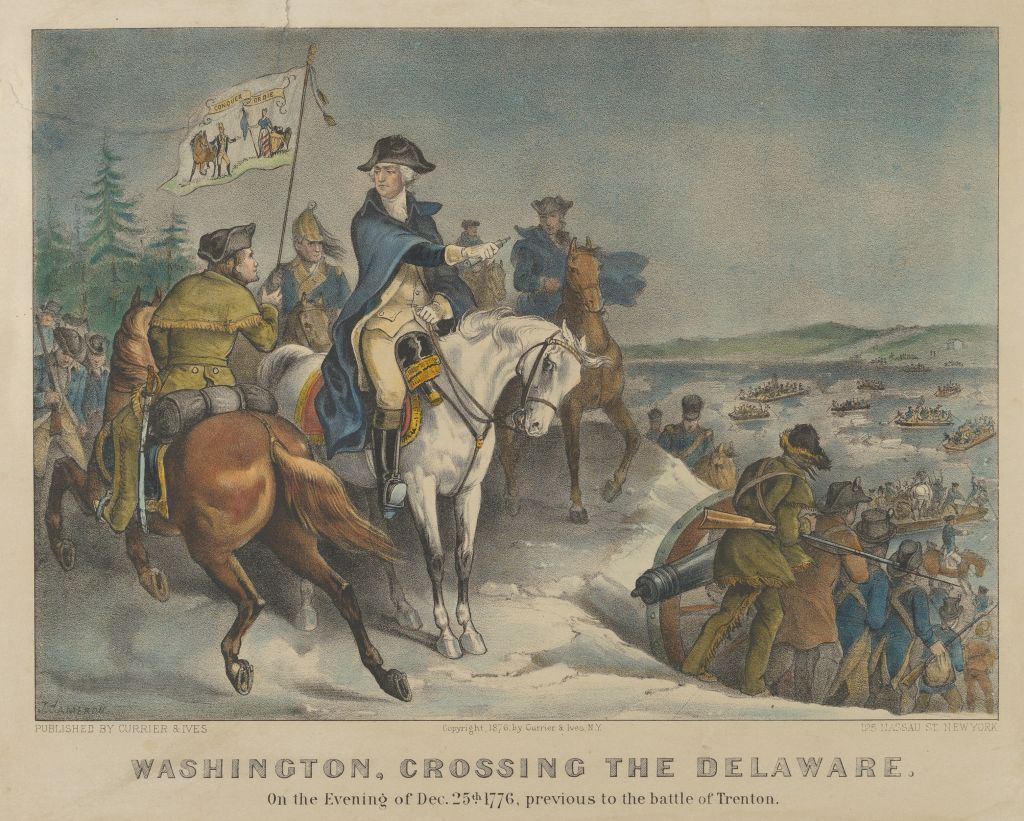
According to his estate, Mount Vernon, Washington “would order special thanksgiving services for his troops after successful battles” during the Revolutionary War. He also supported efforts by the Continental Congress to proclaim days of thanks for military victories.
The next presidents didn’t keep the Thanksgiving tradition. It wasn’t until much later that the holiday was revived.
President Abraham Lincoln brought back a day of thanks during the height of the Civil War. Lincoln expressed his own gratitude to God for the victory at the Battle of Gettysburg, calling upon his countrymen to “set apart and observe the last Thursday of November next, as a day of Thanksgiving and Praise.”
A Pilgrim Attitude
Eventually, the Thanksgiving tradition took root among the American people.
Traditionally, the last Thursday in November was set aside as a day of Thanksgiving. People decided to just be grateful for something and count their blessings. But then President Franklin Delano Roosevelt shook it up a bit. In 1938, FDR changed the date to the third Thursday. But no one listened; Americans failed to accept the date change, and Thanksgiving was celebrated on the fourth Thursday. In 1941, that date had to be set in stone by the 77th Congress.
In 1621, folks had the right attitude. They were simply happy to be alive.
Test your knowledge with a quiz based on this article!
Try a quiz based on this article
The Pilgrims and Native Americans invented the yearly Thanksgiving holiday.
Show the answer
False.
The first colonists of Massachusetts and the _______ people shared food to celebrate the harvest and enjoyed peace with one another.
Show the answer
Wampanoag.
What caused the friendship between the settlers and the natives to fall apart?
Show the answer
European settlers began overpowering the natives and took over their land..
George Washington proclaimed that November 26, 1789 should be named “Day of Publick Thanksgiving.”
Show the answer
True.
George Washington felt that people should give thanks to God and celebrate the victory of what war?
Show the answer
Revolutionary War.
Washington would order special Thanksgiving services for his _______ after successful battles.
Show the answer
Troops.
The presidents that followed Washington kept his Thanksgiving holiday as a yearly event.
Show the answer
False.
Which president brought back a day of thanks during the Civil War?
Show the answer
Abraham Lincoln.
Traditionally, the last ______ of November is set aside for Thanksgiving.
Show the answer
Thursday.
In what year was it made official, by the 77th Congress, that Americans celebrate Thanksgiving in the fourth week of November?
Show the answer
1941.