
★ In this story 03
In 1972, both chambers of Congress passed the Equal Rights Amendment (ERA) and sent it to the states for ratification. It fell short. End of story, right? Wrong. Every so often, this most famous of unratified amendments is brought up again in political discussion. Since its ratification by Virginia, in fact, many declare it a valid part of the Constitution – though notably, the Archivist of the United States has never been among them. But the ERA wasn’t the only one to come close – or to boast a lingering following years later.
Since 1789, Congress has approved 33 constitutional amendments, but only 27 made the cut. The other six failed after being sent to the states. And while the ERA may be the most famous, some of the others maintain a following and technically still stand a chance.
Understanding Amendments
There are two paths for constitutional amendments. Someone must introduce a bill to amend the Constitution to Congress. Two-thirds of each chamber – both the House of Representatives and the Senate – must vote to pass it. After it’s passed, the would-be amendment is sent to the states for ratification. If three-fourths of the state legislatures vote for it, the amendment is then recorded in the federal register by the Archivist of the United States. At that point, it’s official.
The other pathway is the constitutional convention. If the legislatures of at least two-thirds of the states vote to hold a convention, then the US Congress is obligated to call one. Then, anyone at the convention can propose a constitutional amendment. All proposals are voted on by the state delegates, and any that win a three-fourths majority passes and is, just as with the other method, recorded by the archivist.
Despite the low number of amendments approved by Congress and an even lower number ratified, there have been more than 11,000 proposals. Interestingly enough, the last amendment ratified was one of the first proposed. Though it was number two out of twelve proposed in what became the Bill of Rights, the 27th Amendment took almost 203 years. Put forward in 1789, it became our most recent constitutional change in 1992. Now, whenever Congress votes to grant itself a pay raise, the change can’t take effect until the next session.
Equal Rights, Unequal Timeline
On October 12, 1971, the US House of Representatives passed the Equal Rights Amendment, which prohibited discrimination based on sex, with an overwhelmingly bipartisan vote of 354 to 24. On March 22, 1972, the Senate did the same, 84 to 8. It was then sent to the states for ratification but with an expiration date. The amendment had to win over the required three-fourths of the states (38 out of 50) by March 22, 1979. That seven-year deadline was then extended to ten, granting states until June 30, 1982, to get on board. Still, the amendment fell short.
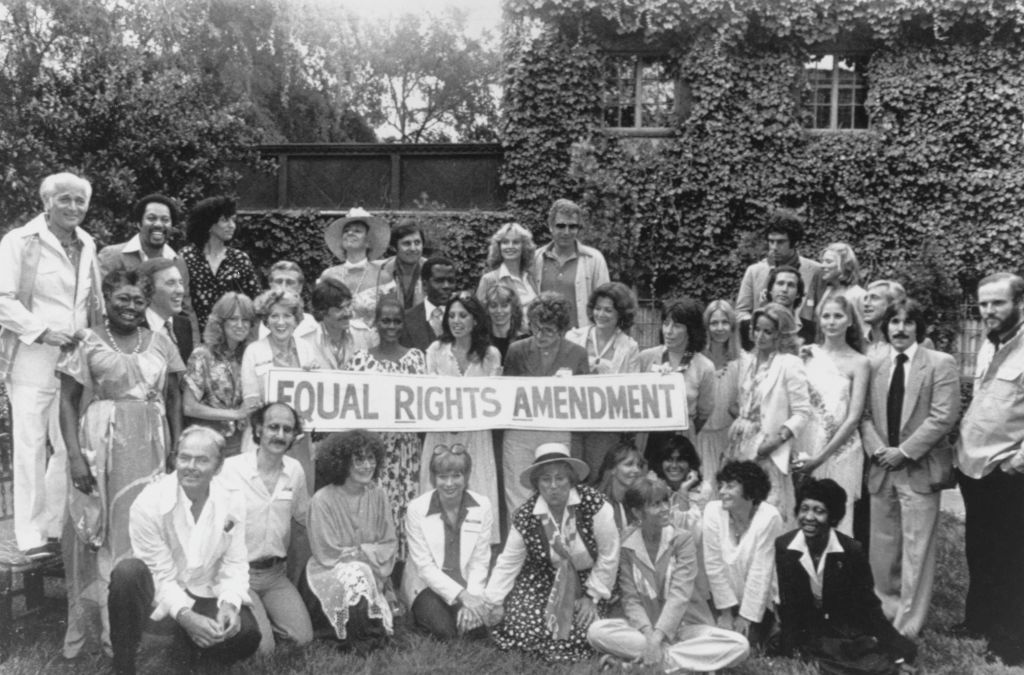
Even by this extended deadline, just 35 of the required 38 states had ratified. The ERA was, by the language of its own legislation, dead.
Only it wasn’t. Every year since, a new version has been introduced to Congress, and states went on “ratifying” the 1972 would-be amendment long after the deadline passed. Nevada was Number 36 on March 22, 2017, 45 years to the day after Congress sent it to the states. Illinois followed suit in May of 2018, and Virginia became the 38th in January of 2020.
Some argue this means the ERA should be added to the Constitution. Former President Joe Biden tried to make it happen, but the Archivist didn’t record it. That refusal carries into the second Trump administration, as well – though this time, the sitting president agrees. That’s not all the drama, however. Five states voted to rescind ratification. Nebraska, Tennessee, Idaho, Kentucky, and South Dakota all recanted before the March 22, 1979, deadline. Furthermore, North Dakota adopted a resolution in 2021, stating that its ratification had lapsed in 1979.
Five More – How Different Things Could Be
While the original Second Amendment eventually became the 27th, the first in that draft remains unratified and is technically still eligible for ratification. The proposed amendment would restructure the House of Representatives. There are those who support growing the House today, but if the specific language of this bill became law now, setting the maximum ratio to one representative for every 50,000 people would require quite a few elections, and fast. The 2024 population of around 340 million would require at least 6,800 congressmen!
The Titles of Nobility amendment was passed by the 11th Congress in 1810, and it could have cost some Americans their citizenship. Simply put, any US citizen who accepted a title of nobility or honor – or received a gift without congressional approval – would see citizenship revoked. It racked up 12 of the needed 13 state ratifications (it needed fewer than today because there were fewer states in the Union), but the War of 1812 brought more pressing concerns, and the ratification votes never came up again, despite some confusion over the next few decades as to whether it had succeeded or not.
Another amendment thwarted by a war was called the Corwin Amendment. Passed in 1861, this proposed change read: “No amendment shall be made to the Constitution which will authorize or give to Congress the power to abolish or interfere, within any State, with the domestic institutions thereof, including that of persons held to labor or service by the laws of said State.” It’s pretty clear, given what was going on in the nation at the time, that this targeted the abolition movement and aimed to protect the right of slave states to remain slave states. However, given the probably intentionally vague wording, it protected state sovereignty in domestic policy in general. Abraham Lincoln even contacted governors in hopes of convincing them to support the amendment – presumably as a last-ditch effort to avoid the Civil War. But war came anyway, and the amendment failed, though it is still eligible for ratification. But with the 13th Amendment that we got, we abolished slavery and involuntary servitude, except as punishment for a crime.
The Child Labor Amendment passed Congress in 1924 but fell short of ratification with just 28 states of the needed 38. Like the pro-slavery amendment, this one is still eligible for ratification, but history has left it behind. In 1938, President Franklin Roosevelt signed the Fair Labor Standards Act, which was then upheld by the Supreme Court in 1941, and banned child labor.
Finally, we come to statehood for Washington, DC. In 1961, the 23rd Amendment was ratified and granted DC presidential electors equal to the number of senators and representatives the District would have had if it were a state. That’s why DC gets three electoral votes despite not being a state or having voting representatives or senators in Congress. The District of Columbia Voting Rights Amendment, passed in 1978, would have repealed the 23rd and given DC full statehood – meaning one representative (based on population) and two senators, as well as the three electors it presently has. Like the ERA, this is a popular cause championed by many on the left. However, this amendment came with an expiration date. When the 1985 deadline passed, only 16 of the required 38 states had ratified.
Just six amendments were approved by Congress but left unratified by the states – yet, for better or for worse, almost any of them would have resulted in a drastically different United States than we know today. Now, remember that Congress approved just 33 out of more than 11,000 proposals. From protecting slavery and revoking citizenship to flooding the legislature with thousands of representatives, there was wisdom in the Founders’ decision to make amending the Constitution so difficult.
Test Your Knowledge – Take the Quiz
Try a quiz based on this article
In 1972, what amendment to the Constitution was passed by both chambers of Congress and sent to the states for ratification?
Show the answer
Equal Rights Amendment.
Since 1789, how many of the 33 approved constitutional amendments have been enacted?
Show the answer
27.
There are two ways to pass a constitutional amendment. The first begins with a legislative proposal that must be approved by the Senate and the House of Representatives and then ratified by the states. The second pathway is called the:
Show the answer
Constitutional Convention.
What are the first ten amendments to the Constitution called?
Show the answer
The Bill of Rights.
The 27th Amendment, which limits when congressional salaries can be adjusted, was first proposed in 1789 but was not passed until 1992.
Show the answer
True.
The Equal Rights Amendment prohibits discrimination based on:
Show the answer
Sex.
What US state became the 38th to ratify the Equal Rights Amendment in 2020?
Show the answer
Virginia.
The unratified first part of the 27th Amendment suggests that there should be one representative in the House for every:
Show the answer
50,000 people.
Which proposed amendment revoked citizenship for those who received a title of honor or accepted a gift without congressional approval?
Show the answer
Titles of Nobility Amendment.
While the Child Labor Amendment fell short of ratification, child labor was banned in 1938 when President Franklin Roosevelt signed the:
Show the answer
Fair Labor Standards Act.