★ In this story 03
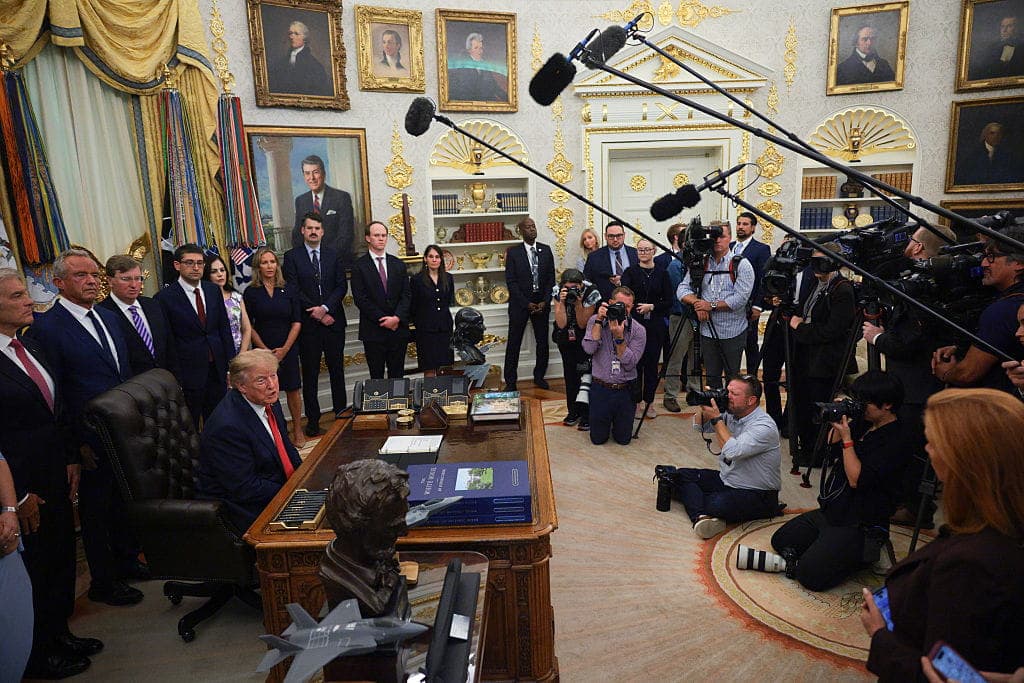
Who gets to say which news outlets have access to the White House? That’s the question in the courts right now, after President Donald Trump issued a ban on three major media companies – CNN, MS NOW, and Politico – barring them from the White House Press Corps. It’s being framed as a First Amendment, free press issue – but is it?
The First Amendment and Free Press
The First Amendment to the US Constitution reads:
“Congress shall make no law respecting an establishment of religion, or prohibiting the free exercise thereof; or abridging the freedom of speech, or of the press; or the right of the people peaceably to assemble, and to petition the Government for a redress of grievances.”
We’re focusing specifically on the freedom of the press part. The Founding Fathers believed that a free press, which can criticize government actions and officials without fear of reprisal, was necessary for the success of a democratic form of government. Only when people know what their government is doing can they guarantee it isn’t abusing them.
Now, the amendment says it applies only to Congress. But after the 14th Amendment’s Due Process Clause, the US Supreme Court started incorporating the Bill of Rights. This means that, over the years, it ruled that the protections found in the Bill of Rights applied to all levels of government, not just the federal – or, in this case, Congress.
So, the president is forbidden from restricting the freedom of expression and the free press. But is that really what happened here?
Freedom of Speech vs Unlimited Access
The White House Press Corps is the entire body of journalists, photographers, and producers who hold credentials to cover the president in the White House, on Air Force One, or at major media events. There’s also a smaller press pool, which is usually made up of one to two dozen journalists and technicians who rotate on any given day so the media in general still provides coverage even when there may not be room for hundreds of people.
The administration doesn’t publicly release the exact number of organizations that are included, but about 975 journalists hold permanent passes to the White House, and it’s estimated they represent between 100 and 200 different news agencies. Most are American, though some are foreign outlets.
But there are more than 3,000 unique operational newsrooms in the United States alone and probably tens of thousands around the world. Who decides which outlets are real news agencies and which should get access to the president?
In order to get a pass to begin with, a news organization must be approved by the White House Press Office, then clear a background screening by the Secret Service to make sure the organization and its staff don’t pose a threat to the president or national security in general. But revoking a pass once it has been granted does come with some judicial oversight.
While the executive branch can both grant and, with sufficient reason and warning, revoke a press pass, federal courts are allowed to review any time a pass is taken away and decide if it was done fairly. That’s what’s happening here. The Trump administration revoked the passes for CNN, MS NOW, and Politico, but US District Judge Timothy J. Kelly issued an order to temporarily block this ban and restore full access while the courts fully examine the case.
Why It Matters
It’s important to understand that Judge Kelly’s temporary order isn’t a final judgment. That will come after the court has had time to consider the arguments of both sides and how they fit into existing law and legal tradition. By issuing this order, though, he’s taking precautions not to violate the rights of these news organizations. A final ruling might grant permanent access to them, or it might allow the White House to revoke it.
But the bigger question is whether this is a matter of free speech and the free press or if it’s the executive branch’s right to decide who has access to the White House and the president. The government argues that the president’s opinion is that these outlets have published falsehoods and focused over the last few years on exclusively biased, negative coverage. But it isn’t stopping these agencies from publishing whatever they want – it is just revoking access because they did.
The news agencies, however, hold that the president’s actions punish them for their free speech, and that is effectively the same thing as preventing them from publishing what they want. If access to the White House requires a news outlet to publish only approved stories, then that still amounts to controlling the free press, they argue.
What the court is really deciding in this case is whether the president has the right to remove media outlets for negative or even false coverage or if that constitutes a violation of the First Amendment.
4 Questions
The story, in brief
Why did Donald Trump ban CNN, MS NOW, and Politico from the White House?
The government says the president believes those outlets published falsehoods and focused for years on exclusively biased, negative coverage. The administration revoked their White House press passes, arguing it was removing access, not stopping them from publishing whatever they want.
What is the White House Press Corps and who decides who gets access?
The White House Press Corps is the group of journalists, photographers, and producers credentialed to cover the president at the White House, on Air Force One, or at major media events. A news organization must be approved by the White House Press Office and then pass a Secret Service background screening before receiving a pass.
Why is the White House media ban being treated as a First Amendment case?
The dispute centers on whether revoking access because of negative or false coverage punishes protected speech and press freedom. The news agencies argue that if access depends on publishing only approved stories, that amounts to controlling the free press, while the government argues the president can decide who gets access.
What happens next in the court fight over CNN, MS NOW, and Politico access?
US District Judge Timothy J. Kelly temporarily blocked the ban and restored full access while the courts examine the case. He has not issued a final judgment, and the final ruling could either grant permanent access to the outlets or allow the White House to revoke it.