
★ In this story 02
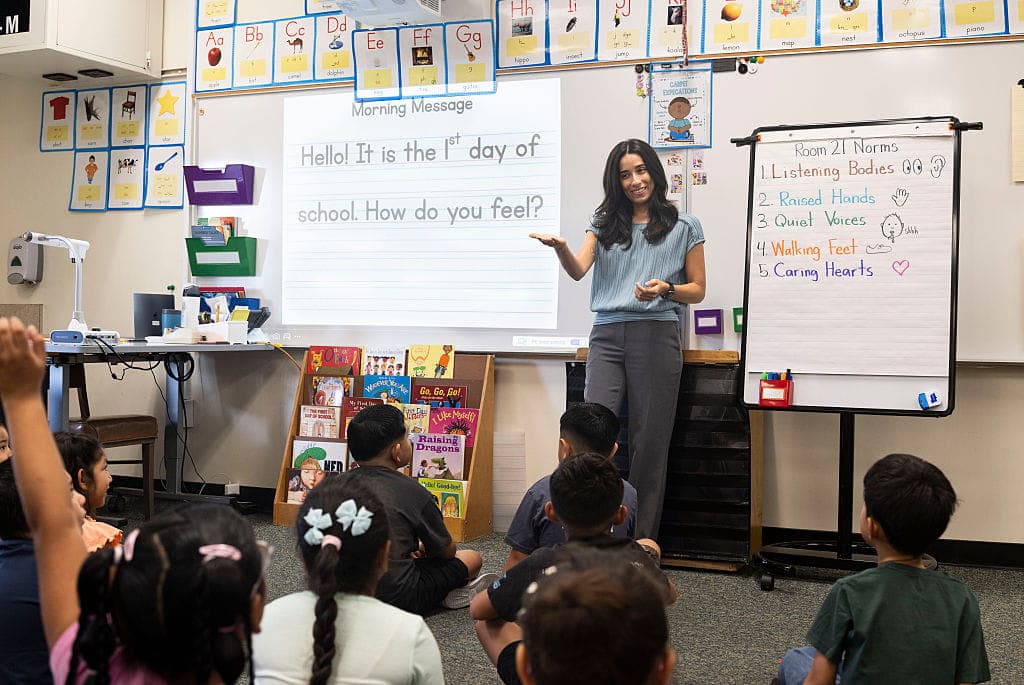
The strains of “School’s Out” by Alice Cooper have died down as millions of US students head back to school this week. The day after Labor Day has long been the traditional first day of classes, though more districts are pushing start dates to August – a communist plot no doubt. All joking aside, some strange things are happening in American schools; we’ll cover three of them.
It Pays to Stay in School
For the third year, the Detroit Public Schools Community District will pay its students for showing up. Those with perfect attendance (in a week chosen by the district) will receive a $100 Visa gift card. Depending on how many “pay cycles” are offered, a student could walk away with $1,000 worth of gift cards for the year.
In the 2025-26 academic year, this program, known as Perfect Attendance Pays, was offered only to high school students. Lo and behold, it worked. The superintendent said it brought down the chronic absentee rate from 64% to 54%. Other reports claim the absenteeism rate is closer to 60%. Either way, it’s better than it was before. This year, the program will be expanded to middle school students, who will receive a $50 gift card.
Here’s how it works: The school system declares a five-day cycle when perfect attendance counts, usually in the winter when absenteeism is at its peak. So most of the cycles occur between January and March. Students must attend class every hour it’s in session, with the information being monitored by a central administrative team.
Last year, 12,800 students were eligible for “at least one gift card,” The Source reports. Close to $14 million has been allocated for the Perfect Attendance Pays program as well as other efforts to stanch chronic absenteeism. This is a drop in the bucket for the $1.1 billion district. Still, it has raised eyebrows among those who went to school because their parents insisted upon it. In her column in The New York Post, Rikki Schlott cried foul:
“The program is actually teaching toxic life lessons: that simply showing up is some sort of accomplishment, and you’re entitled to be rewarded for doing the bare minimum.”
She also asserted:
“$100 feels like a ton of money when you’re a teen, and Detroit is telling kids that they’re entitled to it, regardless of the level of their performance or the depth of learning.”
Others argue the “everybody-gets-a-trophy” generation has now morphed into “You don’t even have to play the game to get a trophy – just show up.” But teachers and administrators say they are just being realistic.
Educational Standards Are Doing the Limbo
The National Assessment of Educational Progress (NAEP) conducts its assessments every two years. The last one was completed in 2024. It showed 8th-grade math scores decreased by eight points from 2019, and reading proficiency remained low, with only 29% of 8th graders scoring proficient or better.
A study of educational standards in the US has found a higher graduation rate alongside poorer scores on college-admissions tests. This strange dichotomy results from schools lowering their standards, according to 2024 research by The Economist.
They compared “classroom grades with performance on state exams” and found grades inflated relative to standardized test scores. The Economist also studied test scores at 3,000 high schools in six states to see if the grade inflation was widespread. Some states were more egregious in handing out higher grades than they should, but overall it is a disturbing trend in American schools.
Some are leaning into the poor standards, as The Economist noted:
“In May last year, New Jersey’s board of education voted to lower the passing score on the state’s high-school graduation test, saying the current standards had ‘adverse impacts’ on students.”
The dumbing down of US children will not serve them well in a global economy, and while there are plenty of jobs in the US, corporations are finding it easier and easier to fill their open spots with foreigners. As researcher Dr. Brooks Bowden put it, “I don’t think we’re helping anybody by handing out higher grades or giving out graduation certificates.”
After hearing these stories involving education, one must pause at the craziness of it all: paying kids to come to school and making it easier to graduate may seem like separate, disconnected events. But that would be wrong. The common denominator is that schools need to focus on educating American children to the highest level possible. Only then will American-educated students be sought after in the world marketplace.
4 Questions
The story, in brief
What is Detroit Public Schools' Perfect Attendance Pays program?
Detroit Public Schools Community District pays students for perfect attendance during a five day cycle chosen by the district, usually between January and March. High school students can receive a $100 Visa gift card, and middle school students will receive a $50 gift card as the program expands this year.
How much can Detroit students earn for perfect attendance?
A student could receive gift cards across multiple pay cycles and potentially total $1,000 for the year. Last year, 12,800 students were eligible for at least one gift card, and nearly $14 million was allocated for this program and other efforts to reduce chronic absenteeism.
Why are schools being criticized for lowering academic standards?
Critics point to falling test results alongside higher graduation rates and inflated classroom grades compared with standardized test scores. The 2024 NAEP showed 8th grade math scores down eight points from 2019, and only 29% of 8th graders scored proficient or better in reading.
What changes did New Jersey make to its graduation test standards?
New Jersey's board of education voted in May last year to lower the passing score on the state's high school graduation test. The board said the current standards had adverse impacts on students, and the move was cited as part of a broader trend of schools lowering standards.

Leesa K. Donner
Leesa K. Donner is executive editor of LibertyNation.com and Generation Liberty. A widely published columnist, Leesa previously worked in the broadcast news industry as a television news anchor, reporter, and producer at NBC, CBS and Fox affiliates in Charlotte, Pittsburgh, and Washington, DC. She is the author of “Free At Last: A Life-Changing Journey through the Gospel of Luke.”