
★ In this story 02
Rock art has been telling stories and history since the beginning of humankind. Scientists today have found a new message in the Columbian Amazon suggesting that the earliest of people have been on Earth for 13,000 years. A new study published in the March edition of Quaternary Science Reviews elaborates on the latest revelations and the data it provides to researchers. Previous discoveries have proven the existence of human life as far back as 12,600 years ago, but the latest information reveals that humans or human-like beings occupied the Earth long before that. What more can be learned from this discovery?
Serranía de la Lindosa
Researchers and archaeologists have studied the area now known as Serranía de la Lindosa for years. Rock art, shelters, tools, and other findings have proven the existence of life, though the timeline has been sketchy. The harsh conditions have complicated any attempt to narrow down just how long the area has been occupied.
Mark Robinson, associate professor of archaeology at the University of Exeter in the UK, stated, “For researchers working in the field, dense rainforest makes it challenging to identify potential fieldwork sites, and acidic, clay-based soils impair the preservation of organic remains. Our recent excavations, however, help to fill this gap, not only dating their arrival to much earlier than previously understood, but also providing novel insights into their lives and historical trajectories during the Holocene.” The Holocene is a period of time following the last glacial period that provides scientists with a crude timeline of the development of human activity.
Digging Up Earth’s Secrets
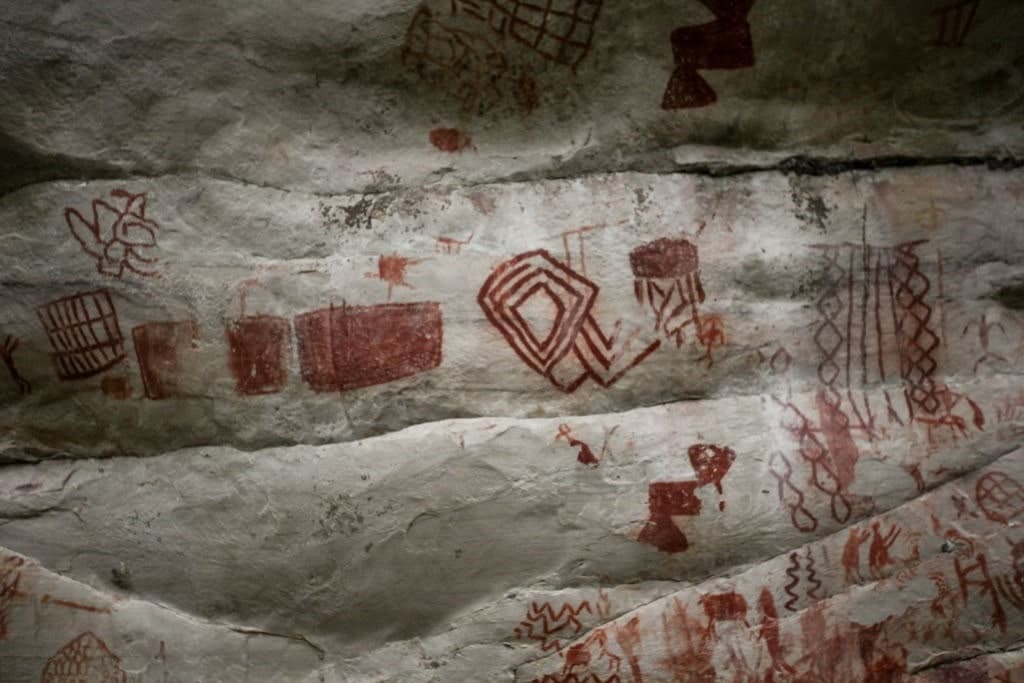
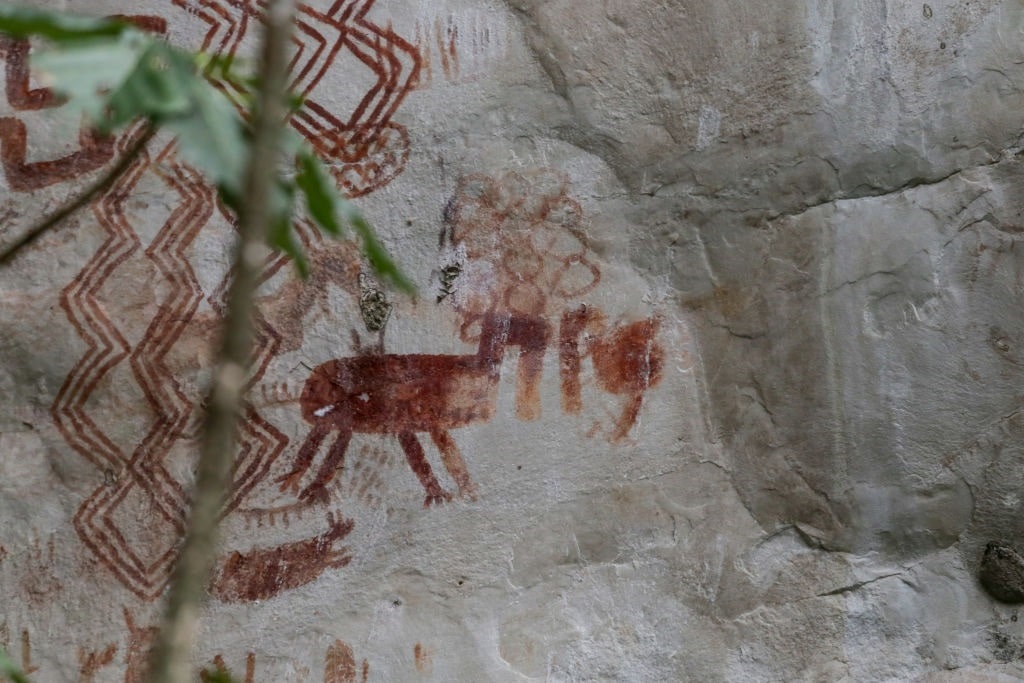
Around 2018, Robinson and his team discovered two rock shelters that spanned about 8 miles and contained rock faces covered in ancient drawings. It is the most extensive collection of prehistoric rock art ever found. The pictures, painted with red ocher, depict the presence of mastodons and giant sloths as well as megafauna that lived on Earth during the Ice Age. The soil layers contained the red ocher used to etch the paintings, proving to archaeologists that the paintings go back to the area’s earliest inhabitants.
Animal remains at the dig site showed that the early occupants of the land had an interesting diet, including piranhas, capybaras, snakes, crocodiles, and turtles. Additionally, the primordial remains and paintings show a time of desertion of the area that lasted for thousands of years during the Holocene period. Researchers are not sure why these moments of abandonment took place, though scientists have discovered several of them in the Amazonian region.
Team member José Iriarte explained that “the results firmly establish that the human occupation of Serranía La Lindosa began in the late Pleistocene, about 12,600 years ago, and continued until the 17th century. The exceptional number of rock shelters found in the region with evidence of human habitation suggest that this area was an attractive landscape for forager groups, where they could access palm-dominated tropical forest, savannah, and riverine resources.”
Test Your Knowledge – Take the Quiz
Try a quiz based on this article
Scientists recently discovered rock art in ________ that suggests humans have been on Earth longer than once thought.
Show the answer
The Columbian Amazon.
What particular area did researchers examine for this study?
Show the answer
Serranía de la Lindosa.
Previous rock art discoveries show signs of human life up to ______ years ago.
Show the answer
12,600.
Acidic, _______ soils have damaged the preservation of the artifacts in the dense rainforest.
Show the answer
Clay-based.
What is the name of the time that followed the last glacial period that scientists use to form a rough timeline?
Show the answer
Holocene.
In what year did Mark Robinson and his team locate the 8-mile stretch of rock that contained the paintings?
Show the answer
2018.
The pictures were painted with:
Show the answer
Red Ocher.
The paintings were of mastodons, giant sloths, and other animals that lived during the _______.
Show the answer
Neolithic age.
The pigment used for the artwork was found in the soil.
Show the answer
True.
The animal remains discovered at the site showed that they had a diet of turtles, capybara, snakes, piranhas, and ______.
Show the answer
Crocodiles.

Kirsten Brooker
Culture Correspondent for Liberty Nation and Generation Liberty. Kirsten loves to write about culture from the point of view of an everyday American who lives deep in the heart of the Midwest. She is the mother of two adorable girls, likes classic rock, and humbly wears the crown of a former Homecoming Queen with grace and style.