
★ In this story 02
Cave art can be found all around the world. However, recent discoveries in an Alabama cave reveal the largest art ever uncovered. One of the drawings was over ten feet long, drawn with mud, and depicted a rattlesnake. The massive image is believed to be over 1,000 years old. Commonly, cave art is either red or black in color. Archaeologists believe that the red pictures were created using iron oxides, while the black images used charcoal or manganese dioxide. However, carved artwork and clay sculptures have also been found over the years. Who is responsible for these artistic creations? And how far back do they date?
Alabama Cave Art
First spotted in 1998, the Alabama cave was never given a name and was kept secret to protect the discoveries within it. It was a complex area to navigate because of the shallow ceilings and over three-mile-long passageways. Much of the artwork was found in one chamber of the long underground tunnel. Hundreds of paintings covered the walls and ceilings, making it the most abundant cave art discovery in the American Southeast.
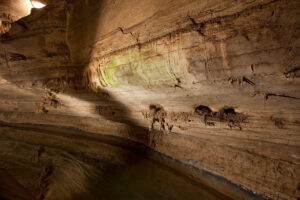
Jan Simek, a professor in the Department of Anthropology at the University of Tennessee, said, “These images are different than most of the ancient art so far observed in the American southeast and suggest that our understanding of that art may be based on incomplete data.”
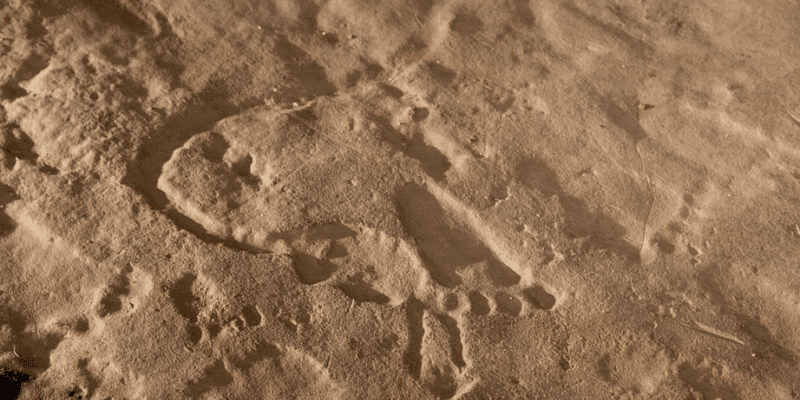
Archaeologists believe that Indigenous Americans – people that inhabited the Americas before the arrival of European settlers – are responsible for the historic images. The most common drawings are of animals such as lions, bears, rhinoceroses, and mammoths, but body parts, geometric signs, and religious symbols are also prevalent. Various tools were used to create the artwork, along with indications of pictures drawn with a person’s bare hands.
The Alabama cave holding the 10-foot image of a rattlesnake was the 19th unnamed cave in the state. The record-breaking glyph showed diamond-shaped patterns indicating that it was a representation of the diamondback rattlesnake – a creature sacred to the Indigenous people of the American southeast.
Because of the limited space inside the cave and the size of the art, it was hard to see the whole picture before. However, a new technology, called photogrammetry, has opened doors for archaeologists excited to continue uncovering the ancient drawings.
What is Photogrammetry?
Photogrammetry is a process that takes hundreds of digital images that are then combined to form a 3D image of the paintings. Some of the drawings are not visible to the naked eye, and others are in hard-to-reach places, so using the latest technology is crucial to discovering ancient cave art.
Test your knowledge – try a quiz based on this article!
Try a quiz based on this article
Most commonly, cave art is found to be drawn in what two colors?
Show the answer
Black and Red.
The cave art image found in Alabama is believed to be over 10,000 years old.
Show the answer
False.
When was the 19th unnamed cave found in Alabama?
Show the answer
1998.
Archaeologists believe that much of the artwork was created by __________.
Show the answer
Indigenous Americans.
Animals are among the most commonly found images in cave art.
Show the answer
True.
The 10-foot long image found in the Alabama cave depicted a __________.
Show the answer
Rattlesnake.
Why was it so difficult to discover this artwork before?
Show the answer
The cave is long with low ceilings.
What scientific process did archaeologists use to capture images of the art?
Show the answer
Photogrammetry.
In the photogrammetry process, photos are combined to form a _____ image of the paintings.
Show the answer
3D.
What pigments are thought to be used in the cave art? Check all that apply.
Show the answer
Iron oxides.

Kirsten Brooker
Culture Correspondent for Liberty Nation and Generation Liberty. Kirsten loves to write about culture from the point of view of an everyday American who lives deep in the heart of the Midwest. She is the mother of two adorable girls, likes classic rock, and humbly wears the crown of a former Homecoming Queen with grace and style.