
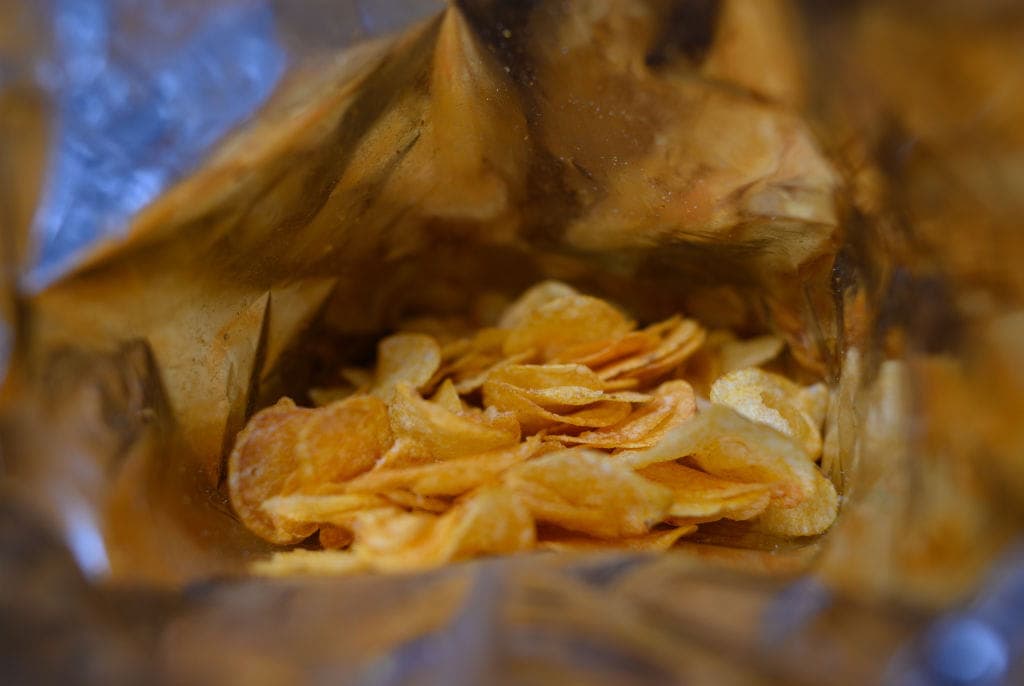
Everyone has been there. We head to the grocery store on an empty stomach, pay $5 for a small bag of chips, open the package, and then see, to our dismay, that half the bag is empty. Hey, where did all the chips go? Some say Big Snack is ripping off its customers. Others argue that it is the science of nitrogen gas. Who is right?
Hungry for a Bag of Chips
Did you know a bag of chips doesn't contain regular air? Believe it or not, it is filled with taste-preserving nitrogen gas.
This non-reactive gas serves two purposes: protecting the chips and helping preserve freshness. No, it isn't what makes it impossible to eat just one.
First, the gas acts like a protective airbag inside the package, preventing the chips from being crushed into dust during shipping and handling.
Second, moisture and oxygen mixed with oils and starches can make chips stale and soft. Nitrogen gas keeps the chips fresh and crisp longer. And nitrogen gas extends shelf life, meaning the product stays fresher until you devour it.
Many consumers wonder whether they get fewer chips because of the gas. Not really. Chip bags are sold by net weight rather than by volume.
But this might not explain why it seems there were more chips back in the day. That's true, too, but it has more to do with a simple economic principle: shrinkflation.
Got Shrinkflation?
Also known as product downsizing or stealth pricing, shrinkflation is a common retail strategy. This tactic reduces the weight of the food inside a package while keeping the outer package size and price the same.

For example, rather than raising the price of a bag of beet or rutabaga chips from $5 to $7, food manufacturers will instead remove as much as one ounce from the package.
Brands use this data-driven method. Surveys have found that consumers were less likely to change their purchases in response to downsizing than to an equivalent price increase.
Do we really need all that extra salt or sugar anyway? Likely not.
Interestingly enough, the Government Accountability Office (GAO) published a report on shrinkflation, noting that the practice peaked a decade ago but picked up steam in the last few years.
“When we looked at trends during the last 10 years or so, we found that downsizing occurred most frequently in 2015. And it was at its lowest in 2020 and 2021, during the first 2 years of the COVID-19 pandemic. Reports of downsized items increased starting in early 2022, amidst rising inflation. Even so, shrinkflation had a minimal impact on overall inflation from 2019 to 2024."
Not all products have been downsized. In fact, according to the GAO, paper products (think paper towels and toilet paper) were hit hardest by shrinkflation than other categories of goods.
Did You Just Double Dip a Chip?
Chips are a fun snack. Are they healthy? You can be the judge. But even if you spend $2 on a bag of chips, it can also provide a valuable education in economics, the science of packaged food, and subjective value.
4 Questions
The story, in brief
Why is there so much empty space in a bag of chips?
A bag of chips is filled with nitrogen gas, not regular air. The gas acts like a protective airbag so the chips are less likely to get crushed during shipping and handling. It also helps keep the chips fresh and crisp longer by limiting the effects of moisture and oxygen.
Does nitrogen gas mean customers get fewer chips in a bag?
Not really, because chip bags are sold by net weight rather than by volume. The empty space comes from the nitrogen gas used to protect the chips and preserve freshness. A bag may look half empty, but the amount sold is based on weight, not how full the package appears.
What is shrinkflation in snack foods like chips?
Shrinkflation is when companies reduce the weight of the food inside a package while keeping the package size and price the same. Instead of raising a $5 bag of chips to $7, a manufacturer might remove as much as one ounce. Surveys found consumers were less likely to change purchases after downsizing than after an equivalent price increase.
What did the GAO report say about recent shrinkflation trends?
The Government Accountability Office said downsizing happened most often in 2015. It was lowest in 2020 and 2021 during the first two years of the COVID-19 pandemic, then reports of downsized items increased starting in early 2022 amid rising inflation. Even so, the GAO said shrinkflation had a minimal impact on overall inflation from 2019 to 2024.