
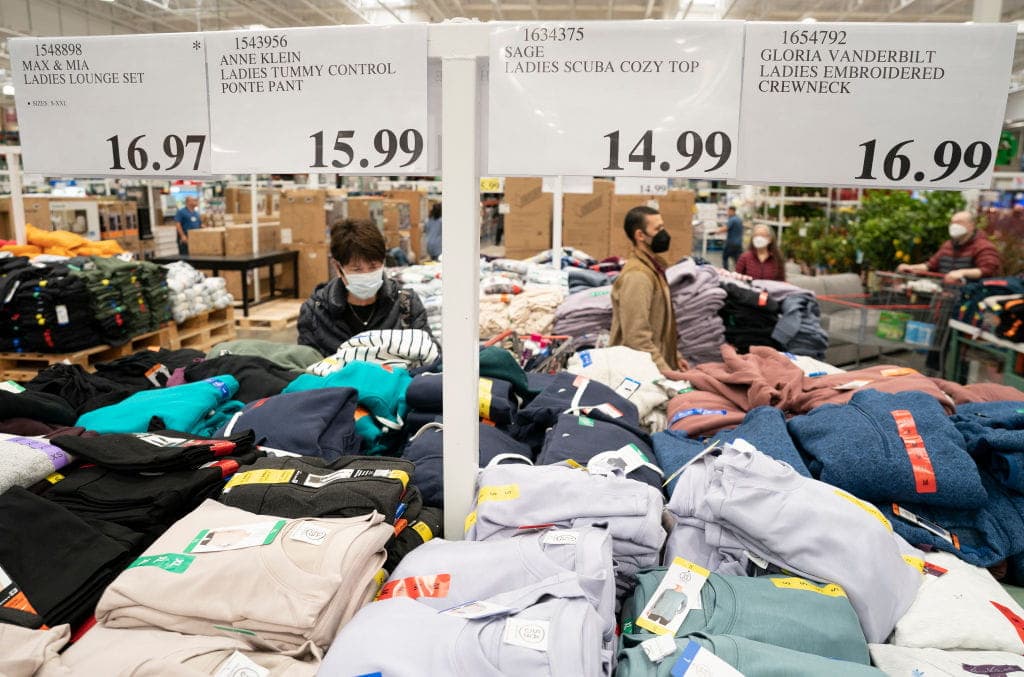
Have you ever noticed that many items in stores end in 99 cents? A bag of chips: $1.99. A case of Coca-Cola: $9.99. A new sofa: $499.99. For outsiders, it would make sense to price these at $2, $10, and $500. Well, this is not random. Researchers have studied why retailers price goods this way rather than using whole numbers.
The Psychology of $9.99
Our brains read numbers left to right and focus mainly on the first digit, what scientists call the “left-digit effect.” In other words, when consumers see a $49.99 price tag, they focus on the first digit (4) instead of rounding up (5).
In the shopper’s mind, this makes the cost seem like $49 rather than $50. Put another way, the psychological difference between a $1.99 organic avocado and a $2 organic avocado is often greater than the difference between $4.49 and $3.80, because consumers place disproportionate weight on the leftmost digit.
Another psychological factor is that consumers typically connect prices ending in .95 or 9.99 with discounts, markdowns, sales, or value. Experts call it retail conditioning, built up over decades of shopping.
Historians also trace today’s pricing tactics back to the 19th century with something called the Cash Register Theory. By using odd prices, businesses ensured cashiers had to open the cash register and make change, which required employees to jot down the sale. This technique reduced employee theft.
Others say newspapers adjusted their prices by pennies to outdo the competition.
What Research Shows About the Price
Over the years, many studies have reaffirmed the use of firms pricing their products at $9.99 or $99.99.
For example, a 2005 study found that consumers overestimate their buying power when prices end in .99. Subjects were given a $73 budget and consistently believed they could buy more items at $X.99 prices than at $X.00 prices. This underscored the power of charm pricing.
In another instance a few years ago, researchers at Ohio State University’s Fisher College of Business ran a coffee stand experiment.

They updated their prices frequently and found that prices set just below a round number, such as $19.99 instead of $20, can make consumers less likely to upgrade to a pricier option. More than half (56%) of customers upgraded to a larger size when prices were $1 and $1.25, compared with just 29% when prices were $0.95 and $1.20.
The Wall Street Journal has reported that retailers often seek to avoid psychologically important price thresholds, such as moving from $9.99 to $10.00, because demand can weaken when prices cross a round-number boundary
"This pricing tactic highlights how customers are not always rational when thinking about price," Christoph Bauer, senior partner at Simon-Kucher, wrote in a May 2018 report.
Won’t Get Fooled Again?
Now that you know the strategies retailers use to get the money in your wallet, will you be fooled again? Probably. We have become so accustomed to this type of pricing that it is hard to shop any other way. The research is clear: Odd pricing can make your bills feel smaller, which then persuades us to follow through on a purchase.
At least you get a penny in the end!
4 Questions
The story, in brief
Why do stores price items at $9.99 instead of $10?
Researchers say stores use odd prices because of the left-digit effect. Shoppers tend to focus on the first number they see, so $9.99 feels more like $9 than $10. Consumers also often connect prices ending in .95 or .99 with discounts, sales, and value.
What is the left-digit effect in retail pricing?
The left-digit effect means people read prices from left to right and give extra weight to the first digit. Because of that, a price like $49.99 can feel closer to $49 than $50 in a shopper's mind. This can make the item seem cheaper than a rounded price.
How did odd pricing like $9.99 start in stores?
Historians trace modern odd pricing in part to the 19th century and the Cash Register Theory. By setting odd prices, businesses made cashiers open the register and give change, which required recording the sale. That practice was meant to reduce employee theft.
What does research say happens when prices end in .99?
Studies cited over the years say prices ending in .99 can change how people think and shop. A 2005 study found consumers with a $73 budget believed they could buy more items at $X.99 than at $X.00. Other research found prices just below a round number can also make customers less likely to upgrade to a pricier option.