
★ In this story 02
The use of technology in schools has increased over the years, and now, very little is done without it. Chalkboards became interactive whiteboards. Textbooks, encyclopedias, and dictionaries are a thing of the past, as children now use laptops to do all their research. Calculators are permitted in math class, and cell phones are in the hands of nearly every student. But how much is too much? Could all this be more harmful than helpful? A report by UNESCO (United Nations Educational, Scientific, and Cultural Organization) reveals that technology may be overused in today’s schools. Let’s find out why.
What Is UNESCO?
The vision of UNESCO, as described on the organization’s website, is: “Since wars begin in the minds of men and women, it is in the minds of men and women that peace must be built. UNESCO uses education, science, culture, communication, and information to foster mutual understanding and respect for our planet. We work to strengthen the intellectual and moral solidarity of humankind and bring out the best in our shared humanity”.
Too Much Technology?
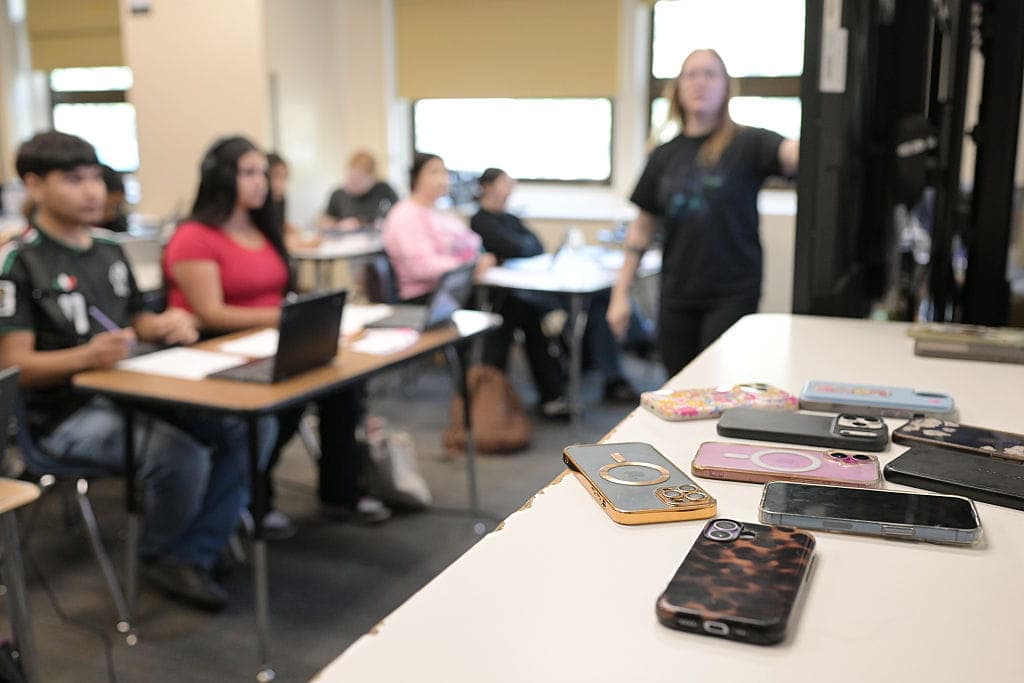
While there are many benefits to using technology in the classroom, like interactive learning and helpful tools for those with special needs, there are also some downfalls. The biggest downside is the distractions caused by allowing students to have and use cell phones during class. UNESCO feels that all smartphones should be banned in schools to allow for more attentive learning and more engaged students. The UNESCO report shows that less than 25% of the world’s learning centers have prohibited the use of cellular devices during school hours.
Manos Antoninis, a contributor to the UNESCO report, said, “We need to teach children to live both with and without technology.”
Students need to be able to communicate with one another and with their teachers. Interacting solely with digital devices can lead to several social and academic issues. Rather than relying on technology to teach and learn, UNESCO feels it would be better used as a support tool to enhance lessons.
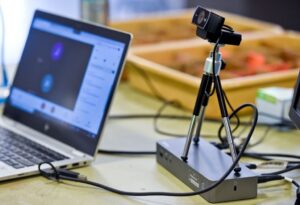
COVID-19 only boosted the need for computers and the internet. It quickly became the only way to complete the day’s work and to communicate with teachers and fellow students. About 500 million students fell behind when this happened. Not all countries have the resources necessary to provide everyone with a laptop and a home internet connection.
In a July 2023 report from UNESCO, the Director-General, Audrey Azoulay, had this to say: “The digital revolution holds immeasurable potential, but, just as warnings have been voiced for how it should be regulated in society, similar attention must be paid to the way it is used in education. Its use must be for enhanced learning experiences and for the well-being of students and teachers, not to their detriment. Keep the needs of the learner first and support teachers. Online connections are no substitute for human interaction”.
Quite possibly, the lesson to learn here is to do all things in moderation. Even useful or fun things can create problems if they are overused or mishandled.

Kirsten Brooker
Culture Correspondent for Liberty Nation and Generation Liberty. Kirsten loves to write about culture from the point of view of an everyday American who lives deep in the heart of the Midwest. She is the mother of two adorable girls, likes classic rock, and humbly wears the crown of a former Homecoming Queen with grace and style.