
★ In this story 03
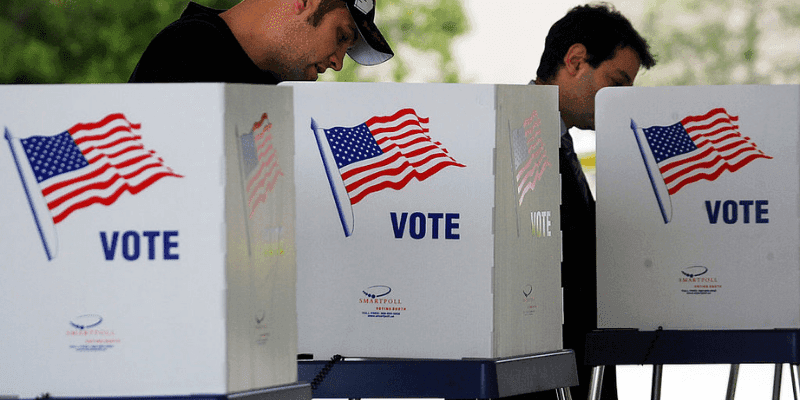
It’s an election year in the United States, and the two main political parties are already preparing. In November, Americans will be voting on politicians to represent them in Congress, as well as various state offices, including governors. Each state is different – this time, 36 states will be voting on governors, while 35 Senate seats are up for grabs, and all 435 voting seats in the House of Representatives need to be voted upon.
Even though the election isn’t until November, voting has already begun in primaries. These are votes to decide who will eventually get to compete in the final elections. Primary season started in early May with Indiana and Ohio, but several other states have already followed with their own primary races.

So, how do primary races work, and what impact will they have on the final election in November?
A Primer on Primaries
If you have ever watched the television reality show Survivor, you already know how American political primaries work. As in the TV show, contestants (politicians) are divided into two teams: In political “survivor,” those teams are the two major parties, Republicans and Democrats. A series of challenges or tests then whittle away the weaker from stronger candidates. Little by little, the field is narrowed, and top candidates then go to a vote within their own party. That’s the primary. The winners then face off in a general election to decide who gets booted off the island – or wins a job representing the American people.

For example, let’s take the recent primary race for governor of Pennsylvania.
On the Republican “team,” nine people competed against each other for the chance to represent the party in the November election. The winner was Doug Mastriano, who got the most votes for a Republican.
On the Democrat team, there was only one competitor: Josh Shapiro. Of course, he got 100% of the votes.
Thanks to those primary votes, we know that in November, Mastriano and Shapiro will face off as the competitors for each major political party.
Types of Primaries
There are three types of primaries: Closed, open, and semi-open. Each state determines which contests will be allowed on voting day.
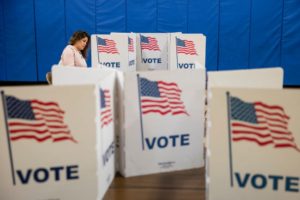
Open Primary
An open primary allows any registered voter to choose any person on the ballot. It doesn’t matter if you are a Democrat who wishes to vote for a Republican, Independent, or Green Party candidate. There are 15 states that allow crossover voting: Alabama, Arkansas, Georgia, Hawai’i, Michigan, Minnesota, Mississippi, Missouri, Montana, North Dakota, South Carolina, Texas, Vermont, Virginia, and Wisconsin. As a general rule, states that have open primaries don’t make people choose a certain party when they register to vote.
Closed Primary
In a closed primary, voters can only vote for a candidate in the same party they belong to as a registered member. Only nine states have a closed primary: Delaware, Florida, Kentucky, Maryland, Nevada, New Mexico, New York, Oregon, and Pennsylvania.
Other Primaries
There are 26 states with some sort of mishmash between open and closed primaries. This system varies from state to state.
Getting Ready for the Big Show
Whether you live in a state with an open, closed, or a combination primary system, every citizen of the US has the right to cast a vote in our representative form of government. Primary season is a time when voters can prepare for an election, get familiar with the candidates and issues, and choose who they want to compete in the final race. Some might say helping to determine which candidates make it to the general election is one of the most important decisions to make during a lifetime.
Test your knowledge – try a quiz based on this article!
Try a quiz based on this article
Primary elections are a way to narrow down the candidates for each party, before the general election.
Show the answer
True.
The two major political parties in the US are the Democrats and the Libertarians.
Show the answer
False.
Primary elections are only held for seats in the House of Representatives.
Show the answer
False.
The first two states to hold primary elections in 2022 were ___________ and ___________.
Show the answer
Indiana; Ohio.
Of the nine primary competitors, who will represent Pennsylvania’s Republican Party in the November election?
Show the answer
Doug Mastriano.
How many Democratic candidates competed in the Pennsylvania primary?
Show the answer
1.
Closed, open, and semi-open are three different types of primary elections.
Show the answer
True.
An open primary allows any _______ to choose any person on the ballot.
Show the answer
Registered voter.
In a closed primary, voters can only vote for a candidate in the same party they belong to.
Show the answer
True.
A person can vote in a primary election even if they are not registered to vote.
Show the answer
False.