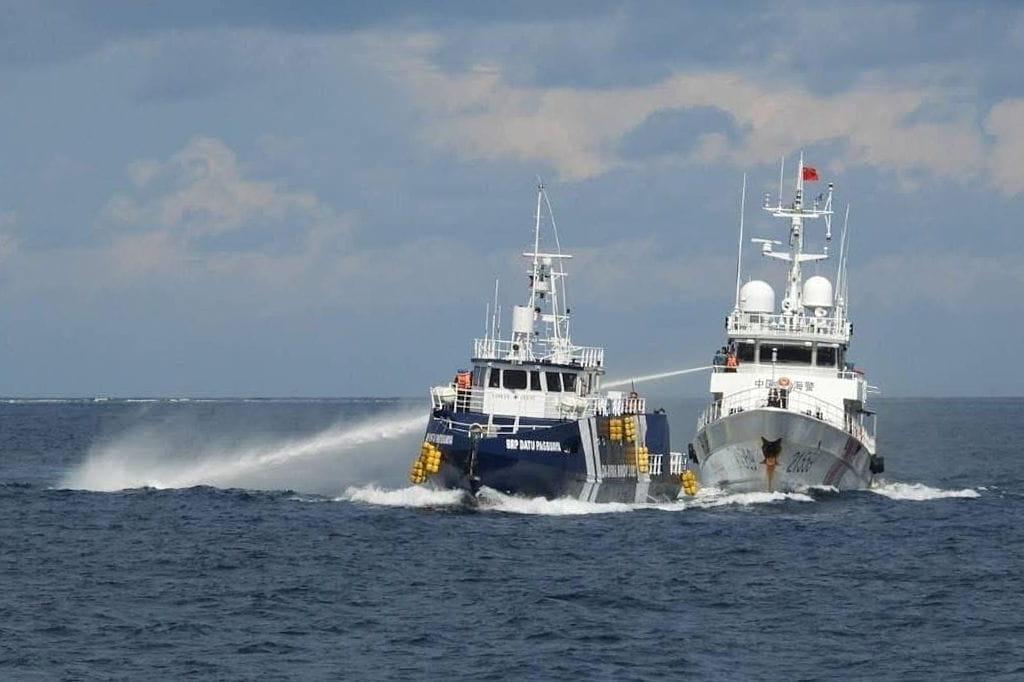

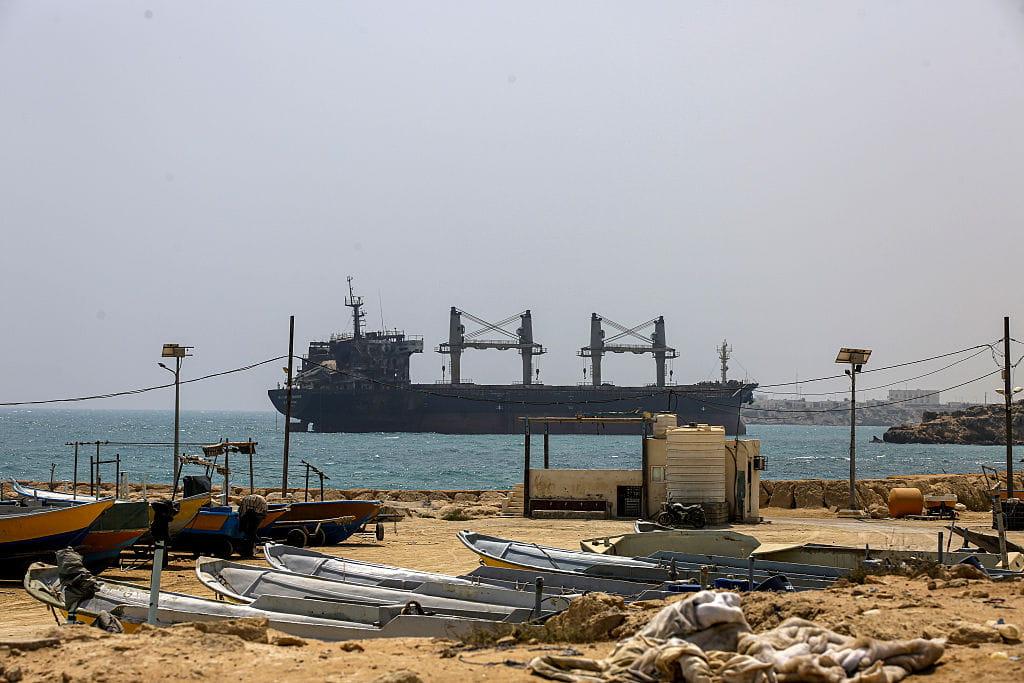
Instead of major air assaults, the United States is using limited airstrikes and calling them “defensive.” The attacks are designed to take out specific Iranian surface-to-air defense installations and drone and anti-ship missile sites on Qeshm Island, which is in the Strait of Hormuz. They reduce the capability of Iran to threaten US aircraft operating in the region and protect ships moving through the strait.
US Targets Qeshm Island
US forces struck Iranian missile and drone facilities on Qeshm Island on Nov. 2 and 6. President Donald Trump described the attacks as minor. According to The Wall Street Journal:
“But the U.S. has been engaged in smaller-scale strikes against Iran for several weeks, officials said, with explosions reported around Qeshm Island on [Nov. 9] on social media. Some of the officials described the assaults as defensive in nature to prevent Iran from having the freedom to attack commercial ships in the Strait of Hormuz.”
Typical of the responses the US has been taking, as reported in The WSJ, “In one instance on [Nov. 2], Iran’s Islamic Revolutionary Guard Corps fired a surface-to-air missile at a U.S. jet fighter, which fired back in self-defense, the officials said.” That same day in a separate engagement, US forces in the region intercepted and destroyed an Islamic Revolutionary Guard Corps missile targeting cargo ships and oil tankers in the strait and launched from Qeshm Island.
Iranian capability on Qeshm Island is not the only target the United States is engaging. The US blockade against all Iranian shipping through the Strait of Hormuz has been nearly 100% effective in stopping Iranian oil shipments. According to a US Central Command (CENTCOM) news release:
“[CENTCOM] forces disabled a commercial vessel in the Gulf of Oman, Nov. 7, after the ship’s civilian crew ignored repeated warnings and attempted to violate the naval blockade against Iran multiple times … Enforcement actions since July have resulted in U.S. forces redirecting 147 commercial vessels that complied and disabled five merchant ships that refused to comply ... CENTCOM has previously destroyed another 10 Iranian commercial oil tankers that were part of the Islamic Revolutionary Guards Corps’ multibillion-dollar shadow network.”
Engaging targets on Qeshm Island and blockading Iranian oil export shipping are not the only initiatives being taken to bring Iran to negotiate in good faith. CENTCOM explained it was starting a new operation called Task Force Iron Gate.
New CENTCOM Task Force Announced for Iran
Fox News reported, “The US announced Task Force Iron Gate on [Nov. 7], which is meant to track illegal movement of advanced weapons, dual-use technologies, illegal revenue streams and other sanctioned material over Iran’s border and the Caspian Sea as the U.S. expands its naval blockade.” The task force includes roughly 20 military and civilian personnel stationed at CENTCOM Headquarters, McDill Air Force Base in Tampa, FL.
Although the blockade has thwarted Iran’s attempts to move oil tankers through the strait, land routes through neighboring countries have picked up some commercial and military traffic. The port of entry at Bazargan (Iran) and Gürbulak (Turkey) is the most important and well-traveled ground route. There are others. The border between Iraq and Iran is the longest and has seven to ten official crossings and a high volume of transit. Other border crossings are with Afghanistan, Pakistan, Turkmenistan, Azerbaijan, and Armenia, as well as the Caspian Sea ports of entry where Russia can ship warfighting materials to Iran.
To stem the overland flow of useful military weaponry and dual-use cargo, the US task force will coordinate with other agencies to deny access to roads, bridges, railroads, and port facilities. Successfully interdicting Iranian ground and Caspian Sea access routes will further isolate Tehran from trade revenue. To date, Iran’s leadership has not felt enough economic pain. US Secretary of State Marco Rubio explained, “Iranian demands are simply not just unacceptable, but in some cases, outrageous and ridiculous, and really not realistic,” The Times of Israel reported.
Why This Matters
The full weight of the blockade, the defensive airstrikes, the economic sanctions, and the interdiction of land and Caspian Sea routes may turn the trick of getting Iran to the bargaining table with a position less “ridiculous.” The midterm election is over, and there is nothing to prevent the United States from executing a more forceful bombing campaign. That may be the only thing Iran understands.
~
The views expressed are those of the author and not of any other affiliate.
4 Questions
The story, in brief
Why did the United States strike Iranian sites on Qeshm Island?
The strikes were described as limited and defensive, aimed at Iranian surface-to-air defense installations and drone and anti-ship missile sites on Qeshm Island. U.S. officials said the attacks were meant to reduce Iran's ability to threaten U.S. aircraft and to protect commercial ships moving through the Strait of Hormuz.
What happened during the U.S. and Iran clashes near Qeshm Island?
U.S. forces struck Iranian missile and drone facilities on Qeshm Island on Nov. 2 and 6. On Nov. 2, Iran's Islamic Revolutionary Guard Corps fired a surface-to-air missile at a U.S. jet fighter, and the jet fired back in self-defense. That same day, U.S. forces also intercepted and destroyed an IRGC missile targeting cargo ships and oil tankers in the strait.
What is Task Force Iron Gate and what will it do?
Task Force Iron Gate is a new CENTCOM operation announced on Nov. 7. It is meant to track illegal movement of advanced weapons, dual-use technologies, illegal revenue streams, and other sanctioned material over Iran's border and the Caspian Sea. The task force includes roughly 20 military and civilian personnel stationed at CENTCOM Headquarters at McDill Air Force Base in Tampa, Florida.
What could happen next in the U.S. campaign against Iran?
The United States is expanding pressure through a naval blockade, defensive airstrikes, sanctions, and efforts to cut off land and Caspian Sea routes. The stated goal is to push Iran to negotiate in good faith. The article also says the United States now faces no midterm election constraint and could carry out a more forceful bombing campaign.

Dave Patterson
National Security Correspondent at LibertyNation.Com and Generation Liberty, Dave is a retired U.S. Air Force Pilot with over 180 combat missions in Vietnam. He is the former Principal Deputy Under Secretary of Defense, Comptroller and has served in executive positions in the private sector aerospace and defense industry. Dave’s articles have appeared in The Federalist and DefenseOne.com.