

★ In this story 03
The United States has a history of, well, making history when it comes to space exploration. In July 1950, America launched its first rocket into space from Cape Canaveral, FL. The spacecraft, known as Bumper 8, reached record altitudes of nearly 250 miles. In January 1958, the first US satellite was sent into orbit. In May 1961, Alan Shepard became the first American in space aboard Freedom 7. In July 1969, Neil Armstrong took “one giant leap for mankind” when he walked on the moon. The list of American achievements in space continues to grow, with the latest milestone making jaws drop around the world: Elon Musk’s SpaceX successfully caught a rocket.
SpaceX Catches a Rocket
When the SpaceX Starship spacecraft returned to Texas from orbit on Nov. 14, two giant mechanical arms attached to the company’s launch tower caught it in a first-of-its-kind maneuver.
Footage of Starship’s return shows the mechanical arms closing around the spacecraft as a crowd erupts in cheers and a SpaceX scientist utters those famous words: “Mission accomplished.” The 171-foot-tall spacecraft was in orbit for roughly 22 hours before the historic catch.
Musk biographer Walter Isaacson marveled at the unprecedented achievement and recalled witnessing SpaceX engineers’ reactions to Musk’s mechanical arm idea:
“This is actually a bigger deal for humanity than most people can imagine. I will always remember the looks on the engineers’ faces in the Starbase conference room in December 2020 when [Elon Musk] suggested, then insisted, that the Mechazilla launchpad arms could catch a returning Starship.”
NASA administrator Jared Isaacman was also in awe of the SpaceX catch, writing on X, “Congrats to [Elon Musk] and the [SpaceX] team! It was almost magic … Making more believers by the day.”
Next Steps
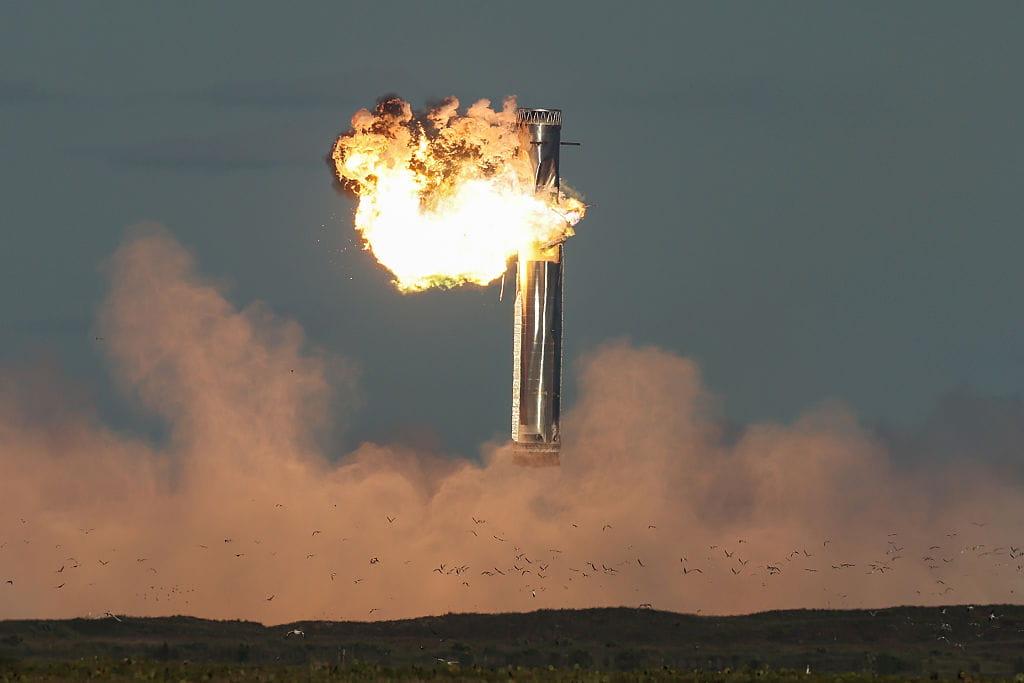
Starship is a two-stage rocket consisting of the Super Heavy booster and the spacecraft itself. SpaceX had hoped to safely recover both components, but the company ultimately failed to catch the booster, which exploded over the Gulf of America (formally Gulf of Mexico). Musk later said the booster had been running low on fuel.
"Not recovering the [booster] is a setback. But they have recovered Super Heavy before and so successfully returning and recovering the Ship is a substantial step forward," explained Malcolm Macdonald, president of the Royal Aeronautical Society. "They have demonstrated the two halves of the recovery challenge, just not yet on the same flight.”
Macdonald noted that the next step will be to catch both the Super Heavy booster and ship after the same flight.
Why This Matters
Elon Musk is working toward developing completely reusable rocket systems, which would make space exploration more efficient and less costly — one rocket can cost tens of millions of dollars to build. Nearly a decade ago, Musk argued that reusability would be essential to making space travel more accessible.
“The analogy I use with my team is, ‘Guys, imagine we had 6 million dollars on a pallet of cash,’” Musk said at the time. “‘Six million dollars is falling through the sky. Would we try to catch it?’”
4 Questions
The story, in brief
What did SpaceX catch with its launch tower in Texas?
SpaceX caught its Starship spacecraft when it returned to Texas from orbit on Nov. 14. Two giant mechanical arms attached to the company’s launch tower closed around the 171-foot-tall spacecraft in a first-of-its-kind maneuver after about 22 hours in orbit.
Why is the SpaceX Starship catch considered a major milestone?
The catch is described as an unprecedented achievement and a bigger deal for humanity than most people imagine. It marks a major step toward fully reusable rocket systems, which could make space exploration more efficient and less costly because rockets can cost tens of millions of dollars to build.
What happened to the Super Heavy booster during the SpaceX flight?
SpaceX hoped to safely recover both parts of Starship, the Super Heavy booster and the spacecraft itself. The company failed to catch the booster, and it exploded over the Gulf of America, formally Gulf of Mexico. Elon Musk later said the booster had been running low on fuel.
What is the next step for SpaceX after catching Starship?
According to Malcolm Macdonald, the next step is to catch both the Super Heavy booster and the ship after the same flight. He said SpaceX has now demonstrated the two halves of the recovery challenge, but not yet on the same mission.