
★ In this story 03
Shortly before the midterm elections, Gallup surveyed registered voters to find out which issues mattered most heading into Election Day. The top five issues, ranked by respondents as either “extremely important” or “very important,” were the economy, healthcare, the Iran war, income and wealth distribution, and gas prices. The root of all five issues was the same: affordability. As is tradition, voters blamed the party in power – in this case, Republicans – for their financial woes and handed the reins over to the Democrats at local, state, and federal levels. So, what is the plan to tackle the affordability crisis? One of the first items on the agenda is a significant hike in the minimum wage, a move that some economists warn could backfire.
Minimum Wage
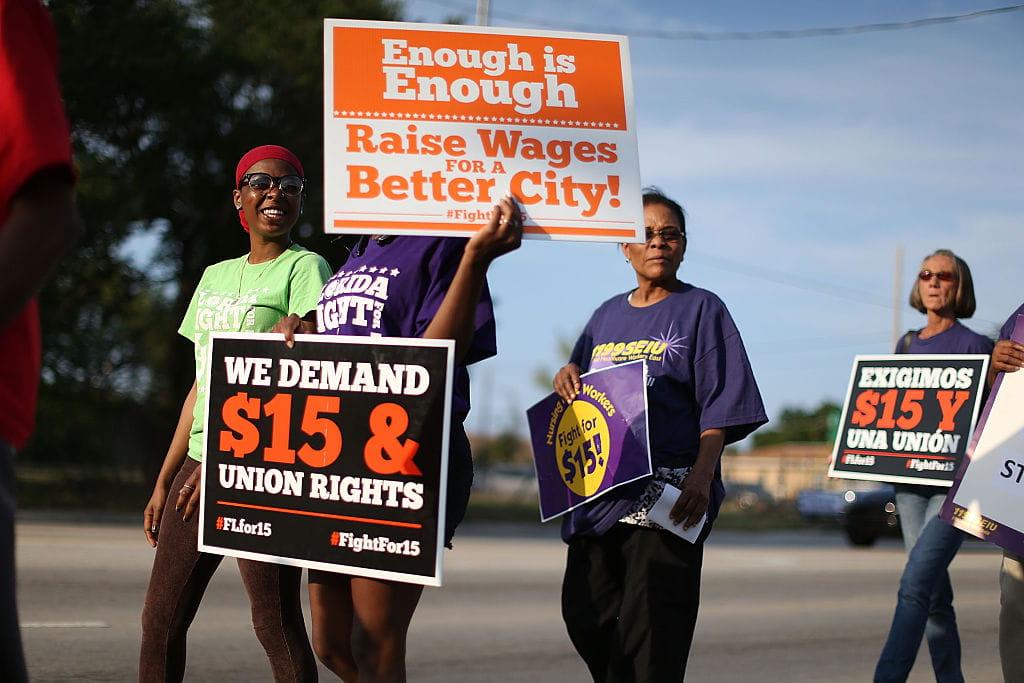
Just one day after the midterms, Pennsylvania’s Democrat Gov. Josh Shapiro vowed: “The very first bill that I will sign into law with our new Democratic majority this January will be to raise our minimum wage – and make sure every Pennsylvania worker has a livable wage.”
"We’re going to more than double Pennsylvania‘s minimum wage," Shapiro added several days later. The current minimum wage in the Keystone State is $7.25 an hour, and Shapiro is hoping to increase it to $15.
Illinois Gov. JB Pritzker, also a Democrat, took the minimum wage discussions a step further, calling on Congress to raise the federal minimum wage. "Americans made their voices heard and this is an opportunity for Congress to immediately address the challenges of working people – higher wages, lower costs, rooting out corruption,” Pritzker said.
House Minority Leader Hakeem Jeffries (D-NY) also chimed in on the minimum wage talk in the wake of the midterms, saying: “It certainly needs to be increased. It’s a disgrace that the minimum wage hasn’t been raised in 20 years and is currently $7.25 per hour.”
According to the Department of Labor, the minimum wage was last increased to $7.25 per hour on July 24, 2009. That may seem like an awfully long time to go without a raise – unless the increase would actually make the affordability crisis worse, of course.
Maximum Pain
Such dramatic increases in the minimum wage could have devastating consequences for small businesses, according to economist Tom Savidge from the American Institute for Economic Research.
"A federal minimum wage hike will worsen the affordability crisis. A one-size-fits-all mandate ignores regional differences in wages and business costs. It risks higher prices, fewer hours and fewer jobs, especially for inexperienced workers,” Savidge told Fox News Digital. “Politicians can mandate higher wages, but they cannot mandate that businesses can afford to pay them.”
Small businesses could be forced to “raise prices, cut hours or stop hiring,” Savidge warned. “Higher minimum wages can favor big corporations over small businesses," he continued. "Large corporations can spread higher labor costs across more sales, invest in automation or relocate operations. Small businesses have fewer options."
Why This Matters
Research has found that consumers ultimately shoulder the financial burden of minimum wage increases. An examination of retail pricing from UC Berkeley suggests “consumers rather than firms bear the cost of minimum wage increases in the retail sector.”
4 Questions
The story, in brief
What minimum wage increase did Josh Shapiro propose in Pennsylvania?
Pennsylvania Gov. Josh Shapiro said the first bill he would sign with the new Democratic majority would raise the state's minimum wage. He said Pennsylvania would more than double its current $7.25 an hour minimum wage and increase it to $15.
Why do some economists oppose higher minimum wages?
Economist Tom Savidge said a federal minimum wage hike would worsen the affordability crisis because it ignores regional differences in wages and business costs. He warned it could lead to higher prices, fewer hours, and fewer jobs, especially for inexperienced workers.
How could minimum wage hikes affect small businesses and consumers?
Savidge said small businesses could be forced to raise prices, cut hours, or stop hiring if labor costs rise sharply. He also said big corporations may handle higher costs more easily than small businesses, and research cited in the article says consumers often end up bearing the cost through higher retail prices.
What did JB Pritzker and Hakeem Jeffries say about the federal minimum wage?
Illinois Gov. JB Pritzker called on Congress to raise the federal minimum wage after the midterm elections. House Minority Leader Hakeem Jeffries said the minimum wage certainly needs to be increased and called it a disgrace that it has remained at $7.25 per hour for 20 years.