

★ In this story 03
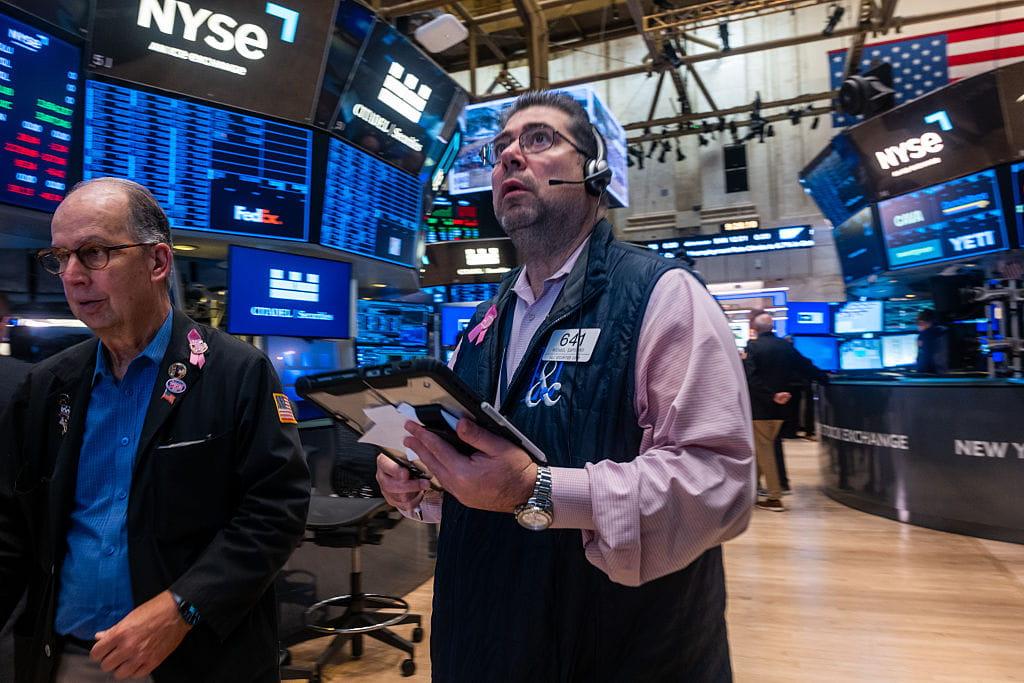
Crisis or opportunity? If you turned on CNBC, opened your Robinhood app, or combed through memes on social media, you likely heard about what happened to US stocks on Nov. 5. An ocean of red ink flooded the New York Stock Exchange, erasing $2.5 trillion in value across many asset categories. Of course, the stocks that took the biggest beating were those linked to artificial intelligence (AI). But is it time to buy the dip or run for the hills?
US Stocks Crash
Wall Street suffered its worst single-session performance since the tariff shock of April 2025. The meltdown blindsided investors because US stocks had rallied big time a day earlier.
Here is what happened.
The tech-heavy Nasdaq Composite Index slipped into correction territory – down 20% from its all-time high – after falling more than 1,000 points. The Dow Jones Industrial Average – a popular index of 30 large publicly traded companies – crashed 1,800 points. The broad-market S&P 500 also erased a few hundred points.
Companies leading the AI boom garnered much of the attention, from Nvidia to SpaceX to Micron Technology to Meta Platforms.
Even President Donald Trump took notice, blaming voters for the stock market's crash. He wrote in a Nov. 5 Truth Social post:
“The Stock Market suffered one of the Worst Days in History based on the results of the Election. Such a sad thing to watch! It took so much work to get us to a level that no one has ever seen before, and then this. Your 401(k)s have, therefore, dropped. Remember, it wasn’t Republicans, it was Dumocrats. Do not fear, however, we will soon, one way or the other, be BIGGER AND STRONGER THAN EVER BEFORE.
"The Stock Market crashed today because the Dumocrats had a big Tuesday — So sad to see, you only have yourselves to blame!"
Put simply, it was ugly, and a day that institutional and armchair traders will never forget.
At the end of the trading week, US tech stocks rebounded, with the Nasdaq climbing around 300 points, or 1%. The Dow shed another 237 points, while the S&P 500 was little changed. Considering what also happened in October, chaos could be the theme in the home stretch of 2026.
Root Cause
The blue wave that swept through the US electorate on Election Day likely drove the sharp selloff. But with the federal government soon to be divided – a Republican in the White House and Democrats in control of the House of Representatives and Senate – why would traders fear anything?
It was less the national level that spooked investors than Democrats taking over several states. What’s more, many of these Democratic candidates have opposed data centers.
Texas, for example, aims to account for as much as 30% of America’s data-center capacity by 2030. However, incoming Governor Gina Hinojosa has proposed suspending all new data-center construction projects to conduct environmental reviews, consider more regulation, and prevent companies from taking over communities.
“There is no way to sugarcoat that Democrats taking control especially over the Senate will create some major hurdles for AI and tech legislation in the Beltway over the next two years," prominent market analyst Dan Ives said in a Nov. 4 note.
Why This Matters
Has the four-year-old AI trade on Wall Street peaked? With higher interest rates, tech companies struggling to borrow cash, and uncertainty clouding the outlook, there could be cause for concern. At the same time, fundamentals remain strong amid robust demand, record corporate profits, and resilient consumer spending.
Ultimately, the AI trade is highly sensitive, and anything that could threaten to slow the infrastructure buildout could have consequences for US stocks and the broader economy.
4 Questions
The story, in brief
Why did US stocks plunge on Nov. 5 after the election?
The selloff was tied to fears that Democratic election victories would create hurdles for AI and tech growth, especially where candidates opposed new data centers. Investors were spooked less by divided government in Washington than by Democrats taking control in several states. That raised worries about slower infrastructure buildout for artificial intelligence.
Which US stock indexes and sectors were hit hardest in the market drop?
The tech-heavy Nasdaq Composite fell more than 1,000 points and slid into correction territory, down 20% from its all-time high. The Dow Jones Industrial Average dropped 1,800 points, and the S&P 500 also lost a few hundred points. Stocks tied to artificial intelligence took the biggest beating, including names such as Nvidia, SpaceX, Micron Technology, and Meta Platforms.
How could Democratic wins affect AI data centers and tech legislation?
The concern was that Democratic wins could slow artificial intelligence expansion through tougher policy and limits on data centers. The article says incoming Texas Governor Gina Hinojosa proposed suspending all new data-center construction projects for environmental reviews, more regulation, and to stop companies from taking over communities. Market analyst Dan Ives also warned Democratic control of the Senate would create major hurdles for AI and tech legislation over the next two years.
What happened next for US tech stocks after the Nov. 5 plunge?
By the end of the trading week, US tech stocks had rebounded, with the Nasdaq rising about 300 points, or 1%. The Dow fell another 237 points, while the S&P 500 was little changed. The outlook remained uncertain, with the article saying chaos could define the home stretch of 2026.