
★ In this story 02
“Agriculture is our wisest pursuit, because it will in the end contribute most to real wealth, good morals, and happiness.” ~ Thomas Jefferson
As Jefferson said, farming is important. In many ways, it’s the foundation of our society. But what happens when farmers are struggling and can’t earn enough money to put food on their own tables?
Farmers Go on Strike
American farmers were already struggling by the time the Great Depression began in 1929. During World War I, the demand for agricultural products had increased, which encouraged farmers to expand production.
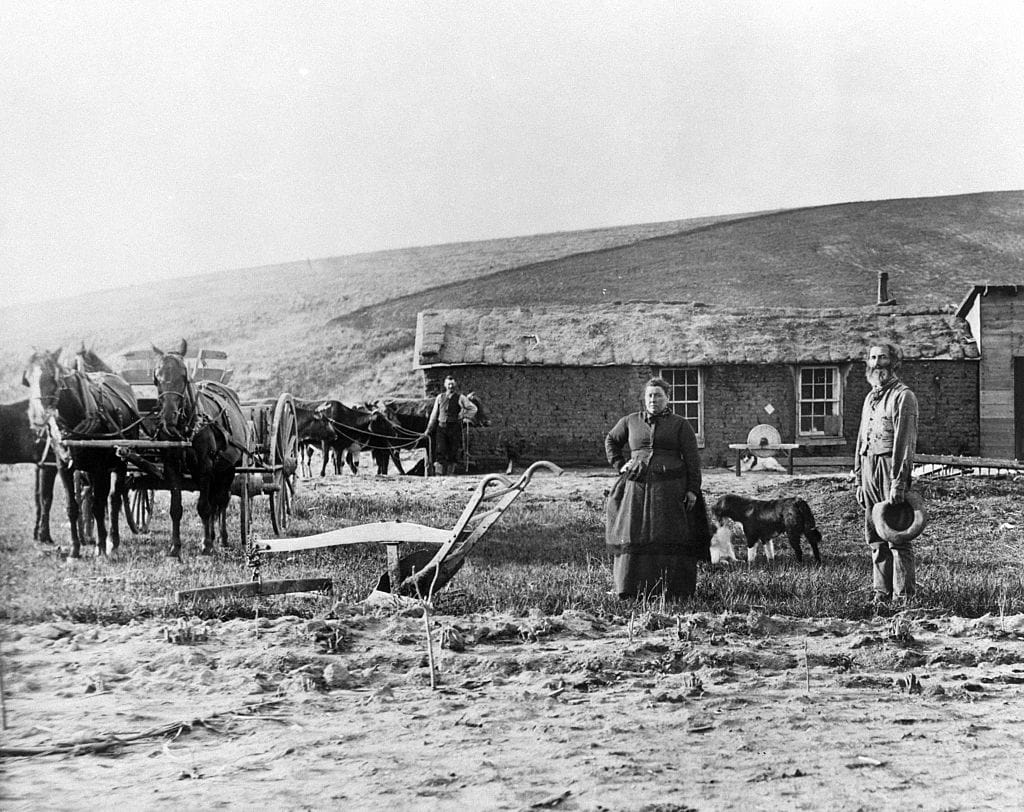
This usually meant borrowing money to buy additional land and equipment. After the war, however, demand decreased and agricultural prices fell. Landowners were left with debts they couldn’t afford to pay. Then the stock market crash and following Great Depression made the situation even worse. Meanwhile, banks continued to demand mortgage payments and local governments continued to collect property taxes. Families were looking at losing farms that had been in their families for generations.
Farmers were producing plenty of food, but they were still losing money because the prices they received for their crops and livestock didn’t always cover the production costs. For example, as Iowa University Libraries reported, “The farmer was currently receiving only $.02 for a quart of milk that cost consumers $.08.”
There was no help from local governments, and by 1932, some farmers decided they needed to take matters into their own hands. In May of that year, approximately 2,000 farmers gathered in Des Moines, Iowa, to establish the Farmers' Holiday Association. If farmers couldn't receive enough money to cover their production costs, they should stop selling their products until buyers agreed to pay more. It was time to go on strike.
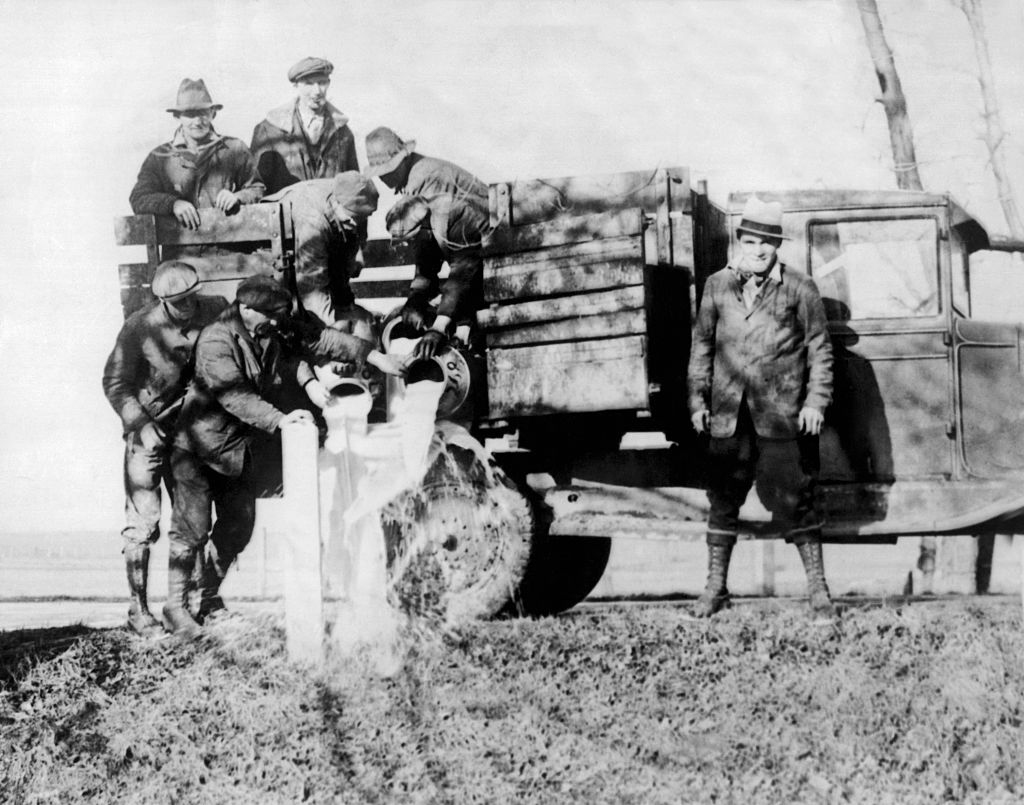
In August, dairy farmers started withholding milk in Sioux City, Iowa. Some set up picket lines along roads that led into the city, trying to prevent trucks from delivering milk and other agricultural products to retailers. The protests escalated, and some striking farmers dumped milk from trucks onto roads or gave it away rather than accepting the low prices offered by buyers. They used logs and hay bales to set up blockades.
By 1933, tactics changed. Farmers started focusing on preventing banks from foreclosing on farms. Demonstrations were held at auctions, and then the penny auctions were born. Neighbors discouraged outside bidders and purchased foreclosed properties for small amounts, hoping they would be able to return the land to the original owner.
On April 27, 1933, a crowd entered the courtroom of District Judge Charles C. Bradley in Le Mars, Iowa, and demanded he stop approving farm foreclosures. When he refused, the protesters became violent, dragging the judge from the courtroom. As Time described:
“A truck rattled up. Judge Bradley was thrown up into it. A dirty handkerchief was tied across his eyes. The truck drove a mile out of town, stopped at a lonely crossroad. Again the judge was asked to sign no more foreclosures. Again he refused. He was slapped and kicked, knocked to the ground, jerked back to his feet. A rope was tied about his neck. The other end was thrown over a roadside sign. The noose tightened. Judge Bradley wheezed, thought they were killing him.”
Although the Farmers’ Holiday movement didn’t achieve its goal, it drew national attention and pressured states to take action. When Franklin D. Roosevelt became president, the government introduced the Agricultural Adjustment Act of 1933, which attempted to raise prices by reducing production.
Today’s Relevance
How does the farmers’ strike relate to today? Many are producing the product but not getting the appropriate revenue. A Nov. 10 Christian Science Monitor article explained that farmers, particularly those growing corn and soybeans in the Midwest, are dealing with rising costs for diesel fuel, fertilizer, and equipment, partially due to the wars in Ukraine and Iran and tariffs. While there are federal programs providing billions of dollars to farmers, with $8 billion announced in October, they would rather earn profits than depend on subsidies.
In 1932, farmers were angry because the prices they received for their products were too low. Today, many American consumers are angry because grocery prices are too high. Farmers can struggle to make money while families struggle to afford groceries.
4 Questions
The story, in brief
Why did American farmers go on strike during the Great Depression?
American farmers were producing plenty of food, but the prices they received often did not cover their production costs. Many had borrowed money to expand during World War I, then faced falling demand, lower prices, mortgage payments, and property taxes after the war and during the Great Depression.
What was the Farmers' Holiday Association in Iowa?
The Farmers' Holiday Association was formed in May 1932 when about 2,000 farmers gathered in Des Moines, Iowa. Its idea was that if farmers could not get enough money to cover production costs, they should stop selling their products until buyers agreed to pay more.
How did striking farmers in Iowa try to stop low farm prices?
In August 1932, dairy farmers in Sioux City began withholding milk and set up picket lines on roads leading into the city. Some dumped milk from trucks onto roads or gave it away rather than accept low prices, and they used logs and hay bales to create blockades.
What happened after the Farmers' Holiday movement drew national attention?
Although the movement did not achieve its goal, it pressured states to respond and brought national attention to farmers' problems. After Franklin D. Roosevelt became president, the government introduced the Agricultural Adjustment Act of 1933, which tried to raise prices by reducing production.