
★ In this story 03
Scientists have discovered a strange, golden orb on the ocean floor that turns out to be alive. It may not be exactly the mythical golden goose egg, but it’s still mesmerizing. The discovery has baffled scientists and divers anxious to deliver it to a lab for further testing.
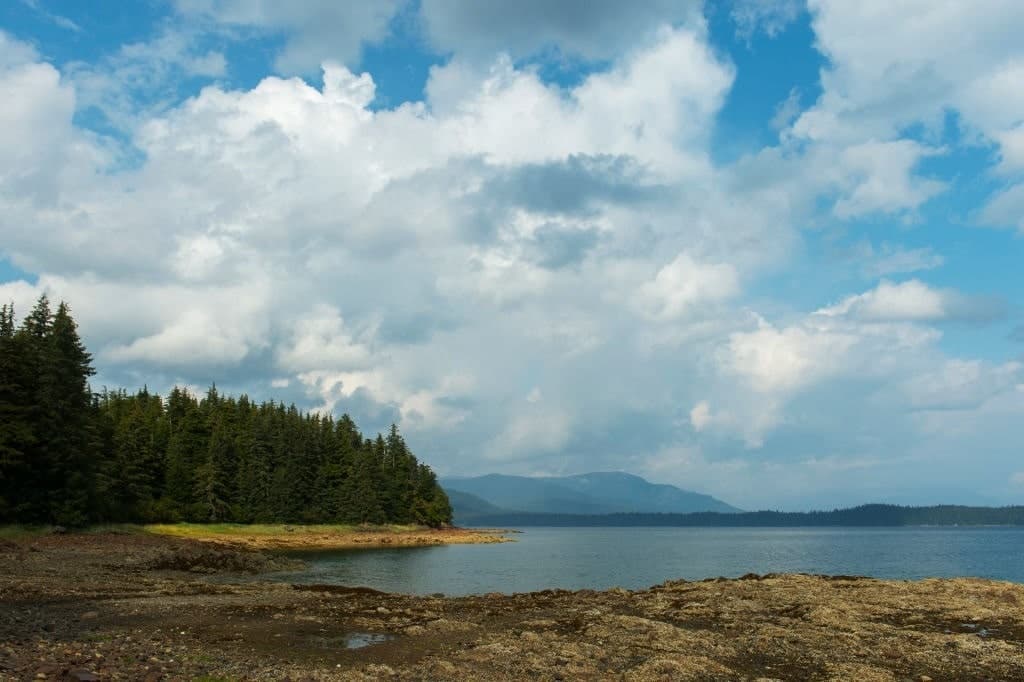
The odd creature, now dubbed the “golden egg,” was located at the bottom of the ocean off the Alaskan shoreline. The sea is full of mysteries and unknowns. Every year, several never-before-seen aquatic creatures stumble into the path of deep-sea divers and machines that sweep across the ocean floor. There is still much to learn about the life beneath the waves.
The Golden Orb
On August 20, a team of researchers from the National Oceanic and Atmospheric Administration (NOAA) observed an odd-shaped, golden orb approximately 2 miles beneath the surface on the ocean floor. It was unclear if the orb was an egg, a leftover part from a dead sponge, or something entirely different. The team brought the unknown item onto the ship using the suction tube on the remotely operated diving vehicle. Upon closer examination, the team realized that it was, in fact, a living animal, but they still had no idea precisely what it was or if it had ever been discovered before.
The coordinator for the expedition, Sam Candio, stated: “We likely won’t learn more until we are able to get it into a laboratory setting, where we can continue to pull from the collective expertise of the scientific community with more sophisticated tools than we are able to maintain on the ship.”
Without an alternative, the plan is to deliver the golden orb creature to a lab, where further testing can take place to try and determine what it is and what potential it may have in the world of science.
“New species have the potential to reveal new sources for medical therapies and vaccines, food, energy, and other societal benefits and knowledge,” Candio said. “Collectively, the data and information gathered during this expedition will help us close gaps in our understanding of this part of the planet, so we can better manage and protect it.”
It will be interesting to see what the scientists will learn about this new orb-like creature.
We Have Only Explored a Small Fraction of Our Oceans
Much like the life within it, the ocean is vast, largely unexplored, and unknown. Though researchers have spent years exploring the earth’s oceans, only about 24.9% of the seafloors around the world have been mapped.
The earth’s surface is about 70% water. The average depth is 12,080 feet, and every bit is filled with living things, some previously discovered and some unknown. One can only imagine the time and resources it would take to cover that area.
Scientists believe between 700,000 and one million species of sea life live within our waters, which does not count all the millions of underwater microorganisms in existence. The only plan of action is to continue searching and researching to discover what kind of life exists in the deepest depths of the vast and mysterious ocean waters.
How Many New Species Are Discovered Each Year?
Thousands of new aquatic species are revealed each year. Taxonomists, those tasked with scientifically classifying newly discovered animals, work year-round to categorize each discovery.
In marine science alone, there are approximately 300 taxonomists who dedicate their work to classifying ocean life. The World Register of Marine Species (WoRMS), with the help of taxonomists, creates an annual top-ten list of the year’s discoveries. The 2022 list contains some pretty funky-looking aquatic creatures.
First on the list is the Fluffy Sponge Crab. The crab is covered in fur resembling that of a dog or cat. The hair-like covering helps to defend the animal from predators. Further down the list is the Golden Cloak Anemone, which forms a living shell on top of a hermit crab. Scientists discovered that two work together to survive, and the crab even moves the attached anemone with it when it changes shells. The list continues and is chockfull of exciting discoveries and scientific facts.
Test Your Knowledge — Take the Quiz!
Try a quiz based on this article
The mysterious golden orb was found off the shoreline of what US state?
Show the answer
Alaska.
The odd living creature was dubbed _______.
Show the answer
The golden egg.
The orb was found about ____ miles below the surface of the water.
Show the answer
2.
After getting the orb aboard the ship, divers discovered it was ______.
Show the answer
A living animal.
Newly discovered marine species can reveal new sources for medicine, food, and energy benefits.
Show the answer
True.
Only about _____ of the world’s seafloors have been explored.
Show the answer
24.9%.
About 70% of the earth’s surface is ______.
Show the answer
Water.
What is a taxonomist?
Show the answer
Those who classify newly discovered species.
There are approximately 300 taxonomists that work with ocean life.
Show the answer
True.
What feature of the Fluffy Sponge Crab helped give it its name?
Show the answer
The fur-like covering all over its body.

Kirsten Brooker
Culture Correspondent for Liberty Nation and Generation Liberty. Kirsten loves to write about culture from the point of view of an everyday American who lives deep in the heart of the Midwest. She is the mother of two adorable girls, likes classic rock, and humbly wears the crown of a former Homecoming Queen with grace and style.