
★ In this story 02
"We are each other's harvest; we are each other's business; we are each other's magnitude and bond." ~ Gwendolyn Brooks.
America was still very much an experiment when it became an independent nation. There was no established blueprint for what the country would become, and many of the people helping shape it had little formal training for the roles they eventually took on. In the nation's earliest years, liberty offered more than independence from Britain. It gave people the opportunity to learn, experiment, and help build a country that was still figuring out what it could become.
A Nation of Amateurs
America was a land of the unknown. There were indigenous people, unfamiliar crops, harsh weather conditions, and unfamiliar terrain. Settlers had a lot to learn, and many of those who are responsible for setting the nation on its path were amateurs, at least by today’s standards.
George Washington, for example, became the country’s first president, yet he never attended college and had very limited formal schooling. He was just 11 years old when his father passed away, and there wasn’t money for education. Instead, he learned from tutors and studied geometry and trigonometry to prepare to become a surveyor.
A lack of formal education didn’t mean a lack of education at all or of understanding, and this is the same pattern seen throughout early America. Abraham Lincoln had less than a year of formal training, according to the Library of Congress. He was an avid reader and taught himself enough law to become an attorney and then of course, like Washington, he eventually became president.
Thomas Edison only went to school for a few months according to the National Park Service. He learned reading, writing, and arithmetic from his mother, then was self-taught through extensive reading on his own. He started working at age 13, selling newspapers and candy on trains, and spent his free time reading scientific and technical books. In other words, he learned by reading and experimenting. Eventually, he held 1,093 US patents.
Would you fly on a new airplane designed by brothers who built bicycles but didn’t have an engineering degree? As told by the Smithsonian, neither Wilbur nor Orville Wright graduated from high school. They worked in printing and later opened a business where they manufactured their own bicycles. From there, they continued to study aviation and created the first sustained controlled flight in December 1903.
And then we have Benjamin Franklin. Printer, publisher, writer, inventor, and scientist, Franklin could be the poster child of America and her creators. He was never formally trained as a scientist and didn’t have a university science degree, yet his accomplishments moved a country forward in progress and thought. Besides his inventions, he helped establish America’s first successful lending library, helped organize Philadelphia’s Union Fire Company, participated in establishing what became the University of Pennsylvania, and was involved with the state’s hospital.
America Encouraged Inventors
The founders understood that to develop a new country and make it great, they had to be willing to experiment and explore. The Constitution states: “To promote the Progress of Science and useful Arts, by securing for limited Times to Authors and Inventors the exclusive Right to their respective Writings and Discoveries.” To help in this regard, the country developed institutions that encourage ordinary people to experiment and invent.
The Smithsonian’s Lemelson Center describes what happened during the 1800s as a “democratization of invention.” Historically, patents in countries such as Britain and France had been expensive and usually favored wealthy elites. The American system was accessible and inexpensive, opening doors for the average citizen.
French writer Alexis de Tocqueville traveled through America in 1831 and 1832 and became fascinated with the way Americans formed organizations themselves. In his book Democracy in America, Tocqueville wrote: “Americans of all ages constantly unite. Not only do they have commercial and industrial associations, in which all take part, but they also have a thousand other kinds: religious, moral, grave, futile, very general and very particular, immense and very small,” the Library of Congress posted on its website. Furthermore, “Tocqueville argued that citizens in a democracy rely on associations to bring them into shared concerns with their neighbors and to empower them with a voice to influence public opinion. Association-making, he claimed, was the ‘mother science’ in a democratic society, the piece of social know-how that makes a democracy flourish.”
Americans didn't necessarily wait for government or an established institution to solve every local problem. They created what was needed, a tradition begun by the Founding Fathers and continued by those who came after.
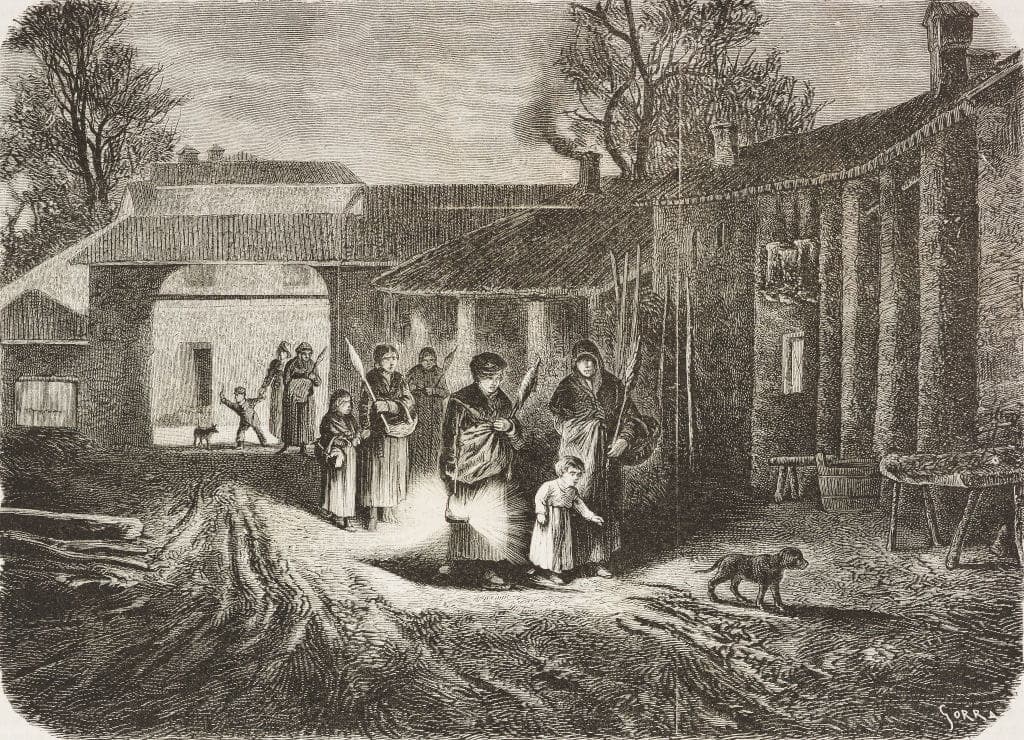
The American Frontier was a time of growth and struggles. Settlers had to carve out a living on unfamiliar land with new and uncertain crops. People often wore many hats. A farmer might also know carpentry, food preservation, and basic medicine. Women usually had extensive knowledge involving a variety of skills like sewing, household medicine, preserving foods, and so on. Self-reliance wasn’t an inspirational goal; it was a practical necessity.
Many of the people who helped shape America began without a degree, a title, or an expert standing behind them. They learned because they were curious, tried because they saw possibilities, and sometimes failed before they got it right. But it is those successes and failures that shaped what America is today.
4 Questions
The story, in brief
Why does America Was Built by Amateurs say early America relied on amateurs?
Early America had no established blueprint, and many people shaping the country had little formal training for the roles they later took on. Liberty gave people room to learn, experiment, and help build a nation that was still figuring out what it could become.
Which famous Americans in America Was Built by Amateurs had little formal schooling?
The examples include George Washington, Abraham Lincoln, Thomas Edison, the Wright brothers, and Benjamin Franklin. Washington never attended college, Lincoln had less than a year of formal training, Edison went to school only a few months, the Wright brothers did not graduate from high school, and Franklin was never formally trained as a scientist.
How did the United States encourage ordinary people to invent and organize?
The Constitution protected authors and inventors by securing exclusive rights to their writings and discoveries for limited times. The American patent system was described as accessible and inexpensive, unlike systems in Britain and France that were often costly and favored wealthy elites. Americans also formed associations themselves to address shared concerns and local problems.
What skills and habits helped ordinary Americans shape the country?
The people who helped shape America learned by reading, experimenting, and taking on many practical responsibilities. On the frontier, settlers often needed skills such as carpentry, food preservation, basic medicine, sewing, and household medicine. Curiosity, self-reliance, and a willingness to try, fail, and try again helped build the country.