

★ In this story 02
So, it’s $5 to see Sack Lunch in movie theaters, but a small bag of popcorn costs $10.99. Well, that’s how the economy works, so who should question this practice? But while it may seem questionable that kernels of popped corn drenched in fake butter cost more than a two-hour film on the big screen, there is a reason for this madness.
Popcorn Costs More Than Tickets at Movie Theaters
The $10.99 popcorn tragedy traces back to the relationship between Hollywood studios, film distributors, and movie theaters.
Today, the industry maintains a revenue-sharing agreement. This means that movie theaters keep a certain percentage of the money customers pay for tickets. Estimates vary, but they can range from 10% to 50%. The remaining sum is transferred to the film studios.
Considering the various costs – rent, utilities, staff, projectors, and other day-to-day expenses – ticket prices should be a lot higher to cover these things. But this is where popcorn prices come into the picture.
With raw popcorn, oil, and salt so cheap, movie theaters are raking in the dough by charging up to 1,400% more than the initial cost of popcorn.
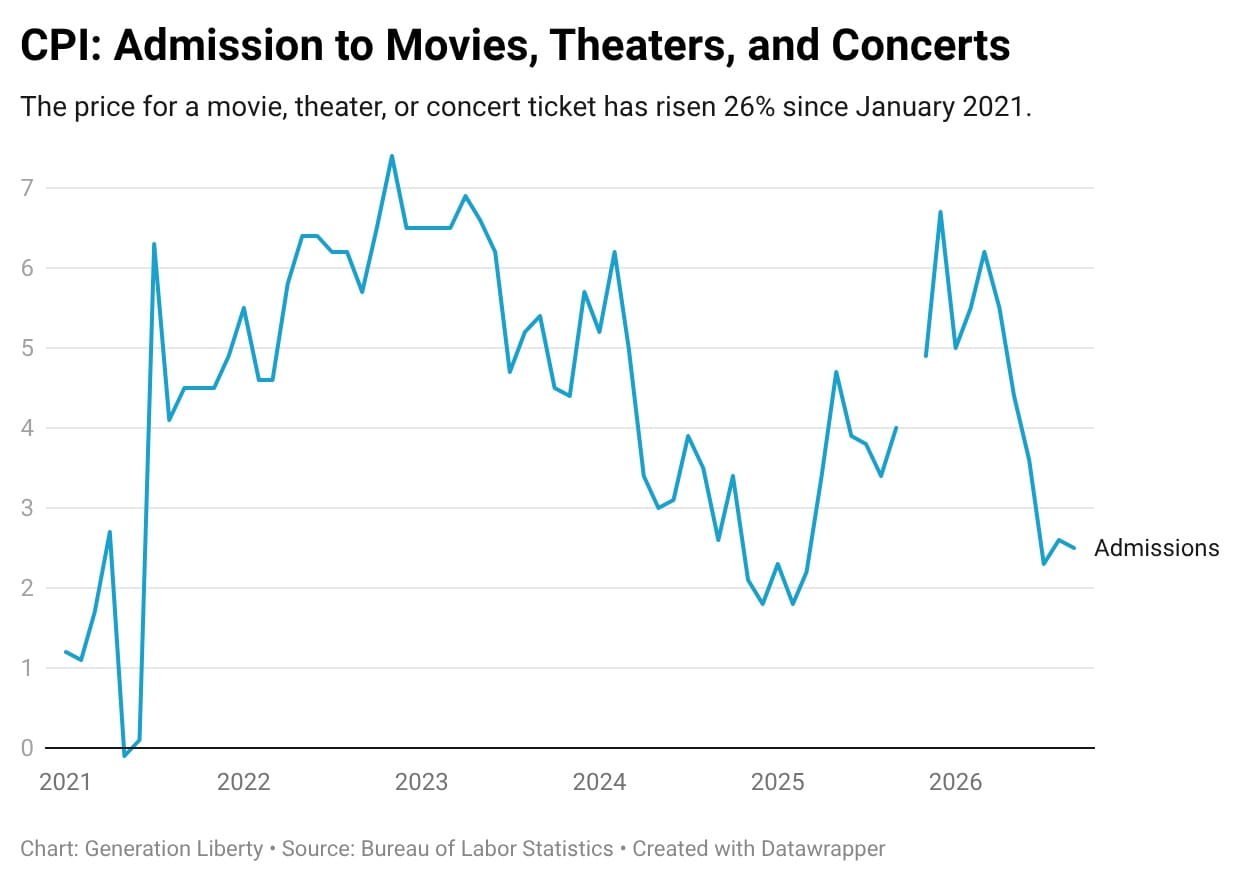
By comparison, according to the Bureau of Labor Statistics, movie theater admission inflation rose 0.4% in October, up from a 0.8% decline in September.
So, by charging customers what might seem like highway robbery for popcorn, soda, candy bars, and even coffee, movie theaters can keep the ticket prices down.
Audiences Are Captured
You have seen the sign: No Food, No Drinks Allowed. At the same time, you walk inside and smell the delicious aroma of buttery popcorn.
For moviegoers, as soon as they enter the premises and their tickets are ripped by the employee, they are trapped inside with no other options.
Because they are held captive inside, if audiences feel peckish, they will either have to leave the building or pay 1,000% more for snacks and sodas.
There is also the basic economic principle called inelastic demand. This means that customer demand does not change – or changes very little – when prices go up or down.
Industry research shows popcorn, soda, and other concessions are examples of inelastic demand. In other words, moviegoers are always willing to pay higher prices for popcorn.
Of course, many people try to avoid the sticker shock by sneaking in their snacks.
The Smell of Price Elasticity in the Morning
In business, price elasticity of demand is crucial. It measures how sensitive consumers are to price changes for goods and services. Based on how shoppers respond, companies must devise pricing strategies that consider consumer behavior, market competition, and the balance sheet (revenue, profits, and expenses).
Come to think of it, paying $20 for a popcorn, soda, and chocolate bar combo might be worth it if you don’t have to spend $30 for a movie ticket!
4 Questions
The story, in brief
Why does movie theater popcorn cost more than movie tickets?
Movie theaters share ticket revenue with film studios, and estimates say theaters may keep only 10% to 50% of each ticket sale. Because theaters still have to cover rent, utilities, staff, projectors, and other daily costs, they rely on high-margin concessions like popcorn to help keep ticket prices lower.
How much profit can movie theaters make on popcorn?
The article says raw popcorn, oil, and salt are very cheap, allowing theaters to charge far above their initial cost. It says movie theaters can charge up to 1,400% more than popcorn costs them, and that snacks and sodas can be marked up by about 1,000%.
Why do moviegoers still buy expensive popcorn at movie theaters?
Once customers enter the theater, they usually cannot bring in outside food and have few other options if they get hungry. The article also says popcorn and other concessions show inelastic demand, meaning people are often willing to keep buying them even when prices rise.
How do high concession prices affect movie ticket prices?
High prices for popcorn, soda, candy bars, and coffee help theaters make money outside ticket sales. According to the article, that extra concession revenue lets theaters keep ticket prices down, even though their share of ticket income may not fully cover operating expenses.