
Its name is thought to be taken from a Shoshone phrase that means “gem of the mountains.” Both tribes lived similar lifestyles and made their homes in tepees, which made it easy to move when they were following the buffalo.
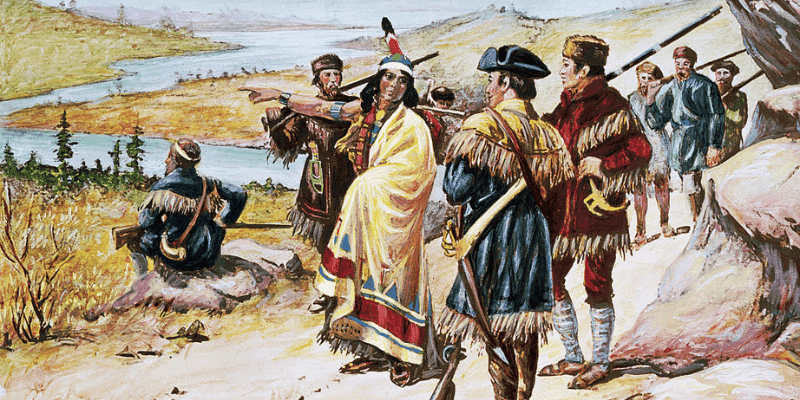
In 1592, Spanish explorers entered the area and began introducing pigs, horses, tomatoes, beans, corn, and garlic to the natives. In 1805, Lewis and Clark entered Idaho while on their way to the Pacific Ocean. They met with the Shoshone and Nez Perce and obtained a guide, Sacagawea, a Shoshone Indian they had met before. The Nez Perce helped the explorers survive, feeding them and helping them build canoes. They showed Lewis and Clark how to get to the Pacific Ocean. Soon after, fur traders started going to the area, including Andrew Henry, who built Fort Henry in 1810.
Idaho’s remote location made it one of the last areas to be explored and settled. When gold was discovered in 1860, people anxious to make their fortunes flocked to the area. It grew in population exponentially and in 1863 it became its own territory. It would still be nearly 30 more years before Idaho joined the Union.
The Tribes
The Nez Perce tribe’s name seems like a translation error. The French somehow translated their name to mean “pierced nose” even though this was not a tradition of the tribe. The natives, however, choose to go by the name Ni Mii Pu which means “The People.”
Idaho generally stayed out of the Civil War and many soldiers from the Union and the Confederate armies sought refuge there. It was ahead of its time as the first state in the nation to ratify the Equal Rights Amendment in 1972.