
★ In this story 03
Ever wonder why Ohio is called the Buckeye State? Simply enough, it’s full of native buckeye trees. But it wasn’t until 1840 that William Henry Harrison’s presidential campaign made the name popular enough to stick. Seven US presidents have been born in Ohio – which is also the founding state of the National Football League (NFL). Situated in the Midwest, Ohio is a key industrial and political center. From the early homes of Native Americans to the bustling cities of Columbus and Cincinnati, Ohio provides a mixture of history, culture, and modern living to its residents and visitors.
History and Wars
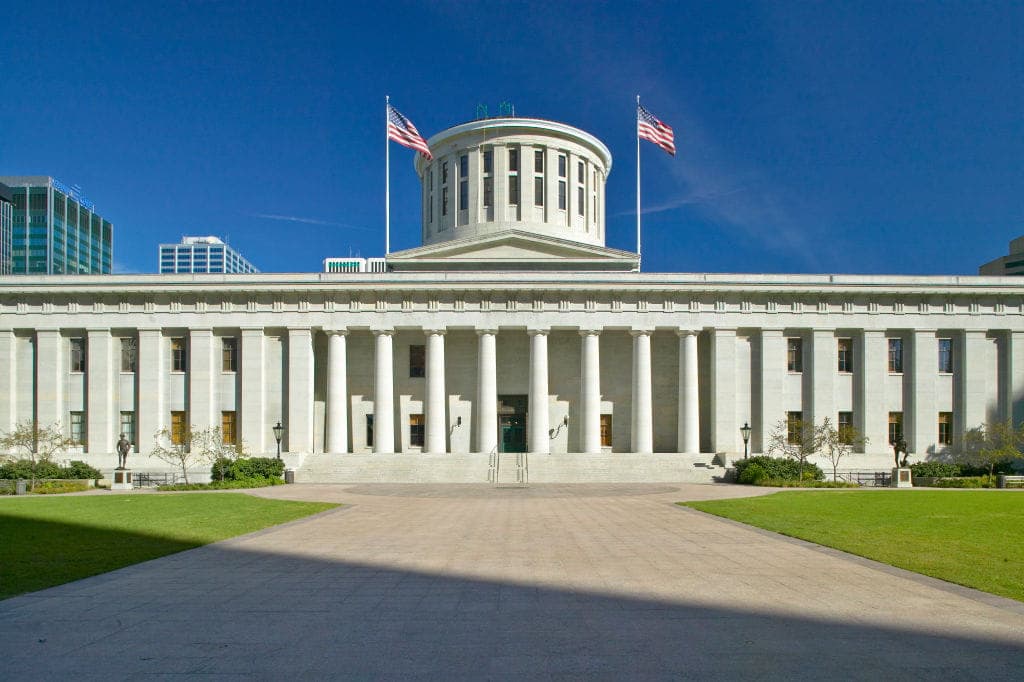
Like many US states, Ohio’s history includes Native American tribes, European settlers, disputes over land ownership, and war. In 1803, Ohio became the 17th state to join the Union. Interestingly, it has had three capital cities: Chillicothe served from 1803 to 1810, Zanesville from 1810 to 1812, Chillicothe again from 1812 to 1816, and Columbus from 1816 to the present.
British trade restrictions, interference with American shipping, and the British Royal Navy’s impressment – that is, forcing American sailors to join the Royal Navy – all contributed to the start of the War of 1812. Important battles included the sieges of Fort Meigs and the Battle of Lake Erie. These conflicts helped the United States take back control of the old Northwest.
Ohio was also an important part of the Civil War, providing troops, military officers, and supplies to the Union Army. One of the state’s most significant war sites is Johnson’s Island in Sandusky Bay on Lake Erie, where barracks and outbuildings were constructed that, over more than three years (1862 – 1865), held thousands of Confederate officers as prisoners of war.
The Birthplace of Seven US Presidents
Ohio has deep roots in politics, primarily because the state has been the birthplace of seven US presidents: Ulysses S. Grant, Rutherford B. Hayes, James A. Garfield, Benjamin Harrison, William McKinley, William Howard Taft, and Warren G. Harding.
Ohio Today
After thriving as an industrial center, however, the decline of what was known as the Rust Belt began in the 1970s, then a second big wave hit in the 2000s, damaging the state’s economy. Recovery took time, but Ohio now has a stable and moderately growing economy once again. Manufacturing currently employs about 12% of Ohio’s workforce, while new growth in bioscience, green technology, and advanced manufacturing has further strengthened the economy.
The state’s low cost of living and overall safety make Ohio an appealing place to live. The choice between urban, suburban, and rural living offers housing options for a diverse population. Some of the top-rated places to live are Oakwood, Madeira, and the suburbs of Columbus due to safety ratings, job availability, diverse communities, and affordable living.
Ohio offers a wide range of recreational activities. Residents and visitors can enjoy everything from hiking and fishing to theme parks and wildlife activities throughout the beautiful state of Ohio.
4 Questions
The story, in brief
Why is Ohio called the Buckeye State?
Ohio is called the Buckeye State because it has many native buckeye trees. The nickname became popular enough to stick during William Henry Harrison's presidential campaign in 1840.
Which presidents were born in Ohio?
Ohio was the birthplace of seven US presidents. They were Ulysses S. Grant, Rutherford B. Hayes, James A. Garfield, Benjamin Harrison, William McKinley, William Howard Taft, and Warren G. Harding.
What role did Ohio play in the War of 1812 and the Civil War?
In the War of 1812, important Ohio-related battles included the sieges of Fort Meigs and the Battle of Lake Erie. Those conflicts helped the United States take back control of the old Northwest. During the Civil War, Ohio supplied troops, military officers, and supplies to the Union Army.
How is Ohio's economy doing today?
After decline in the Rust Belt era beginning in the 1970s and another wave in the 2000s, Ohio's economy took time to recover. It is now described as stable and moderately growing. Manufacturing employs about 12% of the workforce, and growth in bioscience, green technology, and advanced manufacturing has strengthened the economy.

Kirsten Brooker
Culture Correspondent for Liberty Nation and Generation Liberty. Kirsten loves to write about culture from the point of view of an everyday American who lives deep in the heart of the Midwest. She is the mother of two adorable girls, likes classic rock, and humbly wears the crown of a former Homecoming Queen with grace and style.