
★ In this story 02
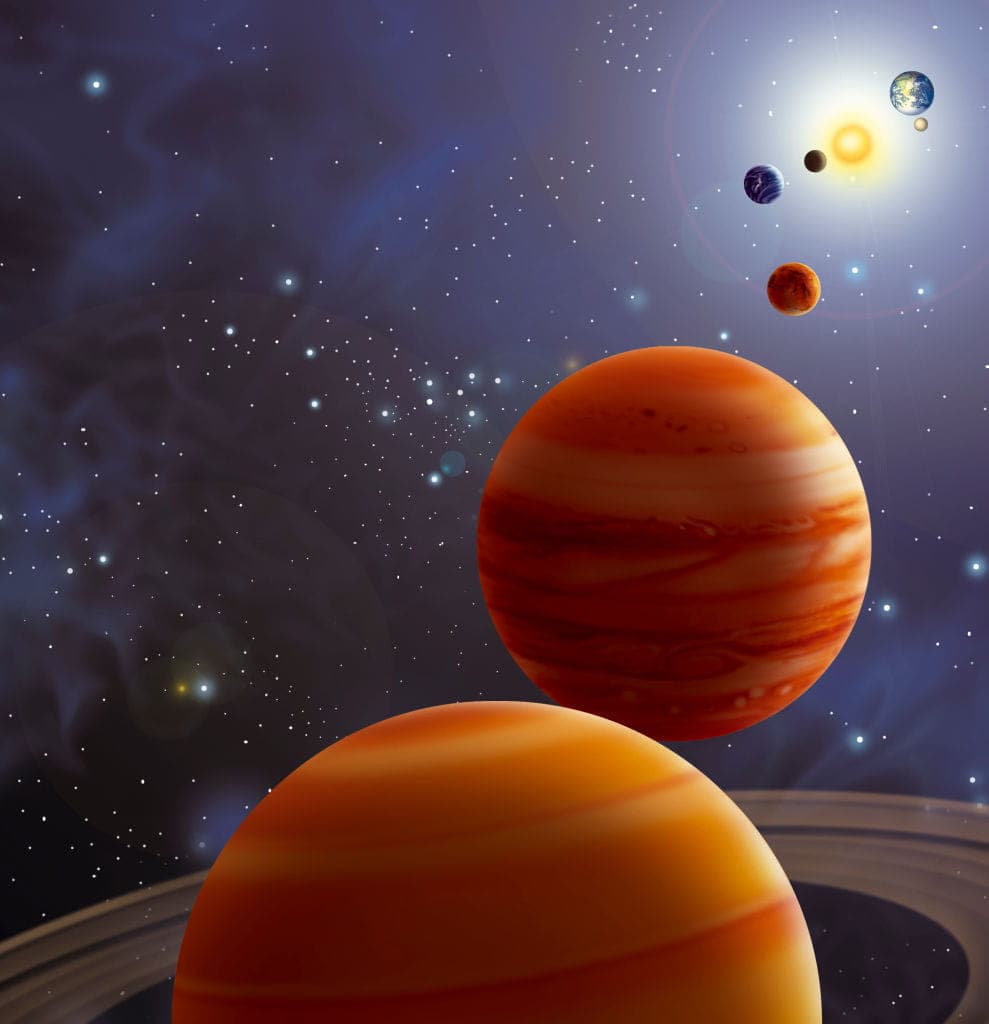
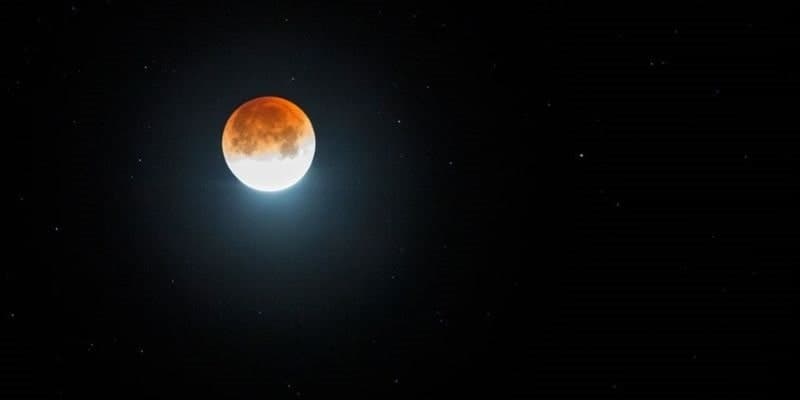
A telescope mounted atop a dormant Hawaiian volcano spotted a never-before-seen object in the sky. In March 2023, scientists discovered 2023 FW13, an asteroid many are calling a second moon. The space rock is unique because it is a quasi-moon or quasi-satellite, meaning it travels along with planet Earth on its yearly trip around the sun. Astronomers began digging into the telescope’s stored data and found that the asteroid had been in orbit for quite some time, possibly even as far back as 100 BC!
What Is Known So Far?
The data retrieved from Pan-STARRS observatory allowed scientists to follow the activities of the asteroid since 2012. From there, they were able to determine that the space rock was approximately 50 meters in diameter. Additionally, they learned that it travels around the sun in about the same time as Earth. However, Earth’s gravitational pull has very little influence on the quasi-moon. Instead, it uses the sun to determine its orbit. Alan Harris, a senior research scientist at the Space Science Institute, feels that classifying the space rock as a quasi-asteroid may not be exactly right because the Earth would play a much more significant role in the movements and activities of a true quasi-moon.

The asteroid gets within about nine million miles of Earth but changes its position throughout its one-year travels. This is far different from the moon seen in the sky every night. Earth’s native moon gets as close as 223,693 miles from our planet – significantly closer than 2023 FW13.
How Long Has 2023 FW13 Been Out There?
Though the archival data only dates to 2012, experts believe this particular asteroid was in orbit as long ago as 100 BC and that it will likely be around until AD 3700. Journalist and astronomer Adrien Coffinet took a special interest in the discovery. “It seems to be the longest quasi-satellite of Earth known to date,” Coffinet said.
This is not the first discovery of a quasi-moon. In 2016, astronomers found a space rock with an orbit similar to Earth’s. It was given the name 2016 HO3. Neither 2023 FW13 nor 2016 HO3 are considered a threat to Earth, as their path never gets closer to our planet.
Astronomers are excited about the possibilities asteroids such as these open up for future missions. Richard Binzel, an MIT (Massachusetts Institute of Technology) astronomer, hopes the rocky Earth tagalongs will act as stepping stones to reaching Mars.
Given that the asteroid was only recently discovered, it will be interesting to see what we can learn about space from it.
Test Your Knowledge – Take the Quiz
Try a quiz based on this article
A telescope mounted on top of a ________ found the 2023 FW13 asteroid.
Show the answer
Volcano.
The asteroid turned out to be a quasi-moon.
Show the answer
True.
A quasi-moon is a space rock that takes on a similar travel pattern as ______.
Show the answer
Earth.
Rather than Earth, the sun determines the asteroid’s ______.
Show the answer
Orbit.
The closest the asteroid gets to Earth is ______ miles.
Show the answer
9 million.
The _____ gets within 225,000 miles of Earth.
Show the answer
Moon.
Experts believe that the newly discovered space rock has been in orbit since 100 BC.
Show the answer
True.
Another quasi-moon was discovered back in ______.
Show the answer
2016.
Scientists fear the two asteroids could eventually collide with Earth.
Show the answer
False.
Richard Binzel, an MIT astronomer, is hopeful the asteroids will help astronauts reach ____.
Show the answer
Mars.

Kirsten Brooker
Culture Correspondent for Liberty Nation and Generation Liberty. Kirsten loves to write about culture from the point of view of an everyday American who lives deep in the heart of the Midwest. She is the mother of two adorable girls, likes classic rock, and humbly wears the crown of a former Homecoming Queen with grace and style.