

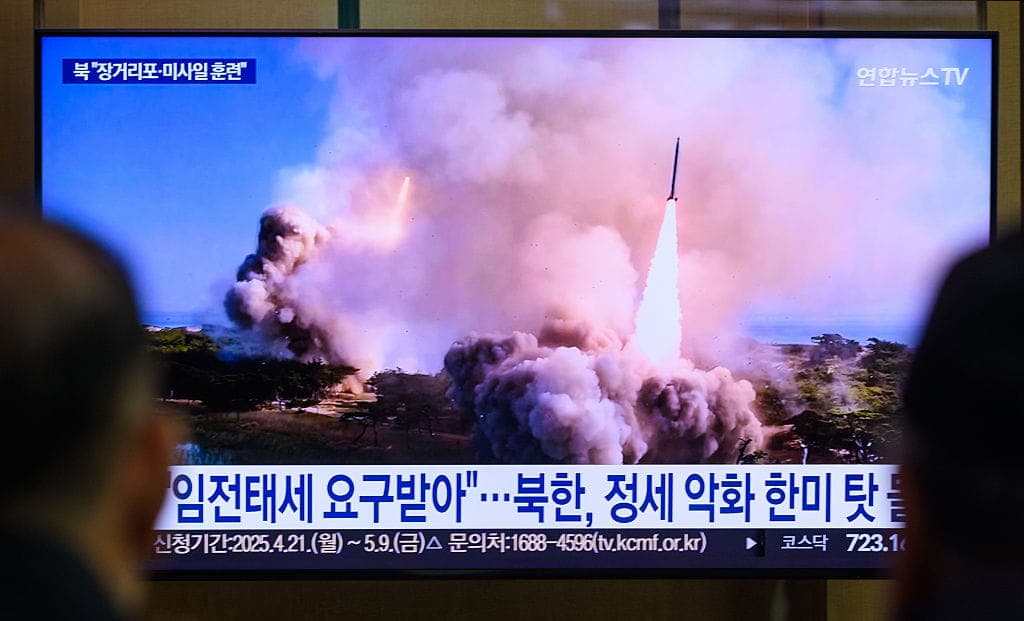
On Oct. 3, North Korea tested an intermediate-range ballistic missile said to possess new and more lethal characteristics. The launch has increased US worries about the expanding Democratic People’s Republic of Korea (DPRK) conventional and nuclear capability.
In this latest test, the missile traveled more than 420 miles and impacted the Sea of Japan just outside Japan’s exclusive economic zone. Furthermore, DPRK leaders claim the missile can evade detection.
That would be of significant concern. There is, however, no corroboration that the claim is true.
North Korea Says Missile More Capable
This latest missile test is one in a series that suggests North Korea has been steadily enlarging its stockpile of nuclear and conventional munitions. Also, the missile was reported to be capable of maneuvering at low altitudes.
According to the Associated Press, “Kim Yo Jong, the powerful sister of North Korean leader Kim Jong Un, said her brother supervised the test of the missile, which she described as strategic, implying it was designed to deliver nuclear weapons.”
Kim also revealed that the missile could change direction in its final stage of flight, making interception far more difficult. The missile’s supersonic speed, combined with an anti-missile defense weapon, could make it hard to take down.
AP reported that South Korea’s Joint Chiefs of Staff said the North Korean missile was launched from the eastern coast of the DPRK and flew more than 435 miles. Japan’s Defense Ministry said it detected the missile and estimated it flew slightly over 420 miles. North Korea asserted the missile flew 610 miles.

Kim claimed that the discrepancy in total flight distance between the two Asian neighbors proved that the two US allies could not accurately track the flight path. There are numerous reasons for the difference, and exact metrics for tracking the distance may vary, as may radar locations. In addition, the DPRK has a habit of reporting the design distance, not the flight track.
Differences Are Explainable
The Asian Horizon Review’s analysis concluded, “Different figures might reflect different measurement definitions or available observations; that remains an analytical possibility, not an established explanation. Furthermore, North Korea is notorious for exaggerating its capabilities for propaganda value.
In addition to the persistent missile testing and claims of advanced technologies, the DPRK rhetoric has intensified. An American Enterprise Institute (AEI) assessment of North Korean public statements explained, “North Korean rhetoric is increasingly referencing nuclear weapons development in a way that reflects North Korea’s evolving nuclear strategy, which is aimed at limiting US options for intervention during a potential Korean Peninsula contingency.”
This level of public pronouncements indicates that the DPRK may be attempting to dissuade the United States and its partner Asian nations from “strategic military options on the Korean Peninsula by warning of potential nuclear escalation if its red lines are crossed,” AEI wrote.
A close military relationship with Russia has enhanced North Korea’s capability. North Korean soldiers actively fighting alongside Russians in Ukraine have provided current, practical experience in trench warfare, artillery employment, missile unit procedures, and drone operations not possible with peacetime training. Furthermore, “Russia has helped North Korea improve the accuracy of its ballistic missiles by sharing data on their performance in flight tests,” The Wall Street Journal reported. North Korea has benefited enormously from the alliance with Russia.
Why It Matters
A Congressional Research Service (CRS) analysis warned about the value of the Russia-North Korea collaboration. “According to the US intelligence community’s 2025 annual threat assessment (ATA), Russia is providing North Korea with ‘financial benefit[s], diplomatic support, and defense cooperation.’ According to one estimate, through the end of 2025, North Korea earned between $7.7 and $14.4 billion from supporting Russia’s war effort, primarily from artillery deliveries,” the CRS reported. Overall, North Korea is becoming a growing presence on the Korean Peninsula and a bigger geopolitical problem for the United States and its Pacific allies.
~
The views expressed are those of the author and not of any other affiliate.
4 Questions
The story, in brief
What did North Korea test on Oct. 3?
North Korea tested an intermediate-range ballistic missile that it said had new and more lethal characteristics. The missile traveled more than 420 miles and landed in the Sea of Japan just outside Japan’s exclusive economic zone. North Korean leaders also claimed it could evade detection, but that claim has not been corroborated.
Why are US officials worried about North Korea's new missile?
The launch has increased US concerns about North Korea’s growing conventional and nuclear capabilities. North Korea said the missile could maneuver at low altitudes and change direction in the final stage of flight, which would make interception more difficult. Its reported supersonic speed and strategic role suggest it was designed to deliver nuclear weapons.
How does Russia help North Korea's military capabilities?
Russia has strengthened North Korea through financial benefits, diplomatic support, and defense cooperation, according to a Congressional Research Service summary of the US intelligence community’s 2025 threat assessment. North Korean troops fighting with Russian forces in Ukraine have also gained practical experience in trench warfare, artillery, missile procedures, and drone operations. The Wall Street Journal also reported that Russia shared flight test data that helped improve North Korea’s ballistic missile accuracy.
What could happen next after North Korea's missile test?
Analysts cited in the piece say North Korea’s intensified rhetoric and weapons development may be aimed at discouraging the United States and its Asian partners from military options on the Korean Peninsula. The American Enterprise Institute said North Korea is warning of possible nuclear escalation if its red lines are crossed. Overall, North Korea is becoming a bigger geopolitical problem for the United States and its Pacific allies.

Dave Patterson
National Security Correspondent at LibertyNation.Com and Generation Liberty, Dave is a retired U.S. Air Force Pilot with over 180 combat missions in Vietnam. He is the former Principal Deputy Under Secretary of Defense, Comptroller and has served in executive positions in the private sector aerospace and defense industry. Dave’s articles have appeared in The Federalist and DefenseOne.com.